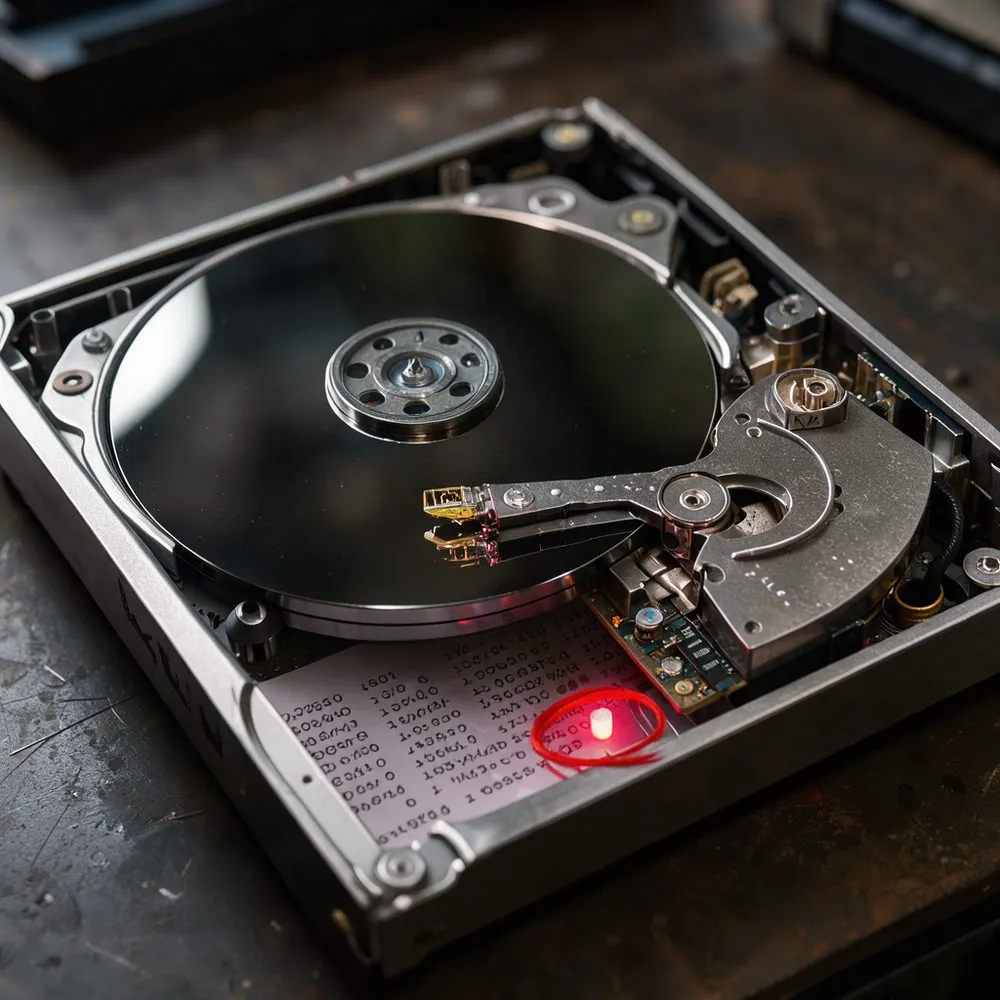
Micron is spending $10 billion to fix the hole in a DRAM bit
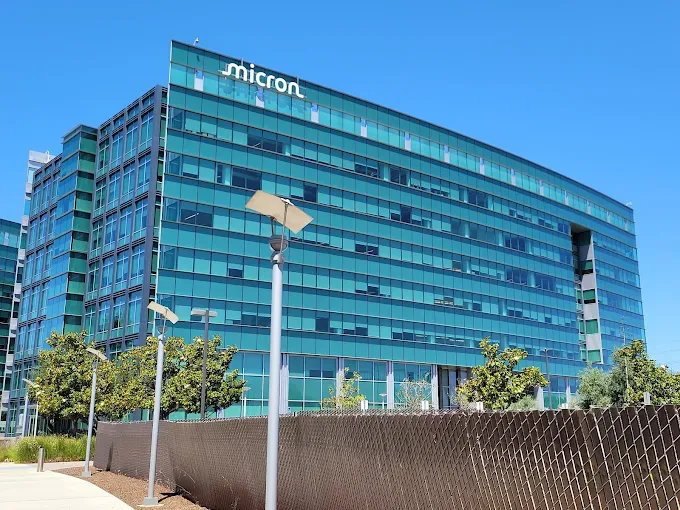

A DRAM bit is one transistor plus one capacitor, and the capacitor is the part that has become hard to build. Micron said in summer 2026 that it will spend a planned $10 billion over the next decade on a new research lab in Boise, Idaho, aimed at work past the next process node, with groundbreaking expected in 2027. The reason a memory maker needs a ten-year research horizon is geometric: as the memory cell shrinks, the hole the capacitor sits in gets deeper relative to its width, and keeping it from tipping over while it still holds enough charge to be read is the wall.
Here is the mechanism. The transistor is a gate that lets charge into the capacitor and out again. The capacitor has to store enough charge that a sense amplifier can still tell a 1 from a 0, and hold it for milliseconds between refresh cycles. Capacitance depends on area and on the insulator between the plates, so when the cell footprint shrinks, the industry keeps capacitance roughly constant by making the capacitor taller and narrower and by switching to high-k dielectrics, insulators that store more charge in the same thickness. Aspect ratio is how many times taller a structure is than it is wide; a 30:1 hole is 30 units deep for every 1 across. Each generation pushes that number up. The transistor has been the celebrated scaling problem, with fin and gate-all-around structures, but the capacitor is the one whose geometry keeps getting more extreme.
Micron Research Labs will focus on advanced memory and compute architectures, packaging, and future manufacturing, plus university collaborations, satellite labs, and ecosystem partnerships. Deirdre Hanford, who spent 37 years at Synopsys, was appointed corporate VP and president of the lab and will build its research infrastructure and operating model. The first named outreach is an intent to invest up to $50 million over five years in the U.S. Department of Energy's Genesis Mission Graduate Fellowship Pilot Program and related national laboratory research. Scott DeBoer, Micron's president and chief technology and products officer, told EE Times the lab changes how the company participates in research. Roadmaps chart five to seven years, he said, and government funding largely carried the decade-out work before. "I couldn't have imagined the R&D investment level that we're at today," he said. He also said the lab funding is additive to previously announced or forecasted investment, which has risen significantly every year for four years.
What the money does not yet buy is a stated target. Micron has not disclosed a process or product the lab is meant to produce, or a timeline past groundbreaking. So the open question is whether a decade-horizon lab changes the capacitor scaling problem, or mainly funds the search for a different memory cell altogether. That is what the next few years of papers, patents, and hiring will show. The article is at eetimes.com/memory-rd-is-a-high-stakes-….