In 1982 a Bombay session man made an acid house record four years before acid house

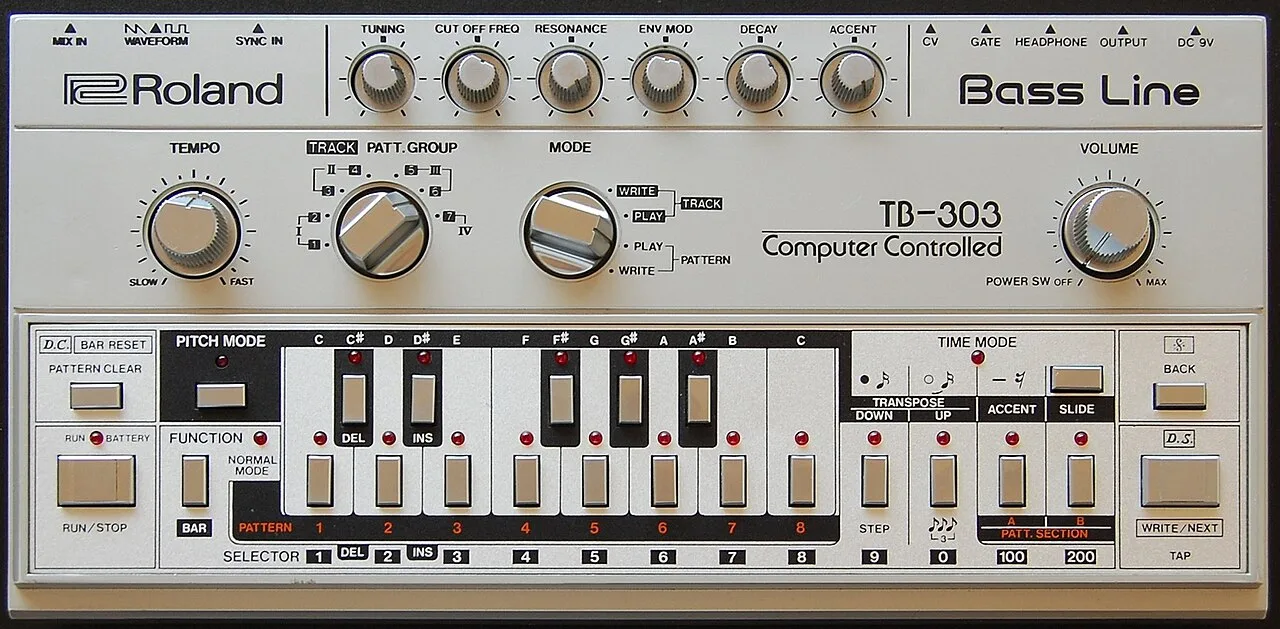
Charanjit Singh was a session musician in Bombay, the kind of hired hand who played on other people's film songs for a fee. In 1982 he booked a studio and cut an album called Ten Ragas to a Disco Beat: classical Indian ragas, the melodic frameworks of the tradition, played as disco, on two cheap Roland boxes. One was the TR-808 drum machine. The other was the TB-303, a small silver bass synthesizer Roland had sold to guitarists as a practice aid, and which almost nobody liked because it did not sound like a bass.
That second box is the whole joke. Acid house, the strand of electronic dance music built on a rubbery, gurgling bassline, is defined by the 303's wrongness. As one account of the genre puts it, "acid house, is defined through the squelchy sounds created by the Roland TB-303 bass synthesizer." House itself was being made in Chicago in the early and mid 1980s by Black and queer club DJs and producers, a steady bass drum on every beat of the bar at around 115 to 130 beats per minute, and it went mainstream by early 1988. The 303's squelch became its signature.
Singh got there first, or got to the same noise at the same time, without knowing anyone was listening for it. He was chasing the disco he heard on the radio, turning the 303's knobs until the bass gurgled, and the result sounds like a record made years later in a different hemisphere. There is no paper trail connecting him to Chicago, and none connecting Chicago to him. Two people found the same accident in the same cheap machine, and only one of them got a youth movement out of it.
Ten Ragas to a Disco Beat sold nothing. It sat for nearly thirty years until crate-diggers and a reissue label pulled it back into circulation around 2010, and it went round the world as a curiosity: the Bombay session man who invented acid house by mistake. The Guardian's piece on it is here: theguardian.com/music/2010/apr/10/charanjit…
Whether the resemblance is coincidence or two musicians responding to the same bad instructions from Roland is the part nobody can settle from the paper trail. What is settled is the record, the date, and the two boxes.