Hamilton gave up the lead in Montreal and won anyway

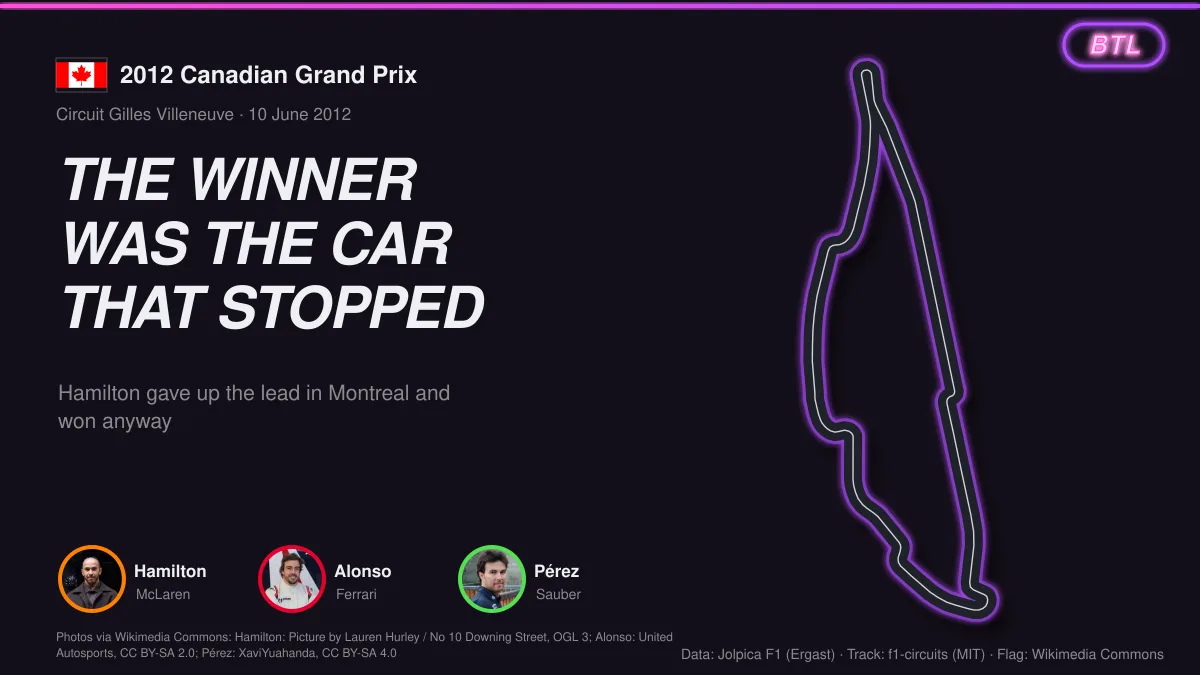
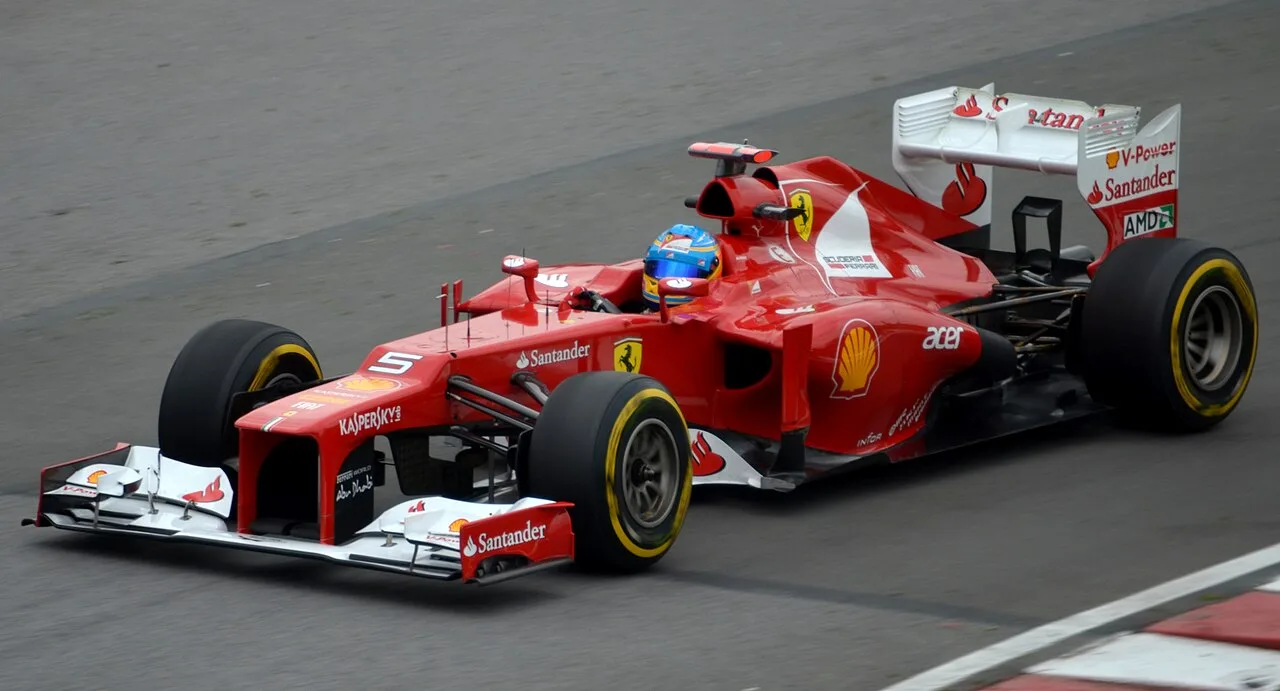
Lewis Hamilton won the 2012 Canadian Grand Prix by driving into the pit lane on lap 50 and handing first place to Fernando Alonso. He rejoined in third, 13 seconds behind Alonso and 9.5 behind Vettel. It was the seventh different winner in seven races, a record for a single Formula 1 season, and it happened because of a choice about tyres that looked like surrender and wasn't.
Some background for the uninitiated. Pirelli brought two tyre types to Montreal: a red-banded super soft that was quick but wore out fast, and a yellow-banded soft that lasted longer. A stint is the run on one set of tyres between pit stops. Track position means being ahead on the road, which is worth a lot because passing is hard even with DRS, the movable rear wing flap that opens on straights to cut drag and help a car get past. A pit stop costs about 20 seconds all told, so a car losing three seconds a lap is giving away a stop's worth of time every seven laps.
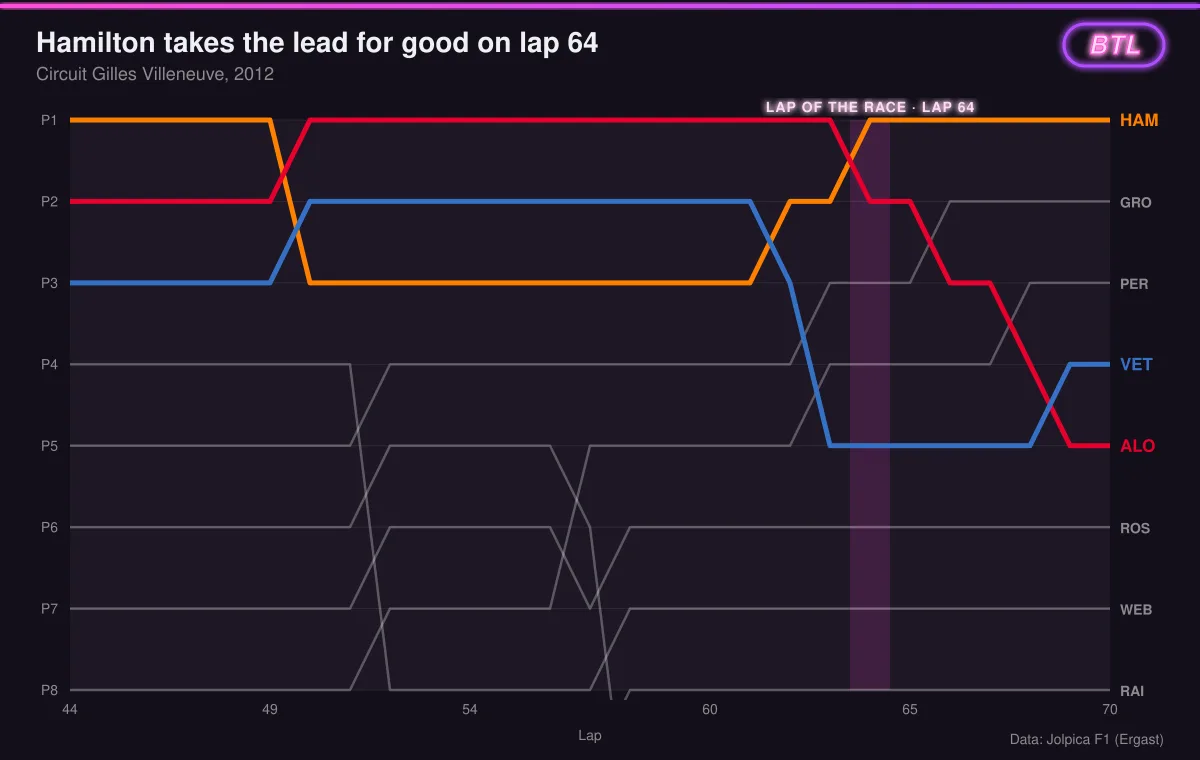
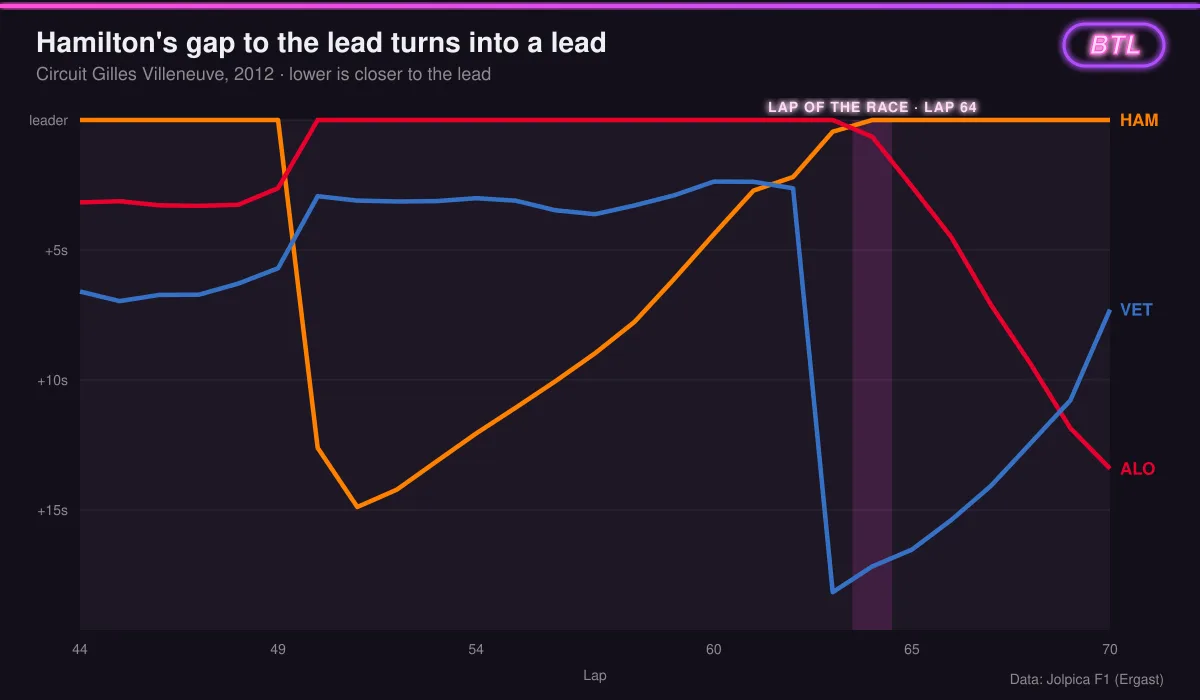
Hamilton had led early, lost the lead when Alonso's quicker stop put the Ferrari ahead, and taken it back when the yet-to-stop Grosjean pitted. Alonso had closed Hamilton's four-second lead to just over two seconds, and Hamilton decided to make a second stop for new tyres. Alonso and Vettel both realized they did not have enough of a gap to make another stop and rejoin ahead of Hamilton, so they stayed out. Their only play was to stay out, hold the road, and hope the gap lasted. It didn't. "Hamilton on his newer tyres was rapidly gaining on Alonso and Vettel at the front at over a second a lap," the race record says, and then the leaders' rubber gave up completely: their lap times fell by three seconds a lap. He took Vettel on lap 62. Lap 64 is the one I'll box: Hamilton passed Alonso to take the lead, and the lead changed for the last time with six laps left.
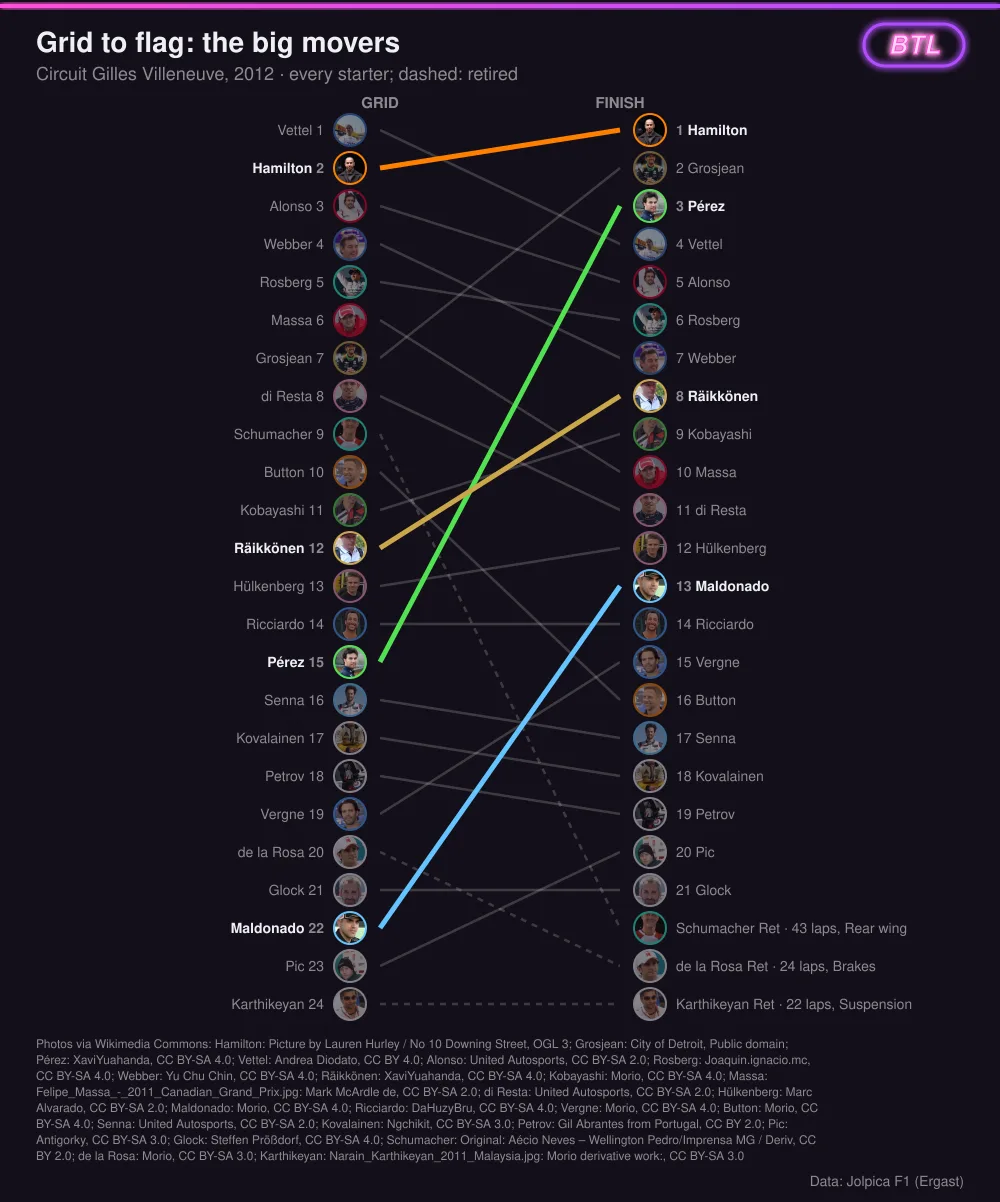
Vettel had already blinked, stopping for new tyres on lap 64 and rejoining fifth; he recovered to fourth, two seconds behind Pérez. Grosjean and Pérez took their second career podiums. The full result is here web.archive.org, and the Guardian's report of the day is here theguardian.com.
What I like about it is how little it depended on a daring pass. Hamilton's winning move was a pit entry, made by a team that could see the numbers: fresh tyres worth more than a second a lap against rivals who could not afford to answer. Alonso's gamble only pays if the tyres hold to the flag, and they did not. The record leaves one question open: whether the leaders' collapse came mostly from the compound or from the setup they chose for it. Either way, the lap chart says the same thing. The winner was the car that stopped.
I draw these myself from the timing data and race reports. If a car, a corner or a face is in the wrong place, say so in the replies.