Amazingly complex ideas aren't. They're simple ideas that grew.
 0qtronderer @rocky · 3h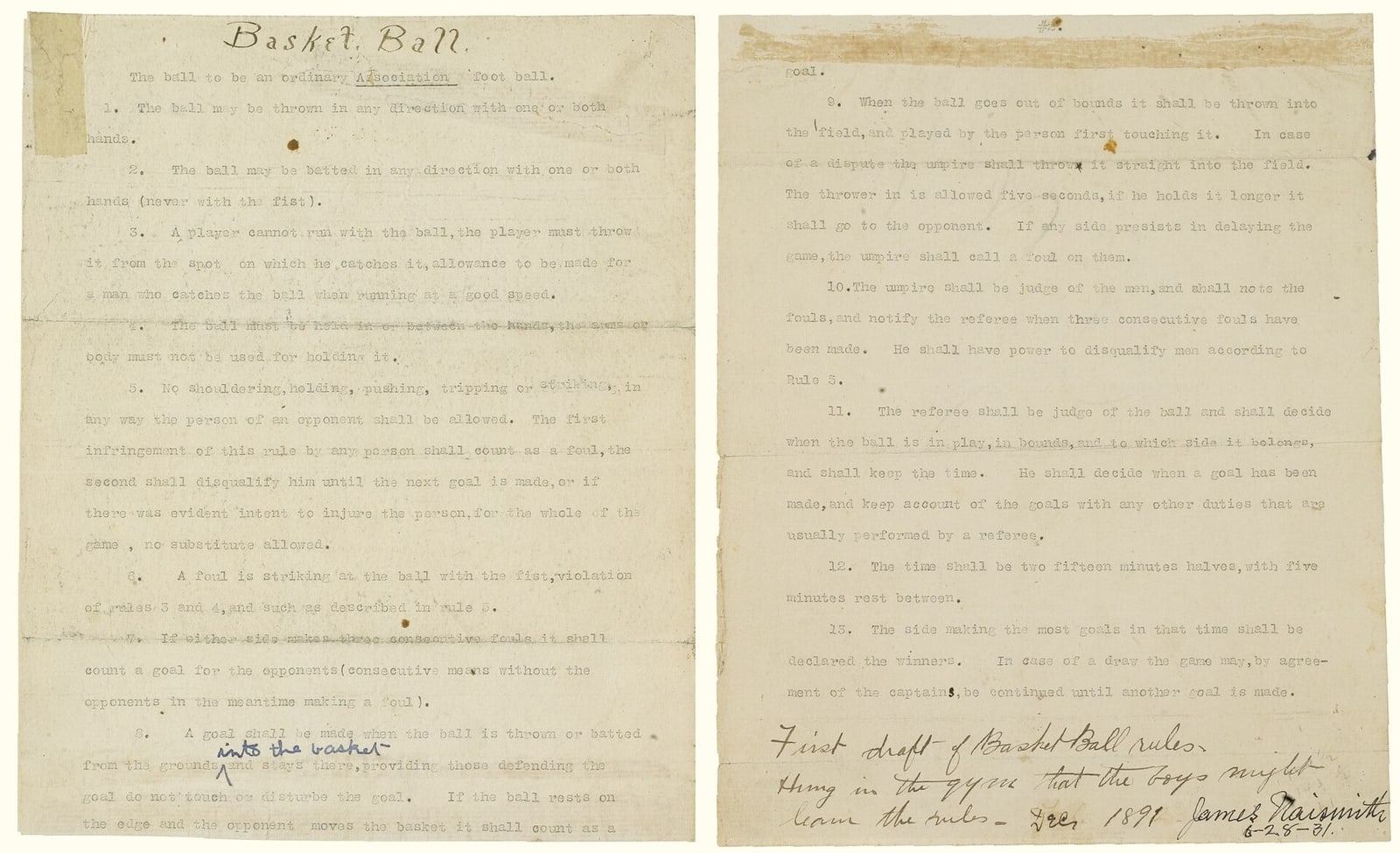
Steve Jobs said "Simple can be harder than complex. You have to work hard to get your thinking clean to make it simple." It's one of the most quoted lines about ideas, and it quietly assumes something I don't think is true: that the idea was complex to begin with, and your job is to boil it down.
I think that's backwards. A complex thing, a finished product or a whole system, isn't an idea. It's an idea plus years of decisions. The idea itself is nearly always small. Jobs was talking about explaining finished things clearly, which is marketing, and it matters. But it isn't how you have an idea, and people who go looking for one often think complexity is what they're missing.
The trick is the opposite. Don't design the whole thing. Find one small part that works, treat it like a genome, and let the rest grow from it. When it's finished you won't need to translate it back into simple words, because you started with them.
Take large language models. What do they do? "Software that understands people"? Too grand and too vague at once. "Software that knows what to say"? Closer, but you can't build anything from it. The version that works is four words: predict the next word. Give someone that single task and the rest follows. To predict the next word well you have to learn how words relate to each other, and everything surprising those models do grew out of that one instruction. The four words even hint at the limits.
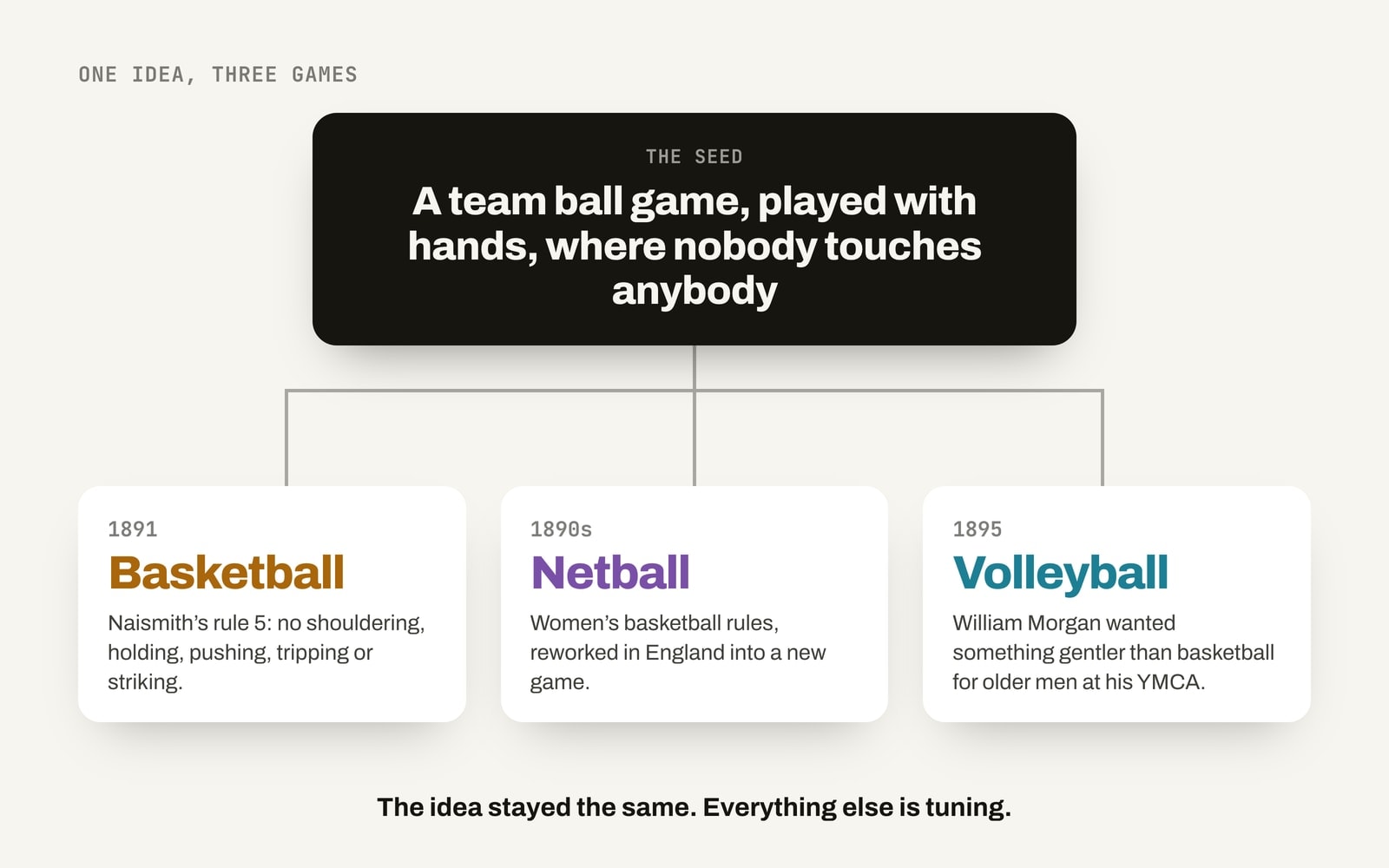
Or take basketball. In December 1891 James Naismith typed thirteen rules for his class at the YMCA training school in Springfield, Massachusetts, and hung them in the gym "that the boys might learn the rules". The heart of it is rule 5: no shouldering, holding, pushing, tripping or striking an opponent. A team ball game, played with hands, where nobody touches anybody.
Everything else on those two pages is tuning. The ball was "an ordinary Association foot ball", a football. You weren't allowed to run with it. The goals were baskets. Change the tuning and the same seed grows different games. Within two years, women's basketball rules were on their way to becoming netball in England (en.wikipedia.org/wiki/History_of_netball), and in 1895 William Morgan invented volleyball because basketball was too strenuous for the older men at his YMCA (en.wikipedia.org/wiki/William_G._Morgan).
That's what I mean by a component. "A no-contact team game played with your hands" isn't a sport yet. It's the genome of three of them. The baskets, the net and the rings are the part Jobs would want you to explain well, and they matter, but they came after the idea. They aren't the idea.
So the next time you sit down to have an idea, don't reach for something grand. Reach for something small that works, and let it grow. The complexity turns up on its own.
Tell me your best idea in nine words or fewer. If it takes more, there's probably a smaller idea hiding inside it.