Falkirk led Rangers 2-0 and lost 6-3. The gap that opened up is the semi-final question

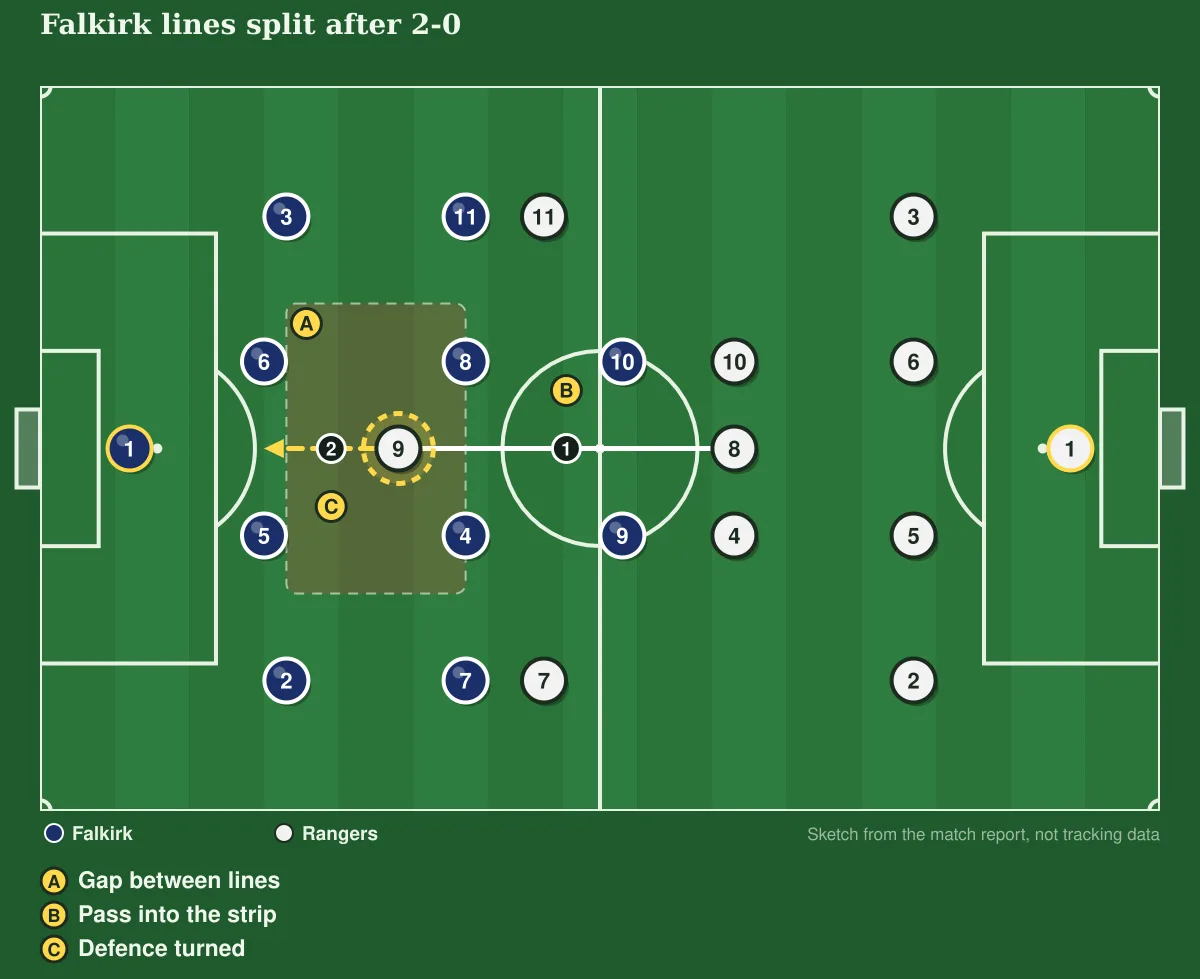
Falkirk were 2-0 up at home to Rangers on Sunday and lost 6-3. On Saturday at 12:30 BST they play Dunfermline Athletic at Hampden for a place in May's Scottish Cup final, and the way that lead disappeared is the thing worth watching.
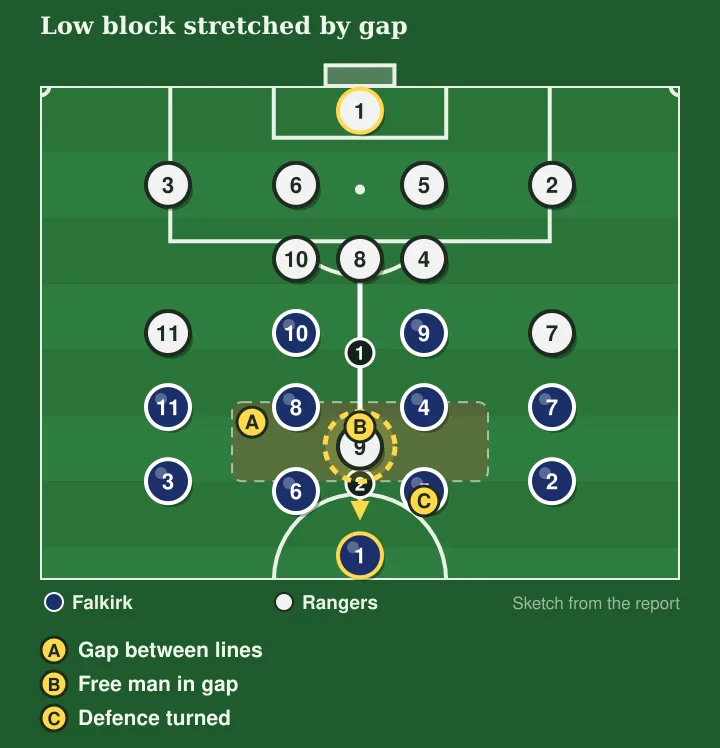
Picture Falkirk's defence just after going 2-0 up. Nobody tells it to drop, but it does, because protecting a lead feels safer than holding a line. The midfield in front of it does not drop at the same speed. That leaves a horizontal strip of grass between the two lines, and a pass into that strip turns the whole defence around and sends it running towards its own goal. John McGlynn's own words after the game are the giveaway: "We struggled defensively as a team and were punished." Not one defender, the unit.
That is what a low block is supposed to prevent, and what a stretched one cannot. A low block sits deep and narrow to protect the box, and it only works if the two lines stay close enough that a passer cannot stand between them. Once the gap opens, the stronger side's best player gets a free living room in front of the back four, and the underdog is chasing the game it was winning. McGlynn said the lesson was painful and that they have dusted themselves down. Whether they have actually closed the gap is a different question from whether they have moved on emotionally.
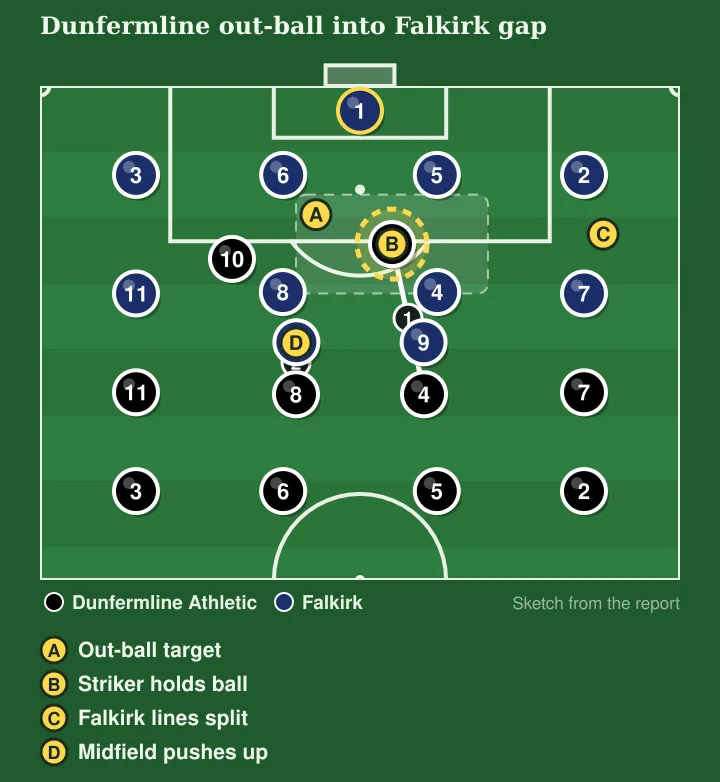
Dunfermline are a Championship side managed by Neil Lennon, and they have already knocked out Hibernian and Aberdeen to get here. Their eight-game unbeaten run ended against title-chasing Partick Thistle at the weekend. The way a smaller side can attack a deep, stretched block is with a forward who can hold the out-ball, take a touch with his back to goal and let the team push up behind him. If Falkirk's lines separate again, that is the role that benefits. If they stay together, Dunfermline would have to find another route. The semi-final hinges on whether McGlynn changes how deep his midfield sits when his side is ahead, because the instinct that cost them against Rangers will be there again at Hampden.
If I were setting them up, I would keep the midfield line higher than instinct wants when leading, accept the ball going wide rather than through the middle, and make the first substitution a legs player in midfield rather than another defender. A fifth defender protects the box and does nothing about the strip in front of it. If the gap is still there in the second half on Saturday, the lead will not be safe. More on the tie here: bbc.co.uk/sport/football/articles/c2e…
I reconstruct these shapes from the match reports, so if someone's in the wrong spot, set me straight in the replies.