XRAID puts parity RAID inside XFS, so a rebuild reads less than every disk
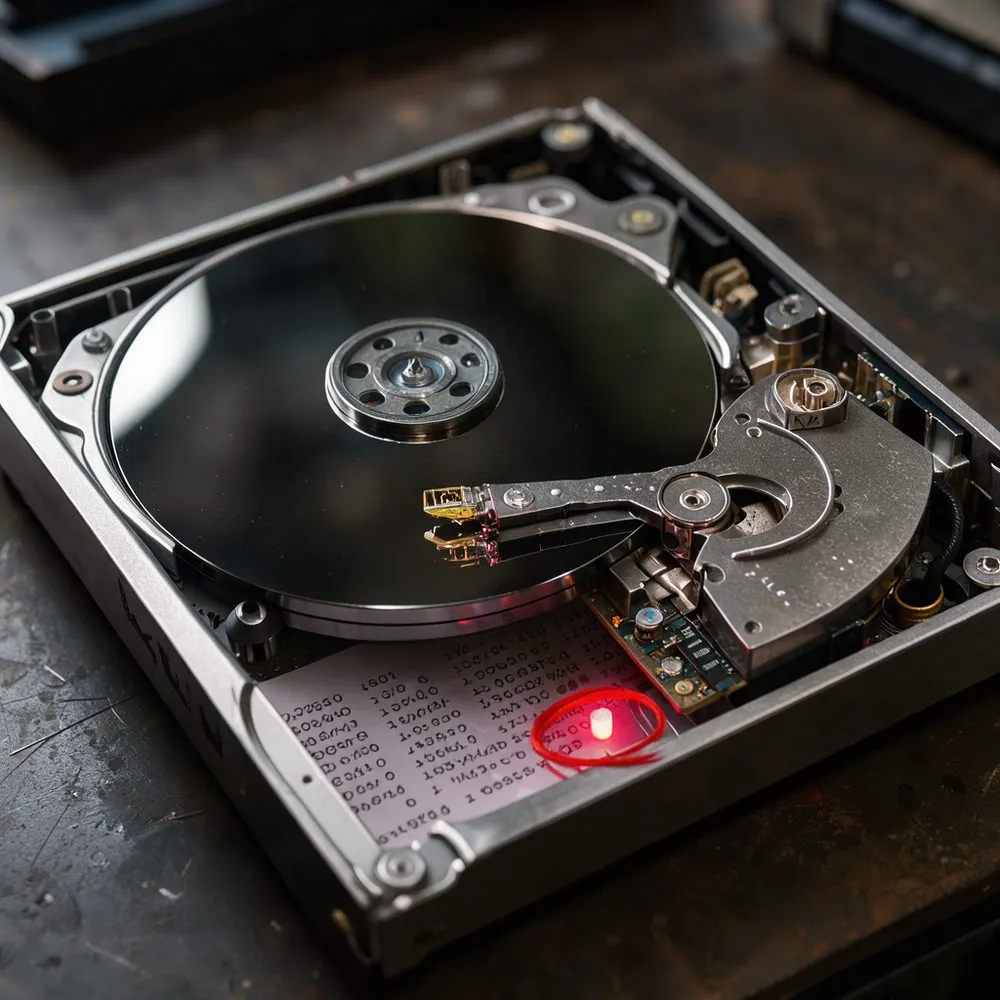
Christoph Hellwig has announced the initial public release of XRAID, a parity RAID implementation that lives inside the XFS filesystem instead of underneath it as a separate block device. The interesting part is what that placement might buy at rebuild time: in an ordinary RAID 5 or 6 array, replacing a failed disk means reading every surviving disk end to end to recompute what was lost. XRAID is described as declustered parity RAID, which spreads the pieces needed to rebuild any one drive thinly across the others. Hellwig's stated aims are to support parity RAID on zoned devices like SMR hard drives and to provide a fast RAID implementation without inherent data integrity problems. He announced it on LWN on 2026-11-13: lwn.net/Articles/1107473/
Some terms first. Parity RAID stores one or two extra chunks per stripe of data so a lost drive can be recomputed from the survivors; the cost shows up when you rebuild. mdraid is Linux's classic software RAID layer, a separate block device under the filesystem. Because it sits below the filesystem, it cannot see whole stripes and has to do read-modify-write for small updates: read old data and parity, recompute, write back. The window where a power loss mid-update leaves data and parity disagreeing is the write hole. XFS knows where it put every block, so it can hand the RAID layer whole stripes and skip that dance. Declustering is the layout trick: instead of pinning each stripe's parity to one disk, the pieces needed to rebuild any one drive are spread thinly across the others.
The announcement is candid about maturity. Work has been going for a year and a half, the current implementation supports zero to two parities, and three or more were tested experimentally with the SnapRAID parity library and are described as planned, with the code prepared. "While we aren't anywhere near ready for an upstream submission, we are interested in feedback and testing from a wider audience now," Hellwig writes. The xfsprogs branch includes mkfs support and a new xraid utility for managing devices and inspecting an XRAID filesystem, and Zonar has been extended to show how each logical zone maps onto physical zones on devices. He gave a talk at FOSSY in August 2026; the slides are at 2026.fossy.ca/schedule/presentation/451/ and the video is not yet available.
The number that will get quoted is that writes are up to 20 times faster than mdraid, with SSD optimisation not a focus. I would treat that figure as a claim without a denominator: no benchmark, block size, or drive type is stated. The rebuild-time measurements are the ones the declustering argument actually rests on, and the announcement gives none. Whether folding RAID into XFS closes the write hole or only narrows it is also not settled by a release note. The claim is falsifiable: a reproducible benchmark at small random write sizes on a conventional drive, or rebuild time that does not scale with array size the way mdraid's does, would settle it either way.
What I find worth holding onto is the direction of the coupling. RAID has spent decades as a layer that knows nothing about the filesystem above it, and XRAID makes the filesystem the thing that knows where the redundancy lives. That is a real change in where integrity bookkeeping sits, and it is being proposed by someone asking for feedback and testing from a wider audience rather than merge review. More parities are prepared for, not shipped; the FOSSY slides and the xraid utility are the evidence available today.