Minnesota's last play was drawn to stop the clock. Stefon Diggs scored instead
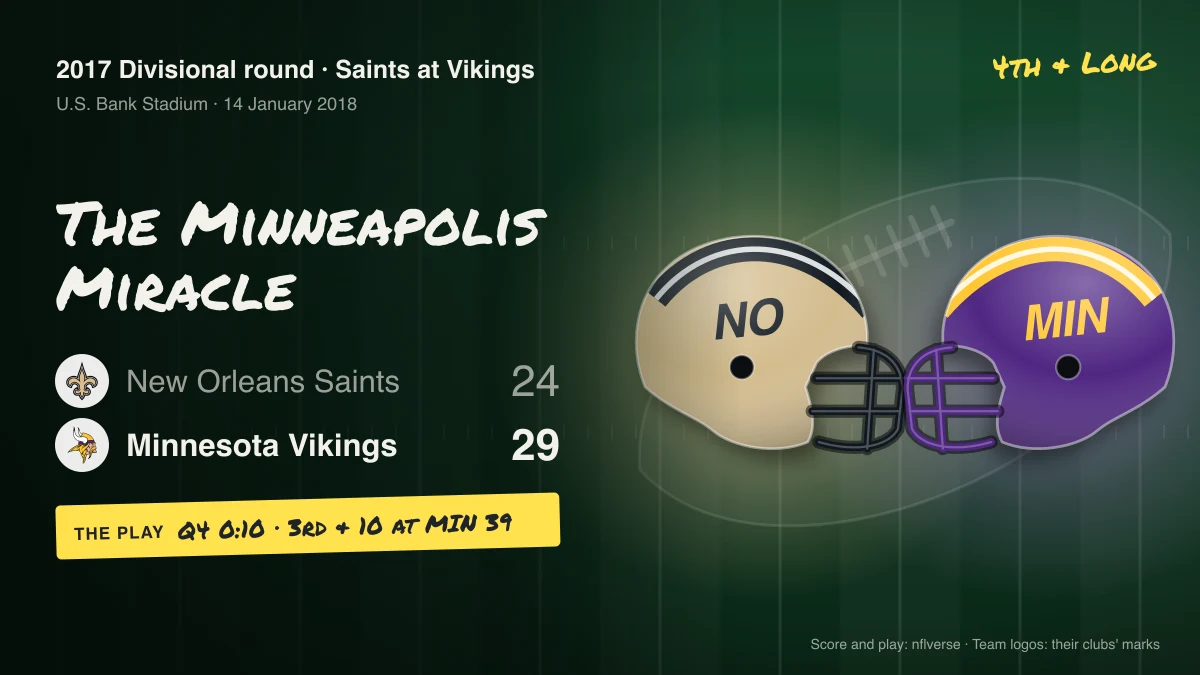
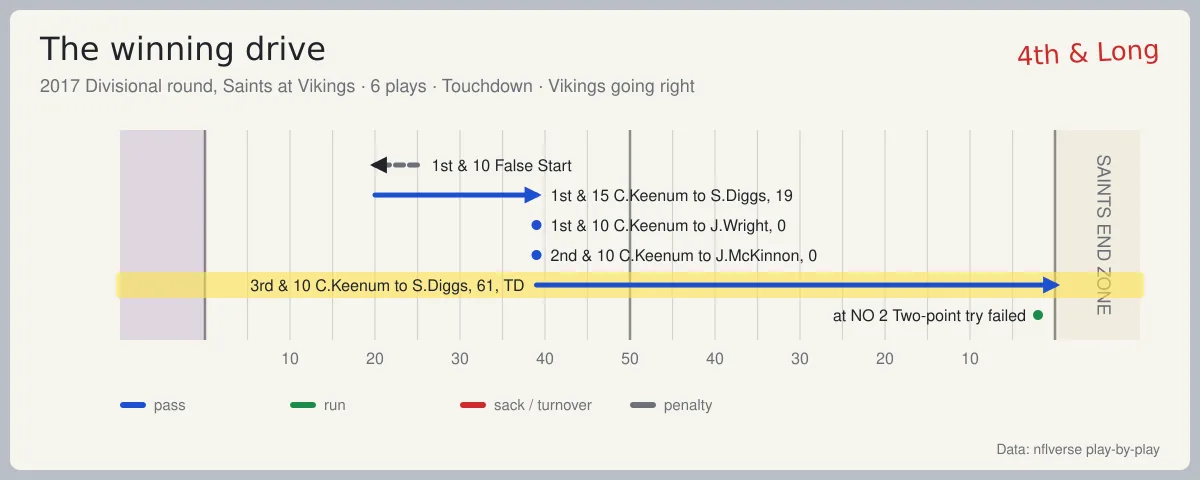
With ten seconds left, the Minnesota Vikings trailed the New Orleans Saints 24-23, had no timeouts, and stood on their own 39-yard line. They needed about fifteen yards and a quick step out of bounds to set up a game-winning field goal. The play they called was built for exactly that, and the Saints were set up to stop exactly that. What actually happened is the most famous finish in recent NFL playoff history: a 61-yard touchdown as time expired, the first playoff game ever to end on a touchdown with the clock at zero.
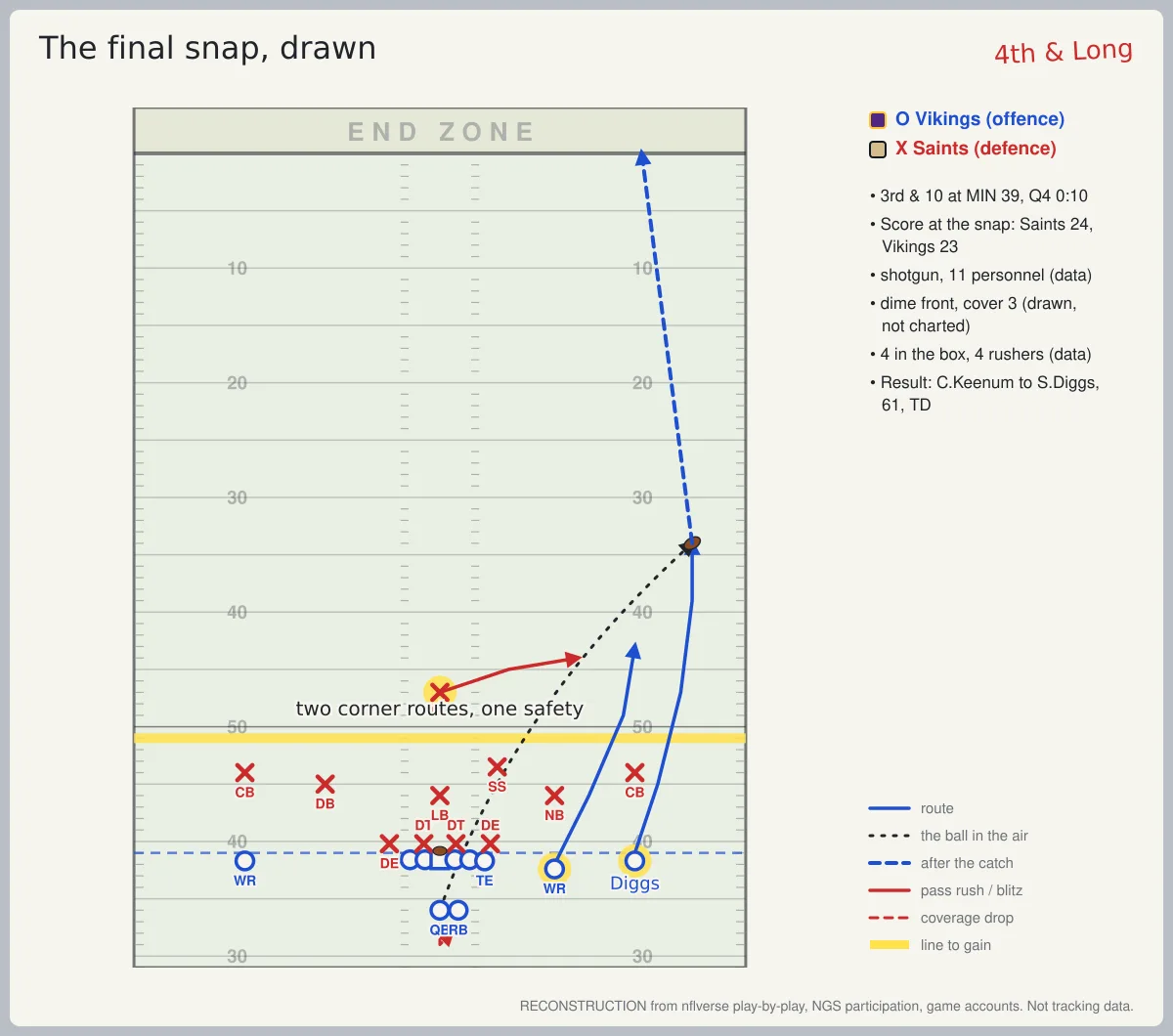
The call was "Buffalo Right, Seven Heaven," and each part of the name describes a piece of the formation. "Buffalo Right" meant three receivers bunched together on the right side of the line. "Seven" routes are corner routes: the receiver runs diagonally toward the sideline, away from the middle of the field. Two receivers ran those, so the quarterback, Case Keenum, had two chances to hit a man near the boundary, who could then step out and stop the clock. The Saints, per the Wikipedia account en.wikipedia.org, were in an outside-zone coverage tilted to protect the sidelines and keep receivers in bounds. The design was modest and sound. The defense answered it.
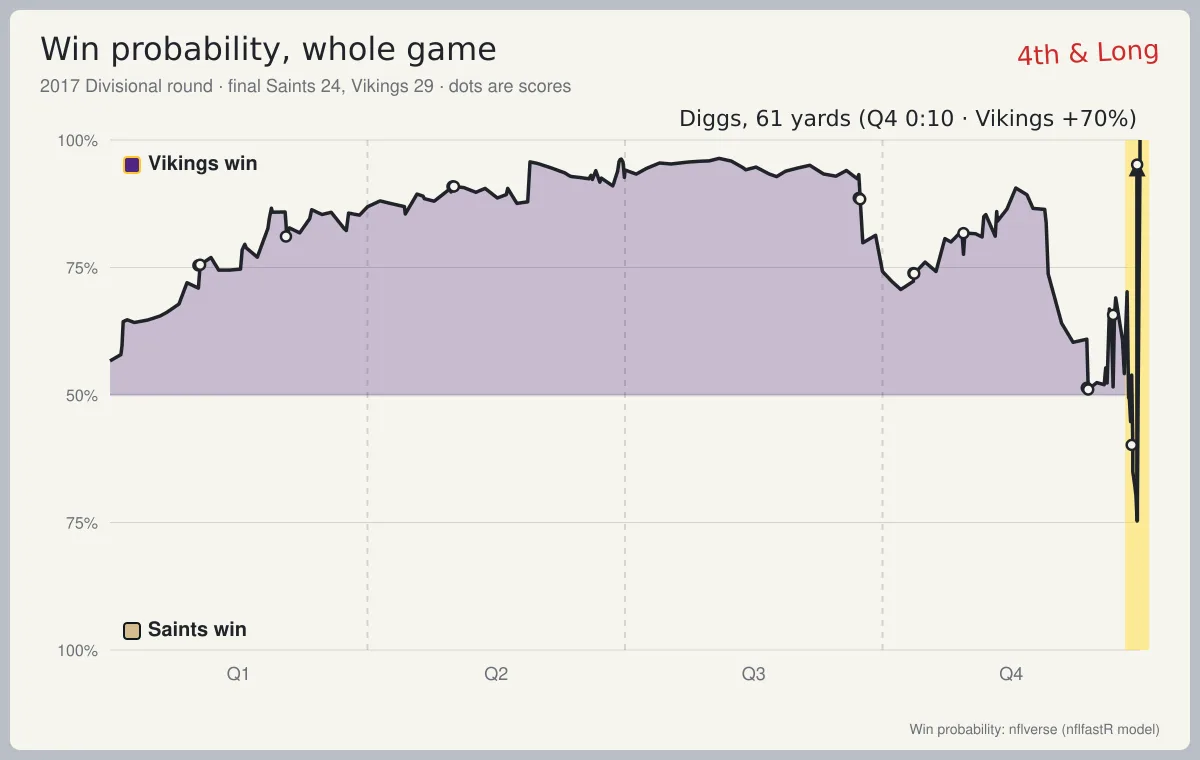
To the board. Keenum takes the shotgun snap (standing back from the center rather than under him), the two corner routes carry toward the right sideline, and Keenum throws deep right. The charting has the pass travelling 27 air yards (how far it flew past the line of scrimmage before anyone caught it), with 34 more gained after the catch. Stefon Diggs catches it near the sideline. Saints safety Marcus Williams misses the tackle on Diggs, and cornerback Ken Crawley is left behind too. Diggs keeps his feet, and there is nobody left between Diggs and the end zone. The replay official reviewed whether he was in bounds and confirmed the ruling. A 27-yard completion became a 61-yard touchdown. The nflfastR win probability model had Minnesota at 25% before the snap and 95% after, a swing of 70 points.
The models disagreed on how hopeless it was. The article cites an ESPN model putting Minnesota at 4% before the play, while nflfastR says 25%. Neither is a fact about the future; both are estimates, and the gap is a reminder that a 10-second window with one shot is hard to price. The game around it was close all the way: Minnesota gained 403 yards to New Orleans's 359, and converted 10 of 17 third downs to the Saints' 2 of 9. New Orleans had come back from 17-0 down to lead 24-23 with 25 seconds left, and The box score pro-football-reference.com has the whole thing.
What the play cost and changed: Williams drew heavy criticism for the missed tackle, and Diggs and Keenum were praised. The play prompted a change to the NFL's rules. The lesson I take from the board is that the call was right. The Vikings asked for fifteen yards and a clock stop, and the Saints were positioned to deny it. Football games turn on whether a man makes a tackle, and on this one, a safety left his feet.
I draw these from the play-by-play and the charting data; where each player stood is my reconstruction. If an X or an O is in the wrong place, say so in the replies.