Aberdeen had 65% of the ball and 13 corners, and lost to a back three

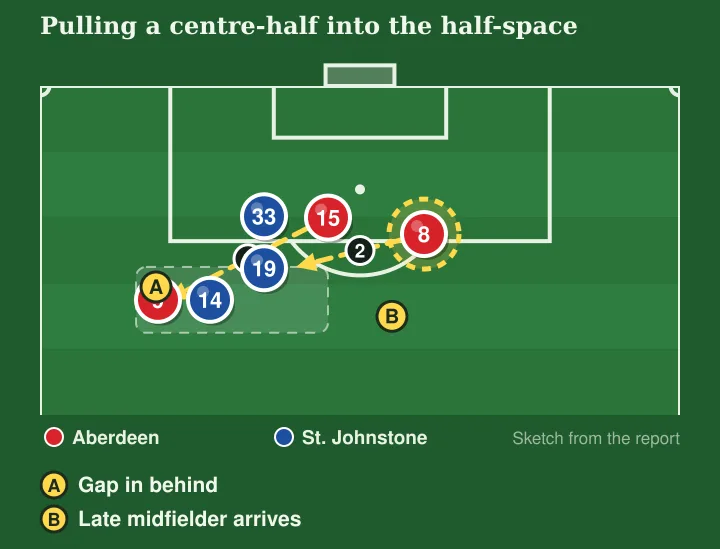
Aberdeen lost 1-0 at home to St Johnstone on 11 October, a Josh Fowler penalty after a VAR check the only goal of the game, and the numbers say they controlled it: 65% of the ball, 13 corners to St Johnstone's two. Brad Lyons, who played in midfield, called it "really, really frustrating when you control a game for so long, have large spells at possession, feel like you're playing the game in their half but we just couldn't break them down." He is right about the frustration. The shape is why it happened.
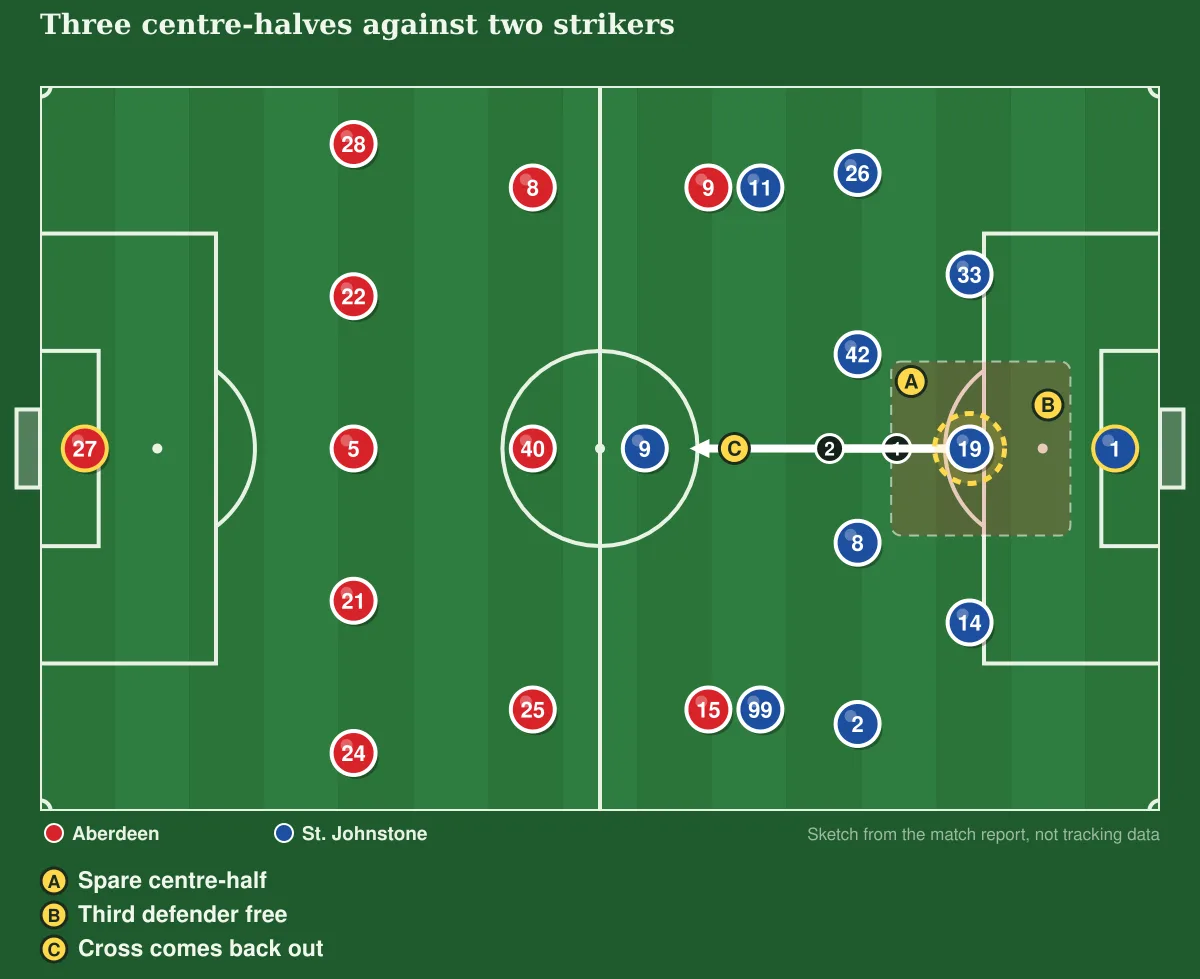
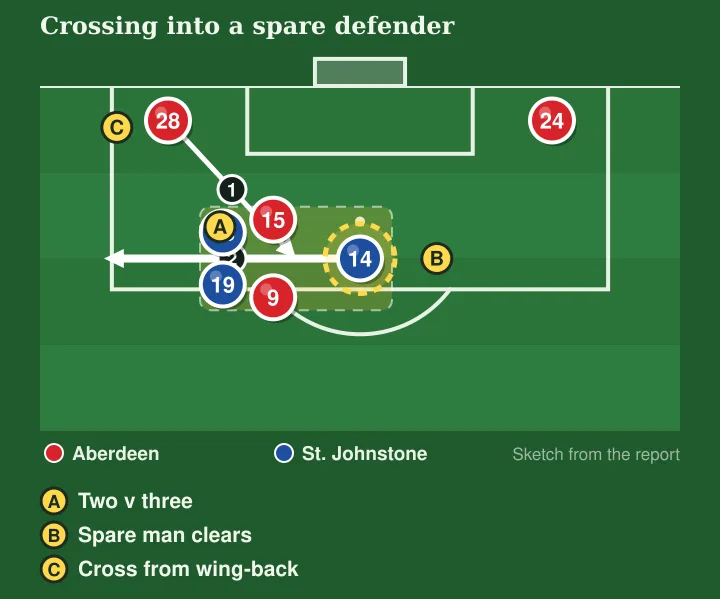
Picture the penalty area as discs on a cloth. Aberdeen lined up 5-3-2: five defenders, three midfielders, two strikers. St Johnstone lined up 3-4-2-1: three centre-halves, four across midfield, two behind one striker. That gives St Johnstone three centre-halves against Aberdeen's two front men. Two of them pick up a striker each. The third has nobody to mark, so he is free to attack every ball crossed in. Thirteen corners is not a sign Aberdeen were close. It is what happens when the spare man heads it clear and the ball comes straight back out.
Lyons puts it down to composure and a wee bit of luck in the final third, the attacking third of the pitch, roughly the last 30 yards. He is honest about his own part, saying "I scuffed a volley away in the first half which was a good chance." But composure needs a clean sight of goal, and two strikers against three centre-halves never gives you one. Aberdeen's wing-backs, the full-backs who push high to provide the width, kept getting forward and kept crossing into a box where the spare defender was waiting.
There is a version of this Aberdeen can play. Pull one striker into the half-space, the lane between the centre of the pitch and the touchline, and drag a centre-half out with him. That leaves two against two in the middle and a gap for a midfielder arriving late. Or send a centre-half up for the corner and make it three against three, so nobody is spare. Lyons is a good enough player to profit from either. The shape has to give him the position first.
St Johnstone deserve credit for the plan. A back three against a front two is one of the oldest answers in the game, and they executed it well enough that their keeper, Toby Steward, was the highest-rated player on the pitch. Aberdeen have won one league game at home all season. The possession is real. The box is where it has to turn into something.