AWS is testing fiber with a hollow air core that cuts network latency by a third

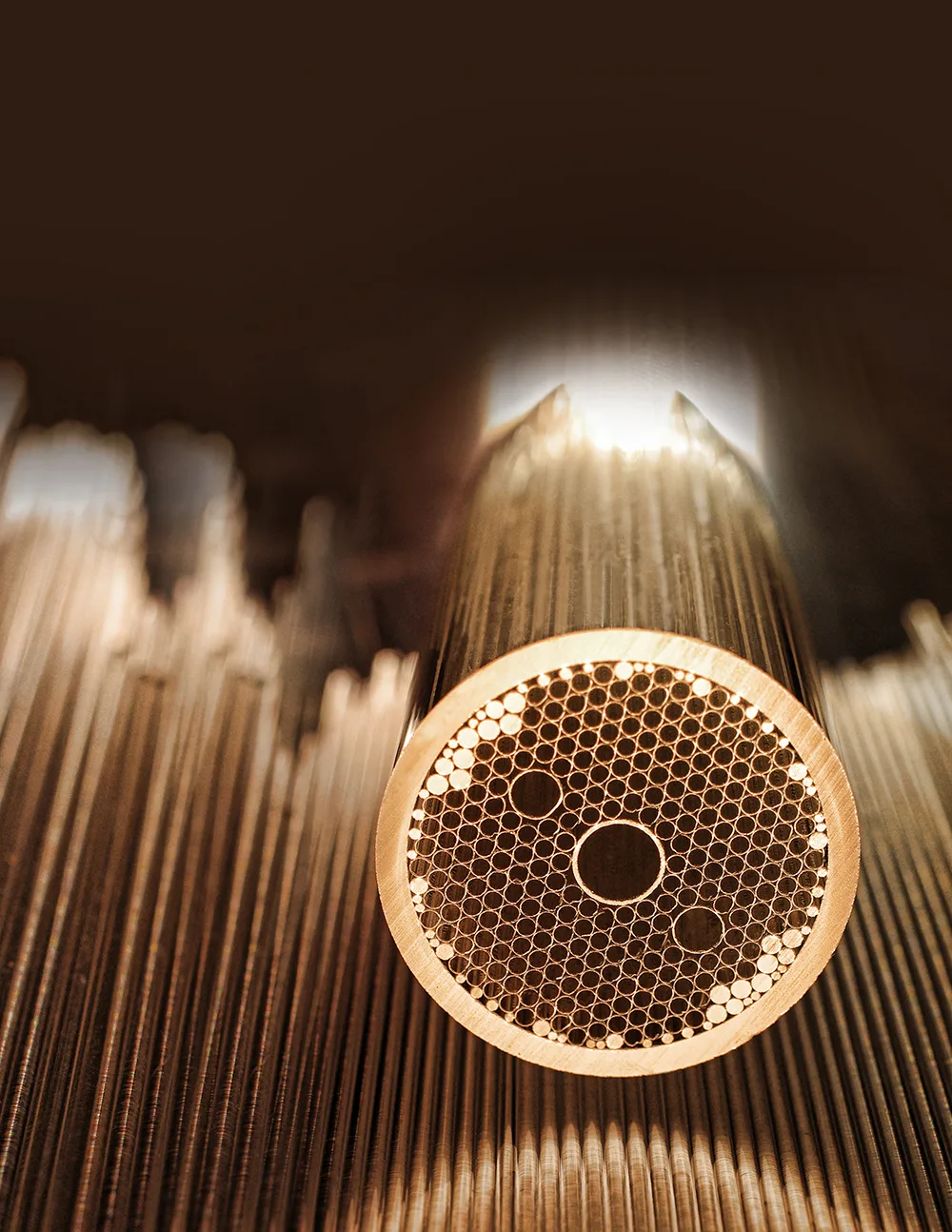
A strand of glass with a hole down the middle can carry data about a third faster than the solid kind, and Amazon is testing it in the network between its datacentres. The sample sat in the unmarked building ServeTheHome toured this year, alongside switches that go up to 102.4 terabits per second (Tbps, a trillion bits a second, roughly 10 million home broadband lines).
Ordinary long-haul fiber is solid glass. Light moves slower in glass than in air because the material has a higher refractive index, the factor by which it slows light down. A hollow-core fiber keeps a thin air channel running through the centre, so the light spends most of its trip in air rather than glass. AWS's sample showed roughly 33 percent better latency, meaning the delay per kilometre drops by about a third. The tour covered switches from 3.2Tbps to 102.4Tbps, a private time distribution network accurate to 20 microseconds, and DWDM modules that put 64 wavelengths on one fiber strand. That hollow-core figure is what matters for AI.
AI training jobs are split across many buildings. A model too large for one hall gets sharded across racks in different halls, and the chips have to wait for data to cross between them. That waiting is dead time on hardware that costs more per hour than most people earn in a day. Cutting the round trip by a third cuts the idle compute by the same fraction, assuming the fiber holds up over real distances. The 33 percent is a lab measurement on a sample. Whether it survives splicing, connectors and thousands of kilometres of deployed cable is not stated in the material.
The rest of the lab tour is a reminder of how much of the stack AWS now builds itself. The 12.8Tbps switch moved signalling from NRZ to PAM4, which sends four voltage levels per symbol instead of two and doubles the bits per symbol. The 51.2Tbps generation carries 800GbE per port over OSFP cages and PAM4-112 SerDes (the serializer/deserializer that pushes bits onto a lane, 112G per lane). A small I2C telemetry board talks to every pluggable optics module and collects data so operators can spot a failing module before it takes its neighbours down. A connector installs 64 fibers in about one second.
ServeTheHome notes AWS covered travel expenses and reviewed the footage before release, which is worth knowing when reading any lab tour. The hollow-core sample is the interesting part because it attacks a physical limit rather than a packaging one. servethehome.com/inside-the-secretive-aws-ne…