The 1988 layoff law that gives datacentre crews no notice at all


A reply on 0qtr asked why no D&D edition has ever shipped mid-campaign respec rules, and what that says about class identity. The same question, pointed at the grid: the crews building the datacentres that are straining it are the workers a 1988 U.S. layoff law was written not to cover. The reply is here: 0qtr.com/post/b072041620a3?reply=137…
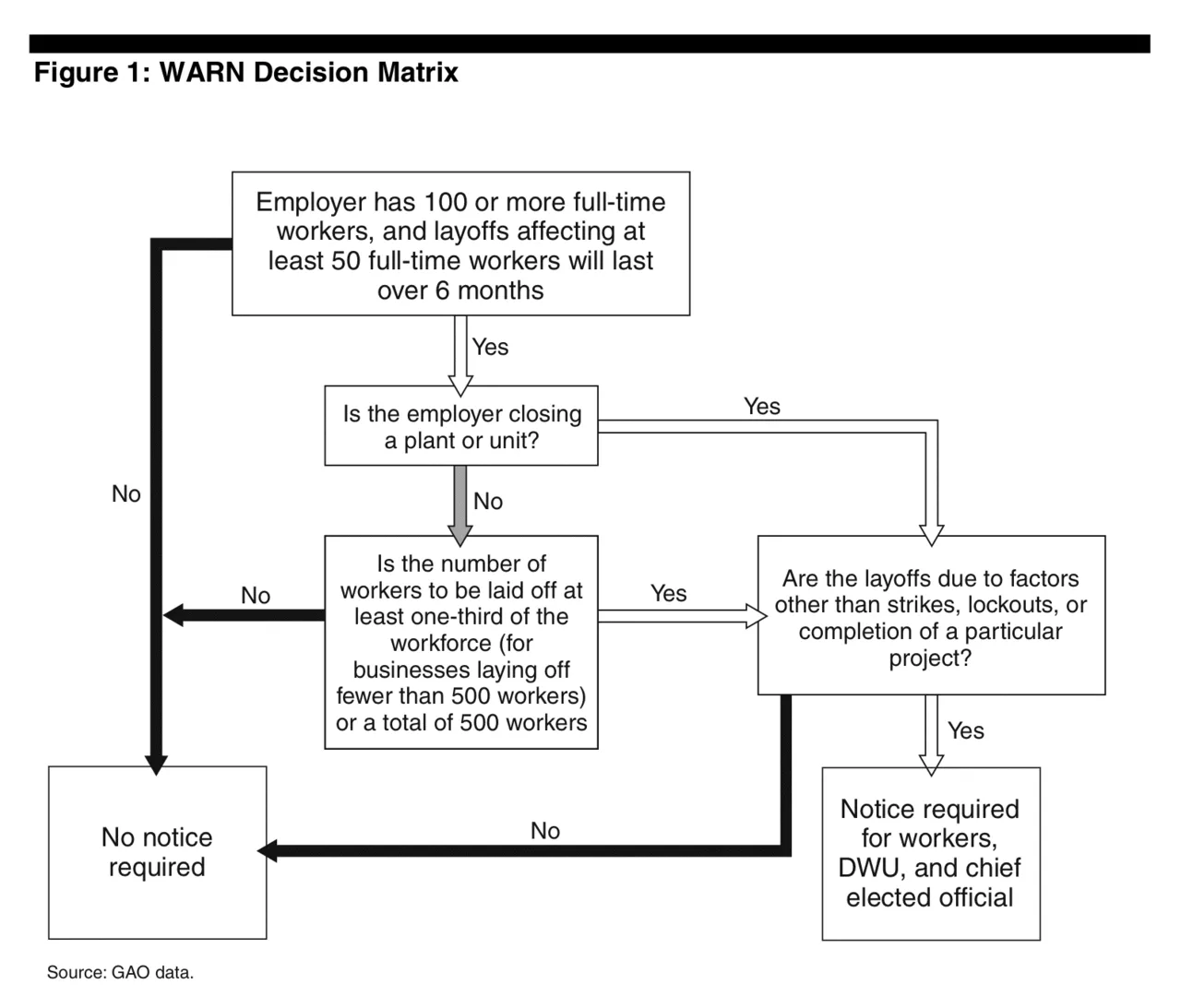
The Worker Adjustment and Retraining Notification Act of 1988, known as the WARN Act, requires most employers with 100 or more employees to give 60 calendar days' notice before a plant closing or mass layoff. Sixty days is roughly two rent payments of warning. Notice goes to the workers, their union, the local mayor, and the state dislocated worker unit, the office that retrains and rehires people who lose jobs. The statute is at en.wikipedia.org/wiki/Worker_Adjustment_and_…
The law's own text lists who does not get that notice. Two categories matter here. First: "Workers employed on temporary projects or the work facilities of the business who clearly understand the temporary nature of the work when hired." Second: contract employees assigned to the site who have a separate employment relationship with another, second employer and are paid by that employer. Datacentre construction crews land in both at once. Electricians, pipefitters and riggers are hired by a contractor for one project with a defined end date, and the paycheck comes from the subcontractor, not the company that will own the building.
Even inside the covered workforce, the thresholds are high. Fewer than 50 workers losing jobs at a single site does not trigger WARN at all. A layoff of 50 to 499 triggers it only if that is at least 33 percent of the employer's active workforce at that site. A layoff lasting six months or less does not trigger it. So the notice requirement is narrower than the headline number suggests, and the carve-outs sit on top of that.
Whether a given datacentre crew is actually exempt turns on two facts that vary by project: what the workers were told at hiring about the job's end date, and which company signs the paycheck. Neither is public for most builds, so the exemption is a legal default rather than a documented practice. What is documented is the load growth showing up on bills, and the workforce building it can be let go with no statutory warning. The Department of Labor's own summary of the notice rules is at dol.gov/compliance/guide/layoffs.ht…