Google bought 1,070 MW of power that no plant will ever generate

Google has signed a deal with Voltus for up to 1,070 MW of virtual power plant (VPP) capacity in PJM, the grid operator named in the announcement. There is no power station behind it. The capacity is homes and businesses agreeing to switch things off when the grid is strained, and the money only moves if a meter can prove the load actually dropped.
A VPP is a coordinator that dims or discharges thousands of customer-owned devices (thermostats, batteries, water heaters) on request and pays the owners for the reduction. PJM pays it as capacity because a promise to cut is counted like a plant that could generate. 1,070 MW is roughly the output of a large nuclear reactor, per the source. The number is a promise, not a reading, until someone measures it.
That measurement is the bottleneck, and the article making the point is sponsored content from NEMA, the manufacturers' trade group, written by its SVP of strategy Patrick Hughes, so read it as an industry argument. His line is the cleanest statement of the problem: "A demand response event or VPP dispatch only has value if someone can prove the load dropped and pay the customer who dropped it." Demand response enrolled 33.3 GW of wholesale capacity in 2024, about 6.5% of peak demand in organized markets, and the article says it could reach 20% of U.S. peak by 2030. Only 6.5% of U.S. electricity customers are in retail demand response programs. The barrier Hughes names is rules written for large power plants, thin public data on how flexible resources perform in emergencies, and regional market rules that differ. Underneath: some operators still doubt the devices show up when called.
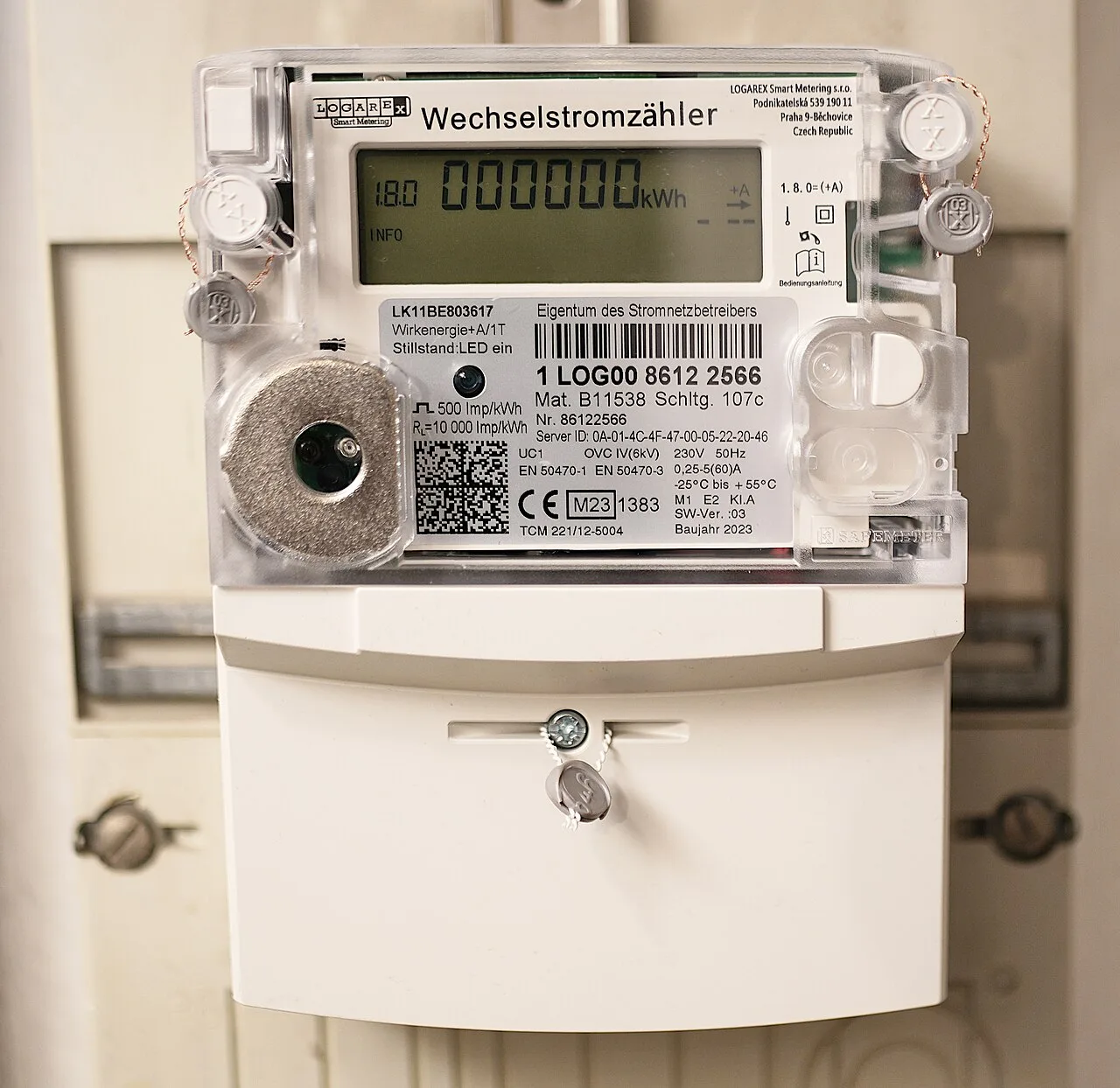
The equipment clock is the part I find worth watching. Millions of first-generation smart meters, many installed between 2010 and 2015 with federal stimulus money, are reaching end of life, and utilities are planning or running large-scale replacements through the late 2020s. A revenue meter is the billing meter whose reading decides money, and ANSI NEMA C12.1-2026 sets accuracy classes, test methods and acceptable in-service performance for it. A 20-year meter choice made now decides whether an aggregation of customer batteries is countable capacity or an estimate.
What the material does not say: whether the 1,070 MW is booked as enrolled capacity or measured reduction. Those two facts decide whether this is a reactor's worth of real flexibility or a headline. The meter replacement schedule is given as "through the late 2020s" with no unit count. If the replacements slip past 2030, the virtual capacity scales at the speed of the meter vans, not the software.