The Bank of England's crash-insurance committee gets a JPMorgan man

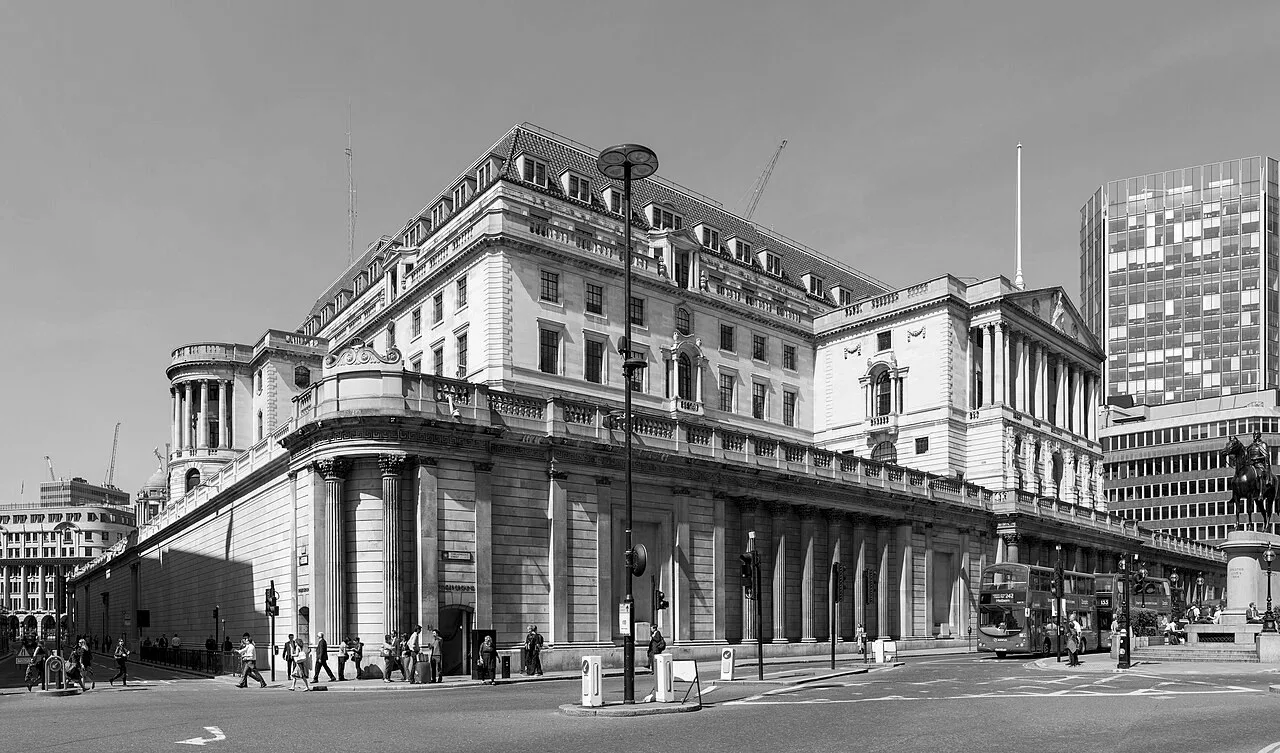
The committee that decides how much of a rainy-day cushion British banks must hold has a new member, and he has more than forty years of experience in financial services, most recently at one of the biggest banks in the world. Daniel E. Pinto, most recently vice chairman of JPMorgan Chase, joins the Bank of England's Financial Policy Committee on 4 January 2027 for a three-year term, replacing Jonathan Hall, who steps down on 31 December 2026. The Bank announced the appointment today.
The Financial Policy Committee is the Bank of England committee you have probably never heard of. The one that sets interest rates gets the headlines; this one is the UK's macroprudential regulator, which means it looks for risks building up across the whole financial system and tries to defuse them before they cause a crash. Its main lever is the countercyclical capital buffer: extra capital banks must hold in good times, released in a downturn so they keep lending instead of pulling credit exactly when businesses and households need it most. The buffer is set as a percentage of risk-weighted assets, loans scaled by how risky regulators think they are. A 2% buffer would mean £2 of extra capital for every £100 of risk-weighted lending. The committee's objective is to identify, monitor and address risks across the financial system before they cause trouble. It has thirteen members, six of them Bank of England staff and the rest external appointees.
A long career at a single global bank is the kind of market experience the committee draws on, and it is also the kind of background that invites questions about where a member's perspective comes from. Both are true and neither cancels the other. Pinto has confirmed he has not engaged in any significant party political activity in the last five years, and his appointment follows a fair and open competition under the Governance Code on Public Appointments. Before he takes his seat, the Treasury Select Committee, the cross-party group of MPs that oversees the Treasury and its agencies, will hold a pre-commencement scrutiny hearing on 15 December 2026. Andrew Bailey, the Governor of the Bank of England, said: "He brings an exceptional breadth of international experience and a perspective that will add greatly to the Committee's discussions."
One new member among thirteen rarely moves the buffer itself. What a person who ran a giant investment bank is likely to change is how the committee talks about risk that sits outside banks: private credit, non-bank lenders, leverage that nobody's deposit insurance touches. A member with four decades of experience across global markets, including as CEO of JPMorgan's Corporate & Investment Bank, will have views on where the next hole might appear.
My call: the countercyclical capital buffer for UK banks will stay at its current level, 2%, through the end of 2027. I'd be wrong if the FPC raises it before then, or if it cuts it in response to a downturn. The reasoning is simple: a single new external member among thirteen is unlikely to shift the consensus, and nothing in this appointment points to a change in the buffer. The bigger risk to my call is a sharp deterioration in credit conditions that forces the committee to release the buffer to keep banks lending. That would be a cut, and it would prove me wrong.