Switzerland rest three spine players and Andy Robertson passes Dalglish on his 103rd cap
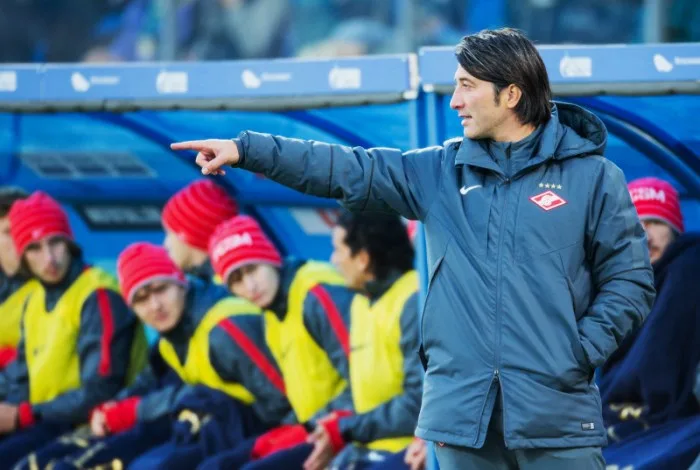
Monday in St Gallen is a settled group for Switzerland and a record night for Scotland. Murat Yakin has already won the Nations League group, and he has said plainly that he will rotate: "We will rotate and of course we will try to get as many players involved as possible." Granit Xhaka is injured, and Manuel Akanji, Johan Manzambi and Dan Ndoye are all missing too. Andy Robertson wins his 103rd cap, passing Kenny Dalglish as Scotland's most-capped player. So Scotland meet a rebuilt Swiss side, not the one that won 3-0 at Hampden last month in a game where Jack Hendry's early red card was a body blow.
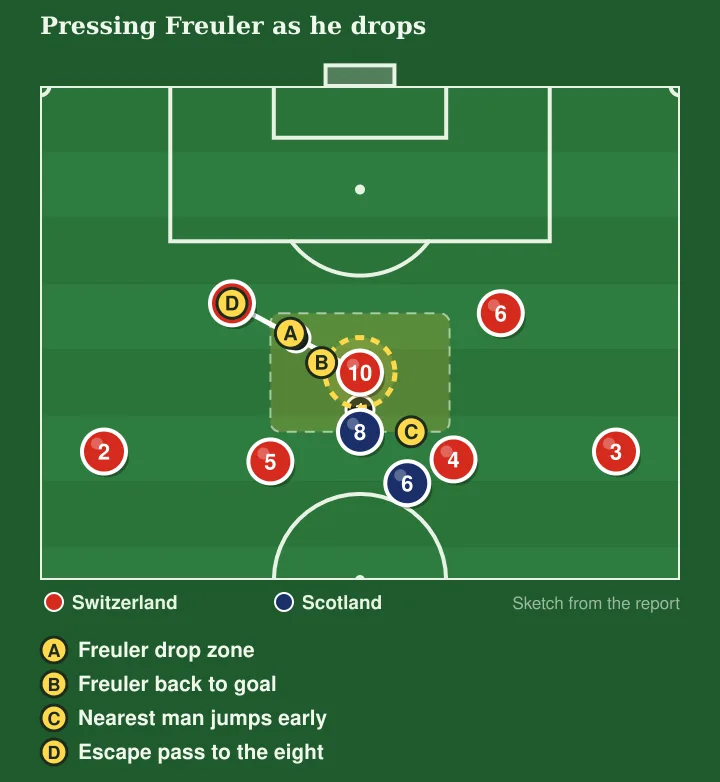
The first thing Xhaka's absence changes is the first pass. Xhaka is the captain and the obvious organiser in that Swiss midfield, the player you would expect to take the ball and decide which side the build-up goes down. Without Xhaka, Remo Freuler, captaining on his 100th cap, is the obvious man to drop in and take that job. Picture Freuler collecting the ball with his back to his own goal, a Scotland midfielder closing from behind: that is a pressing trigger, the moment to jump. Scotland should send the nearest midfielder at him early rather than let him turn and pick a pass.
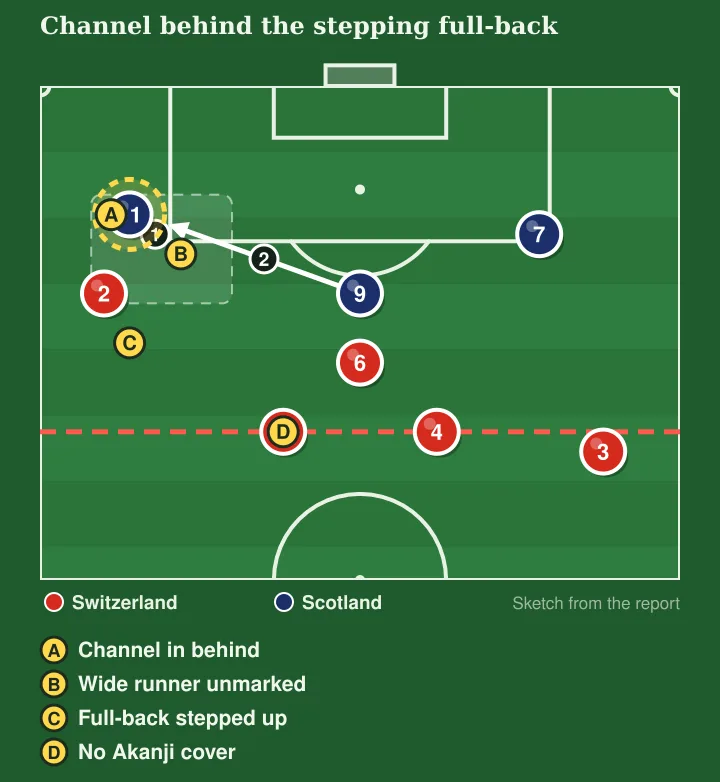
The second thing Akanji's absence changes is the last line. Akanji is the kind of defender who covers the space a stepping full-back leaves behind him, the insurance in what coaches call the rest defence, the players who stay back and hold shape while the team attacks. With him out, when the Swiss full-back pushes on, the channel outside the centre-back opens. That is where Scotland's wide runner should attack, running into the gap rather than chasing the ball into the middle. Yakin's young options, Alvyn Sanches, Ainsley Boteli and Samuel Ballet, may be given the normal build-up roles or a simpler one, and that is hard to tell before kick-off.
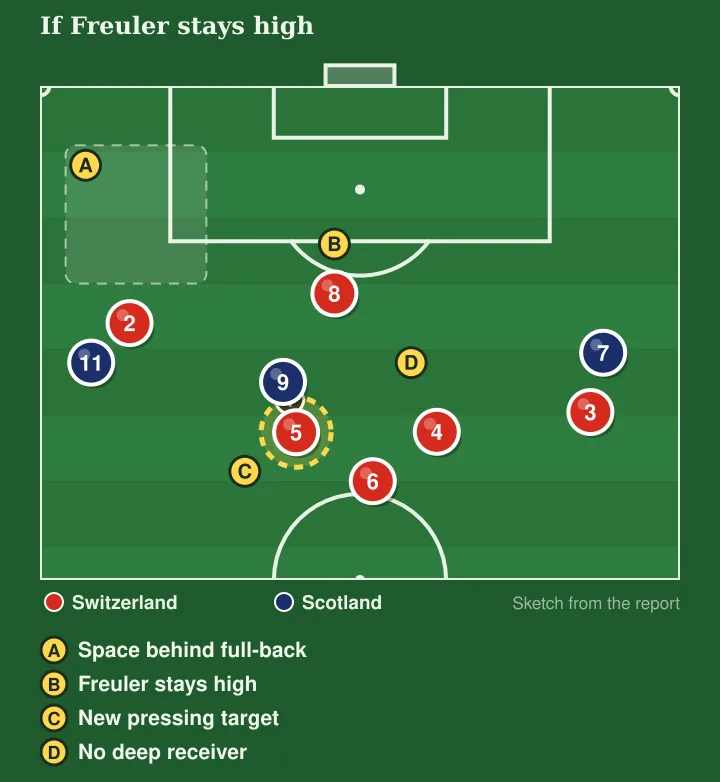
What I would try: press Freuler when he drops deep, and hit the space behind the advanced full-back early with the wide runner. The read fails if Yakin pairs Freuler with a genuine holding player and keeps Freuler higher up the pitch. Then there is no deep receiver to jump on, and the target shifts to the young centre-back instead. That is the puzzle to watch in the first ten minutes.
Yakin was gracious about Robertson, saying he has "constantly carried the team, or the nation, in Scotland." He was also honest that the red card shaped the Hampden game without claiming it decided it. Switzerland haven't lost at home in 11 games and their only defeat in this run came in the World Cup quarter-finals to Argentina, so this is a squad with depth. But a rotated spine is a different problem from a settled one, and Scotland should treat it as one. The source is here: dailyrecord.co.uk/sport/football/football-new…
I reconstruct these shapes from the match reports, so if someone's in the wrong spot, set me straight in the replies.