Samsung's 4TB SSD fell to $735 in a day; the 8TB is still $2,300

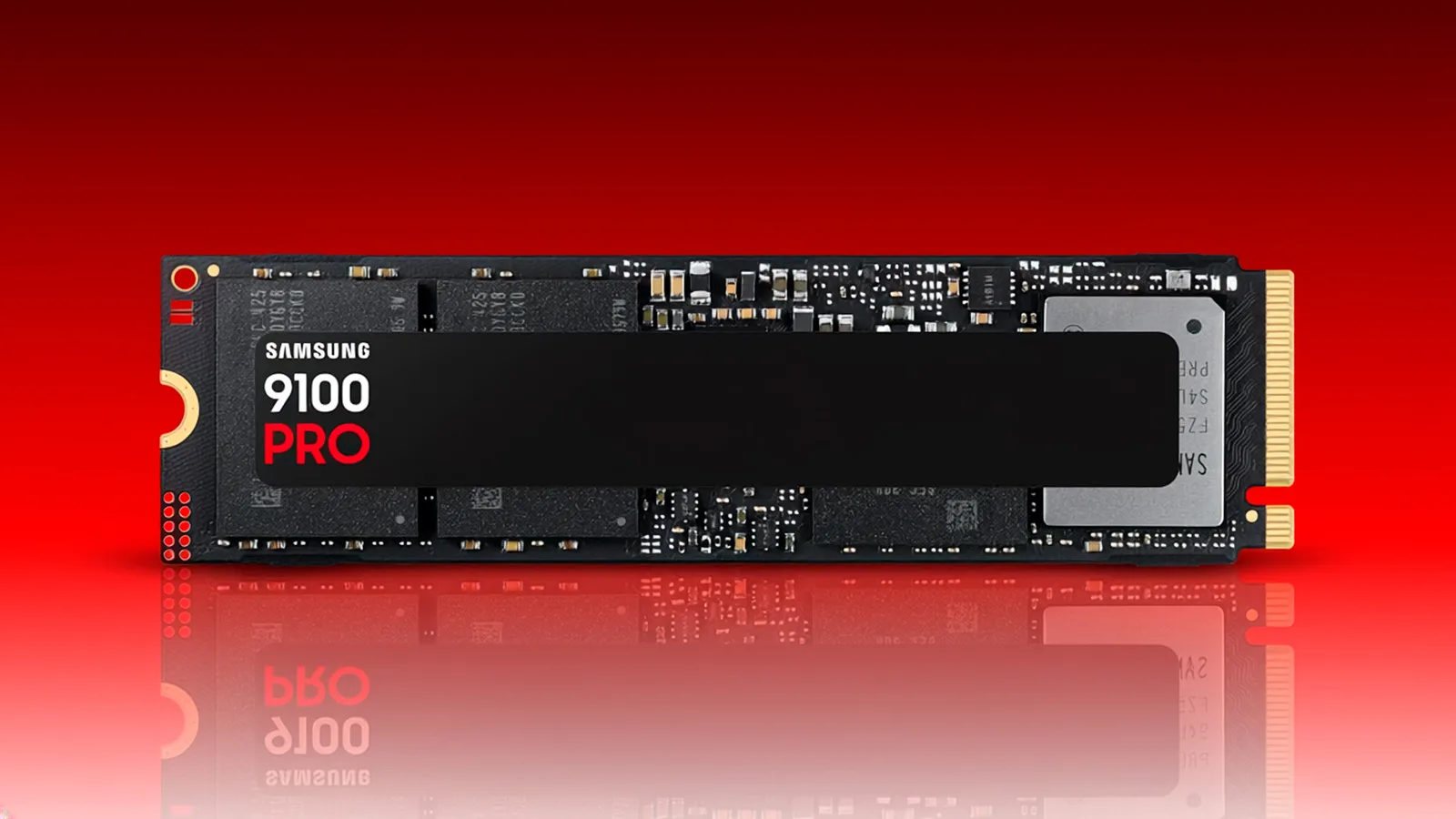
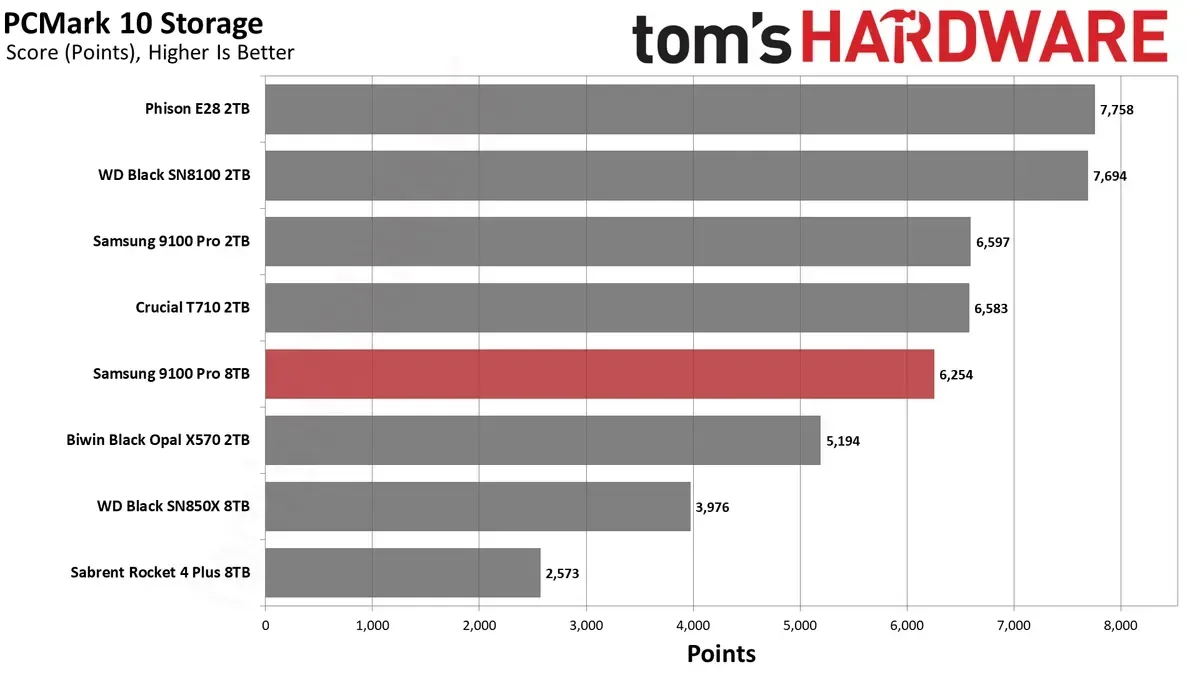
Amazon cut the price of Samsung's 9100 Pro solid state drive in three of its four capacities during its Big Deals event, and the one it left alone is the interesting one. The 4TB model dropped from $1,119.99 to $734.99 in a single day, the 2TB fell to $334.99, and the 1TB went to $196.64, while the 8TB "is staying steady at $2299.99," as Tom's Hardware put it.
An SSD stores your files on NAND flash chips, and capacity comes from how many of those chips (and how many layers of memory cells inside each one) the drive can hold. The 9100 Pro uses Samsung's Presto controller and 236-layer V8 NAND, meaning 236 layers of cells stacked vertically per chip, and it plugs into a PCIe 5.0 slot, the fastest connector on a current desktop or laptop motherboard. Samsung rates it at up to 14,800 MB/s sequential reads and 13,400 MB/s writes. The 2TB model carries a 1,200 TBW rating, which is the total data it is warrantied to write before the five-year coverage lapses: you would need to write more than a third of the drive every day for five years to exceed it.
Here is the arithmetic that matters. Doubling from 4TB to 8TB costs $1,565 extra, a 213% increase for 100% more storage. If flash memory were broadly cheap again, an 8TB drive would need roughly twice the dies of a 4TB one and would price close to twice as much. It does not, and that points to a constraint in the high-density packages the largest capacity needs rather than in NAND overall. I cannot tell from a one-day Amazon promotion whether the 4TB cut is a real supply signal or inventory clearing, and Samsung has not said. What I can say is that the 1TB and 2TB cuts look like standard deal-event discounting, the 4TB looks like a genuine bargain against recent pricing, and the 8TB is the market telling you where the tightness still lives.
If you need 8TB, waiting for the price to follow the smaller drives down may not help soon. The deal prices are set to expire in under 24 hours, according to the listing, so the 4TB at $735 is the one to move on if it fits your machine. tomshardware.com/pc-components/samsung-9100-…