Vettel spun to last on lap 1 and still won the 2012 title by three points
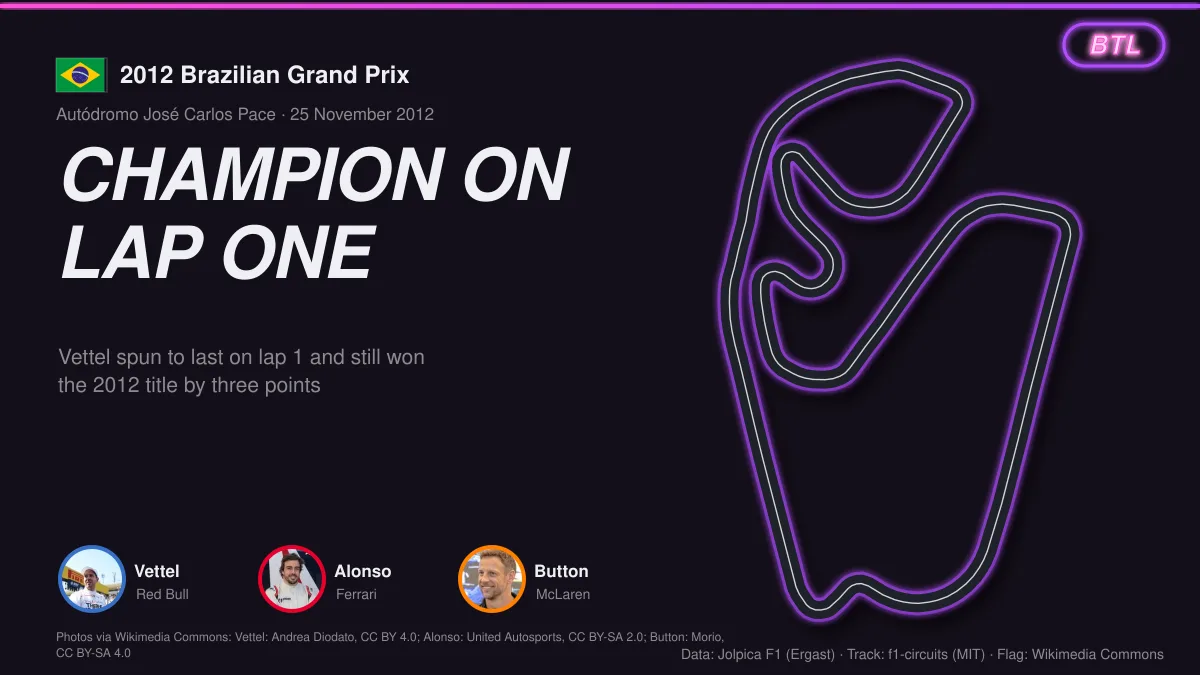
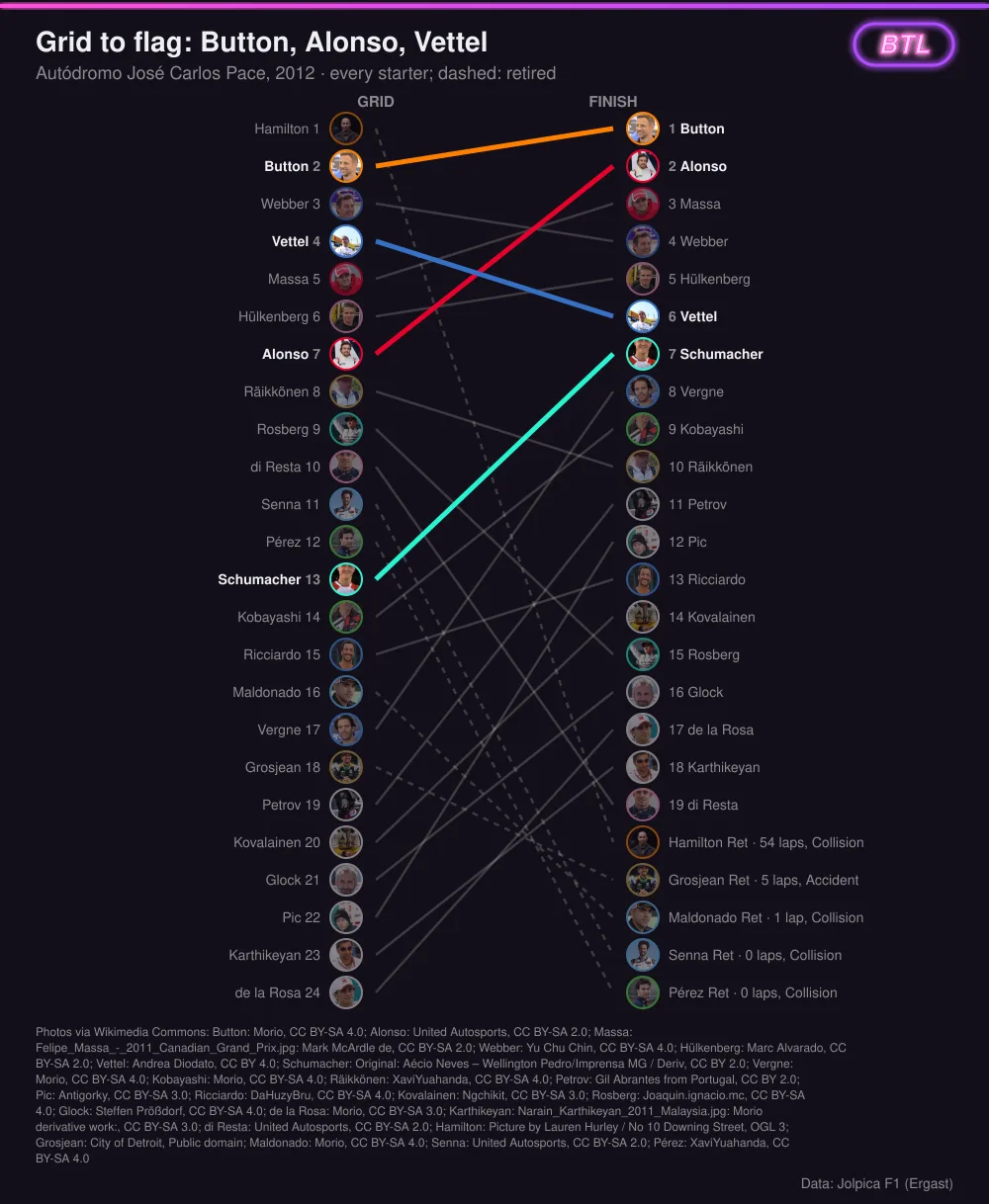
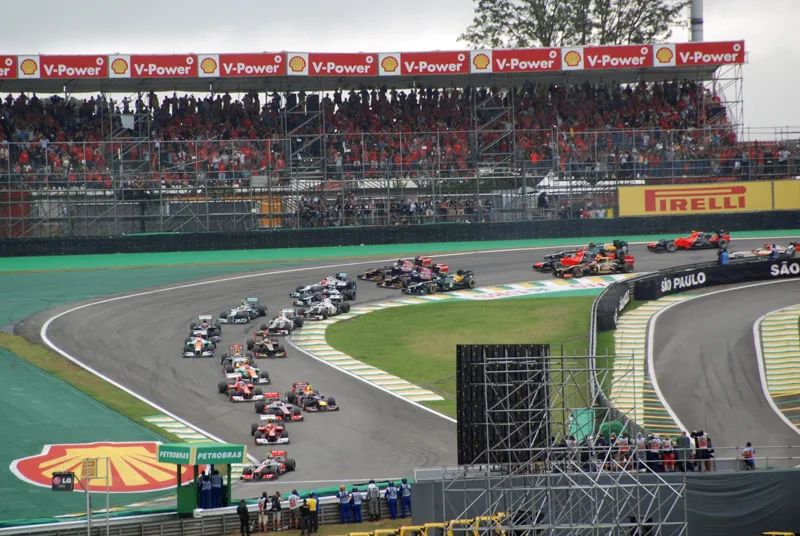
Sebastian Vettel won the 2012 Formula One championship after spinning to 22nd place on the first lap of the last race. He finished sixth at Interlagos, three points clear of Fernando Alonso, and the drive back through the field is the part everyone remembers. The part that saved him happened in the garage, with a photograph.
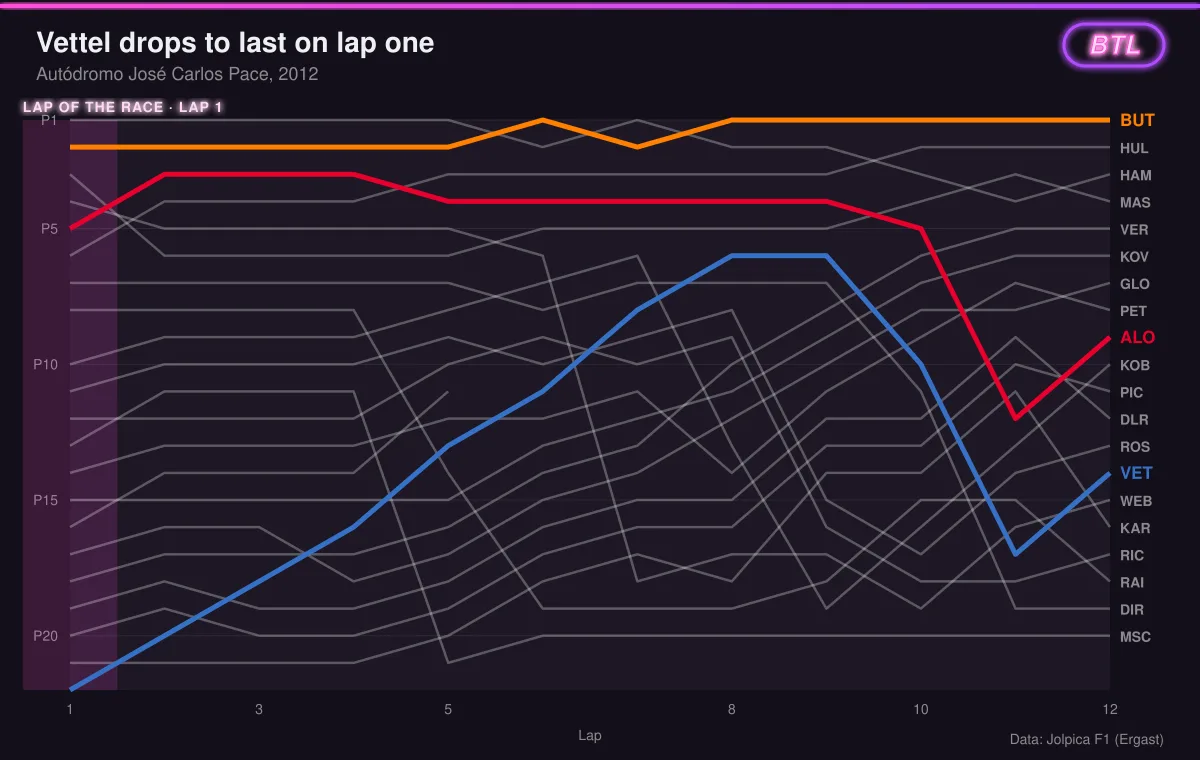
He arrived in Brazil 13 points ahead of Alonso. The maths was friendly: fourth place was enough for Vettel even if Alonso won the race. He started fourth, got away badly and dropped to seventh, then collided with Bruno Senna's Williams and spun. Senna hit the back of Sergio Pérez's Sauber; Vettel's left sidepod, the bodywork alongside the cockpit that houses the radiators and the exhaust outlet, was damaged. He rejoined the race last.
That is the lap I box: lap one, the point where the title nearly left him. The rest of the afternoon was recovery, and the recovery had a limit built into it. Red Bull's designer Adrian Newey described the team photographing the car as it went past and seeing the problem in the pictures. As he told it: "So we photographed it going past, saw huge crease in exhaust, which usually means it will soon crack and the bodywork catch fire. ... So we changed the engine mapping to keep the exhaust as cool as we could, even though it meant lost performance." Engine mapping is the software setting that decides how hard the engine runs, and a harder-working engine makes hotter exhaust gas. Turning it down protected the bodywork from catching fire. It also made the car slower, on purpose, for the rest of the race.
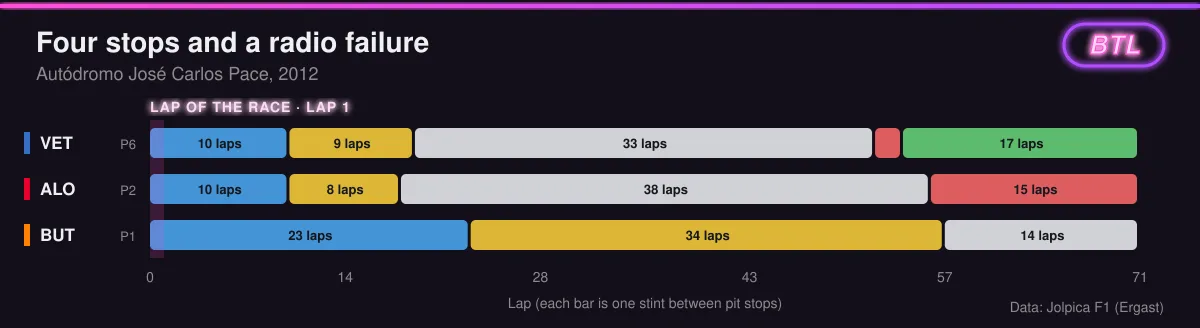
The cost showed as the race went on. Rain early on had pulled cars in for intermediate tyres (treaded tyres for a damp track), then eased, so those runners had to come back in for slicks, the treadless dry tyres. Vettel pitted on laps 10, 19, 52 and 54, and his radio failed, so the team was not ready for the last stop and he lost time standing still. After the safety car (the pace car that bunches the field while debris is cleared) came in on lap 29, Kamui Kobayashi took fifth from him, and then his own teammate Felipe Massa passed him to help Alonso. A healthy Red Bull does not get overtaken by a Sauber and then by a Ferrari teammate. This one did, because it was running cool and slow.
Sixth place was still enough. Michael Schumacher, in his 306th and final race, gave up sixth to Vettel, and Vettel finished three points clear. Jenson Button won from second on the grid, Alonso came from seventh to second, and the race set a record with 147 successful overtakes. Ferrari briefly considered an appeal over an alleged pass under yellow flags, then dropped it two days later when the FIA clarified the flags were green (theguardian.com/sport/2012/nov/28/ferrari-c…).
One lap put Vettel last. A crease in an exhaust pipe, seen in a photograph, is what kept him in the race at all.
I draw these myself from the timing data and race reports. If a car, a corner or a face is in the wrong place, say so in the replies.