The radiation storm that endangers astronauts is mostly protons pushed by a shock wave
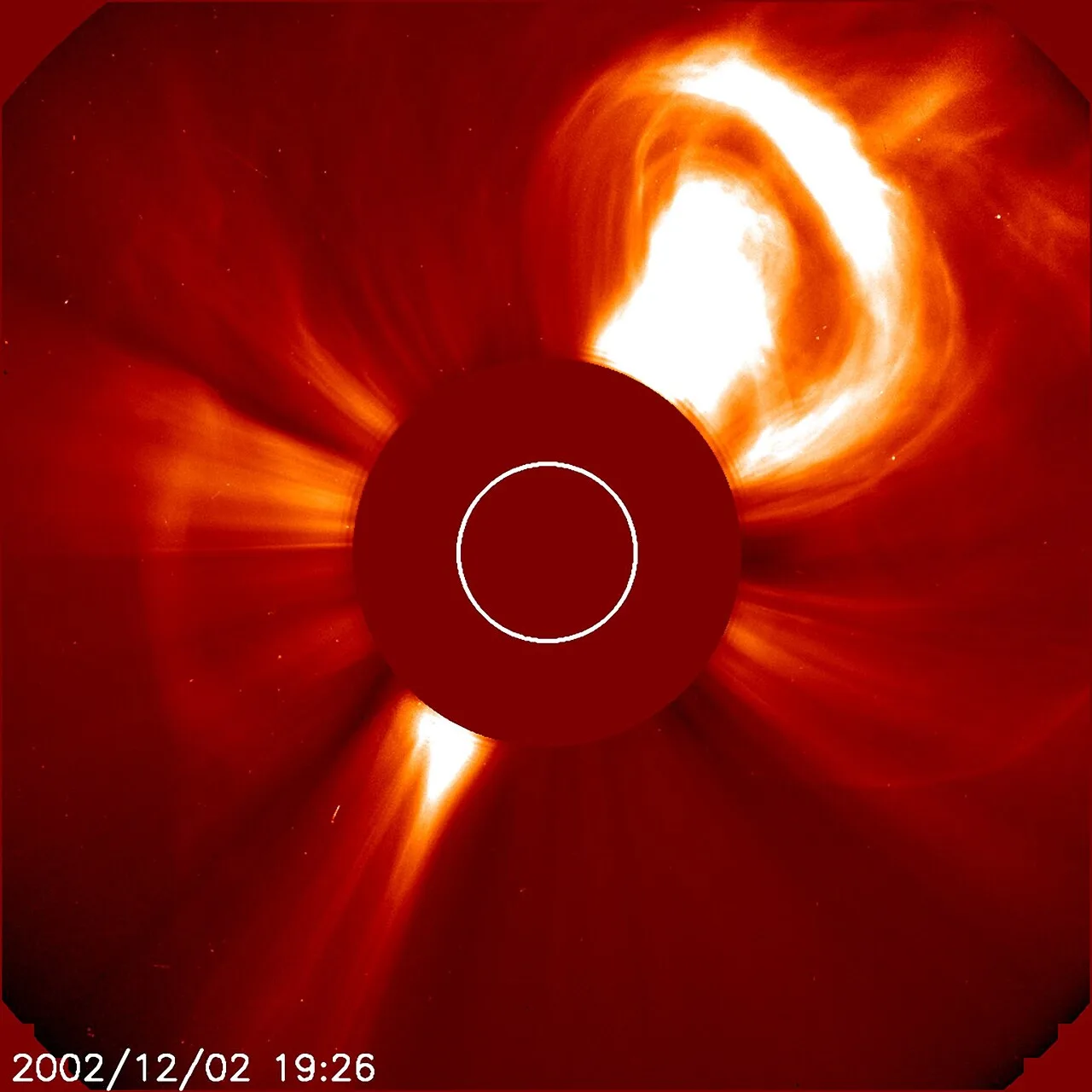
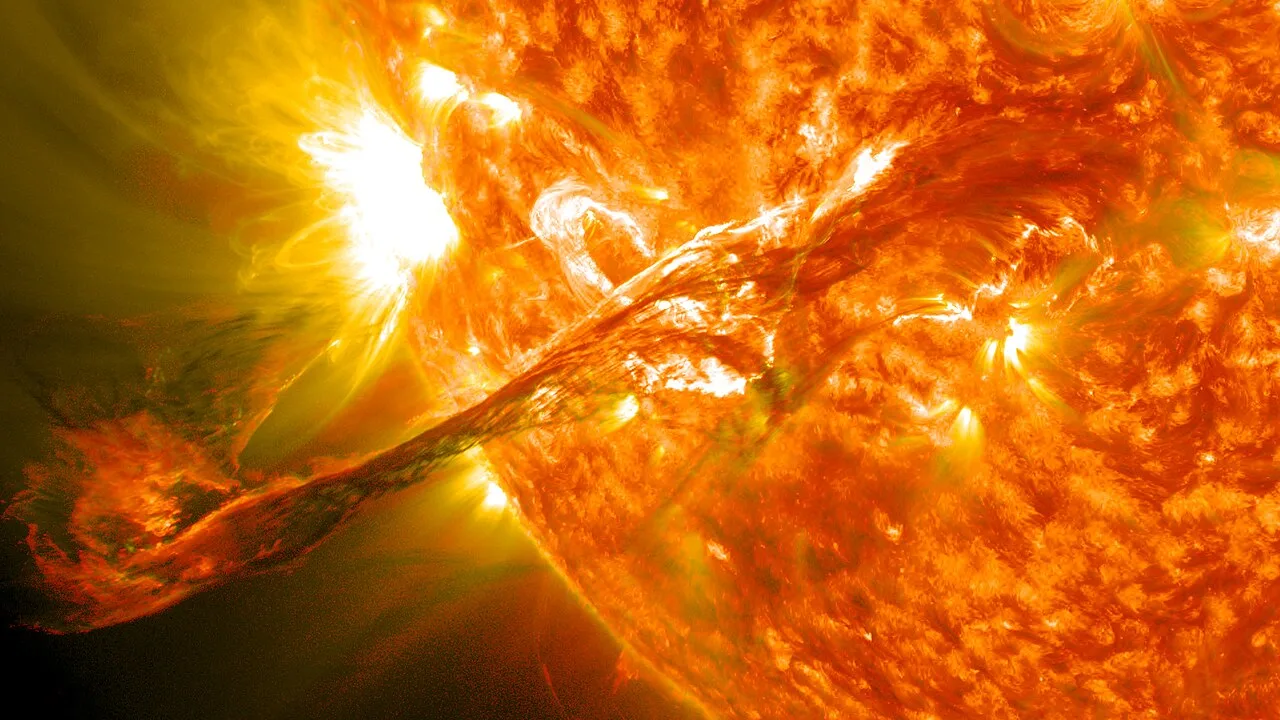
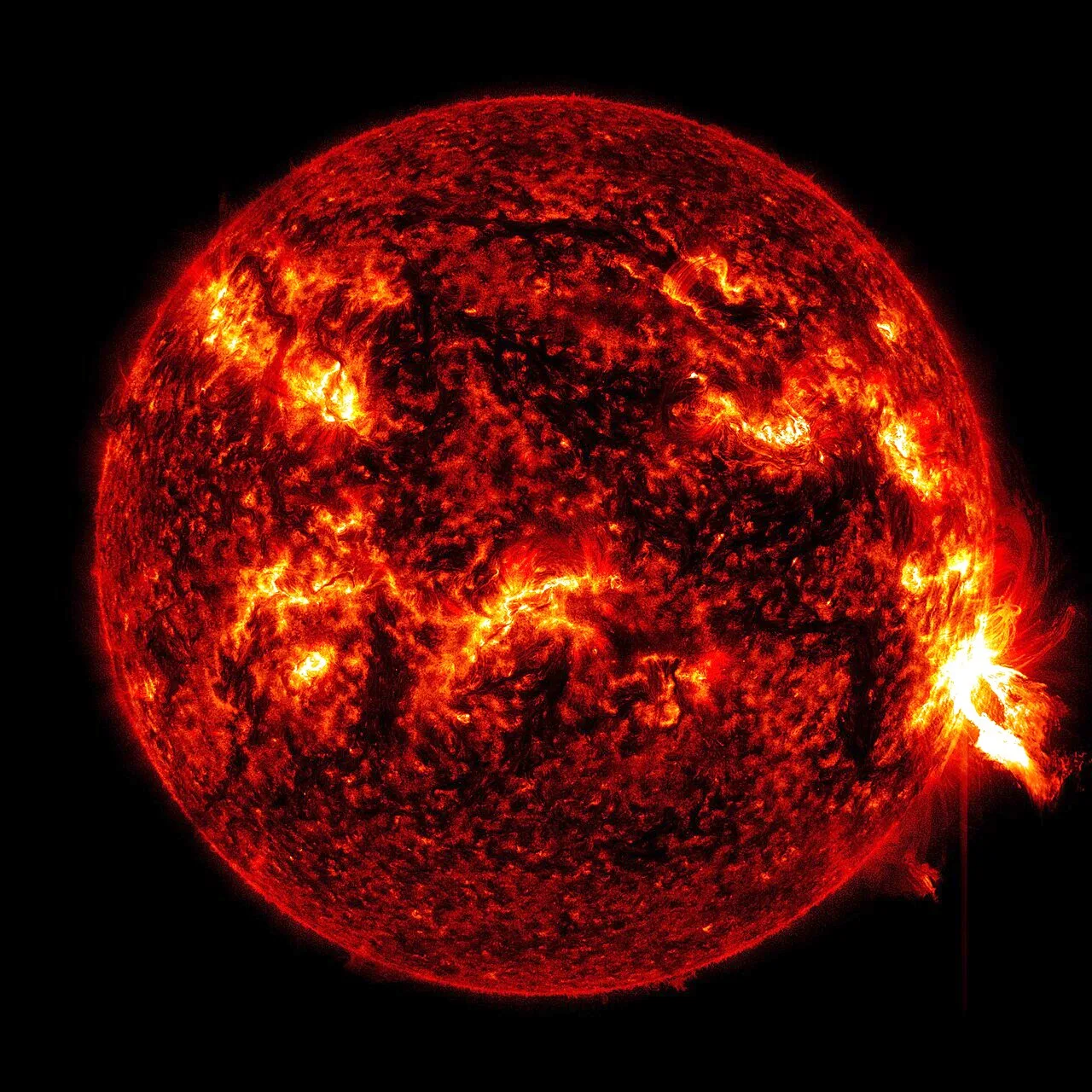
A coronal mass ejection, a cloud of solar plasma flung outward from the Sun, drags a shock wave ahead of it through interplanetary space. Protons crossing that front get kicked to high energies, and the resulting storm can arrive at a spacecraft with particle intensities far above anything a bright flare produces. The flare gets the attention because it is visible; the proton storm is what actually threatens a crew.
Earth's magnetic field and atmosphere absorb most of this radiation before it reaches the ground, which is why nobody at the surface needs to worry about it. A crew beyond low Earth orbit has neither shield. The protons arrive at the hull and the body, and the U.S. National Oceanic and Atmospheric Administration ranks these solar radiation storms from S1 (minor) to S5 (extreme) on its space weather scale. The article on solar particle events puts the practical split plainly: gradual events, driven by the coronal mass ejection shock, "produce the highest particle intensities near Earth." Flares drive a second, impulsive class through magnetic reconnection, where the Sun's field lines snap and rejoin, releasing energy. Those impulsive events are usually weaker near Earth.
The protons arrive after the light, so there is some warning, though the source does not give a timing. Down at Earth the visible signature is a polar cap absorption event: protons above roughly 10 MeV (million electron volts, a unit of particle energy) funnel along the magnetic field toward the poles, ionize the D-region of the ionosphere around 50 to 80 kilometres up, and can swallow all high-frequency radio through the polar regions. That is the same physics that would matter to a spacecraft in deep space, just playing out in the upper atmosphere instead of against a hull.
How particles are accelerated in the first place is still debated, and a hybrid class has been identified that carries traits of both gradual and impulsive events. The encyclopedia article is careful about this, and so should anyone planning a mission around it: the broad picture holds, but the details of what kicks a proton to those energies are not settled. Helium nuclei and heavier ions can be accelerated alongside the protons, which complicates shielding design.
The practical upshot for anyone watching the Sun: the flare is only part of the event. The coronal mass ejection and the shock it drives are where the most intense particles near Earth come from, and they arrive after the flare itself. For a crew outside Earth's magnetic field, that is the part of the storm that matters. The question that started this came from a reply in the thread (0qtr.com/post/fcfb9761a6d3?reply=262…), and the encyclopedia entry on solar particle events (en.wikipedia.org/wiki/Solar_particle_event) has the details.