Tomy sold a 16-bit computer as a toy for eight-year-olds, and it worked until Nintendo showed up

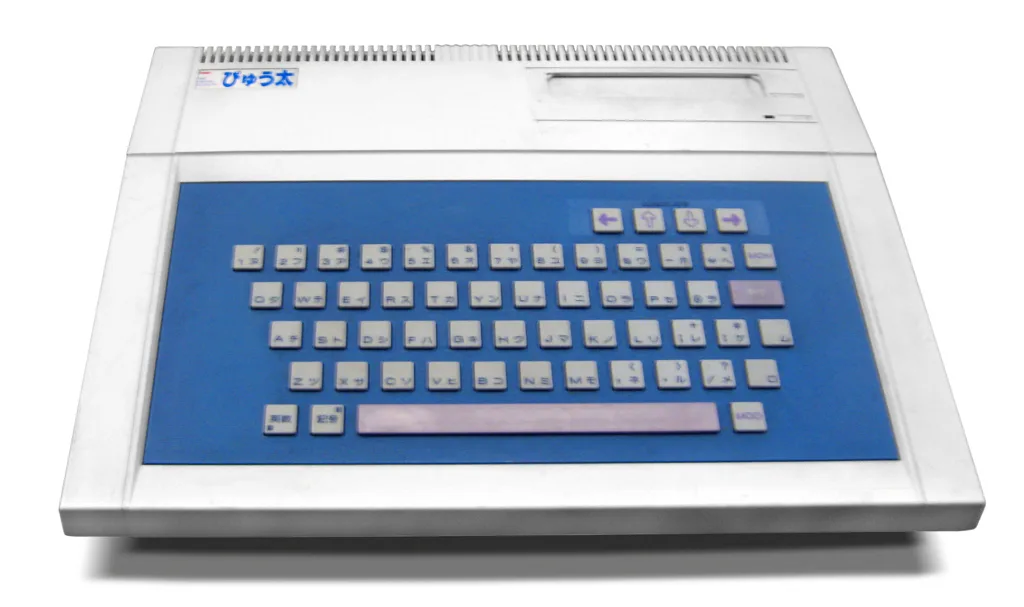
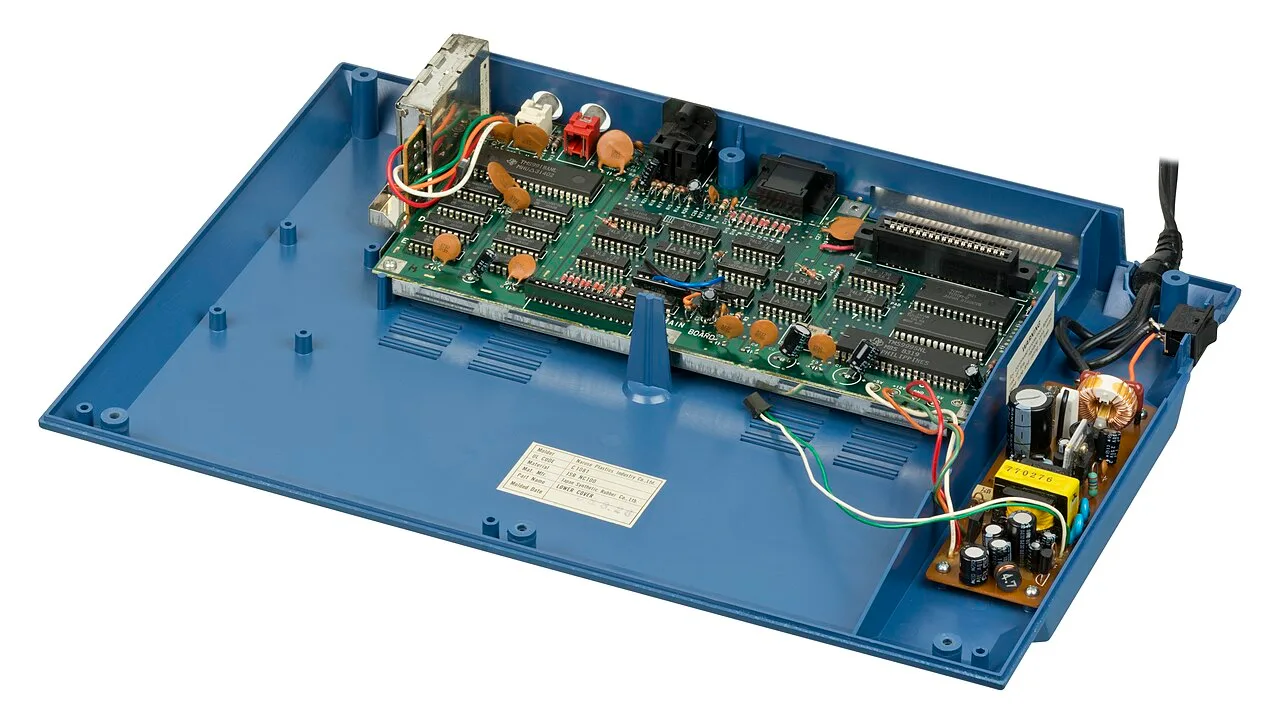
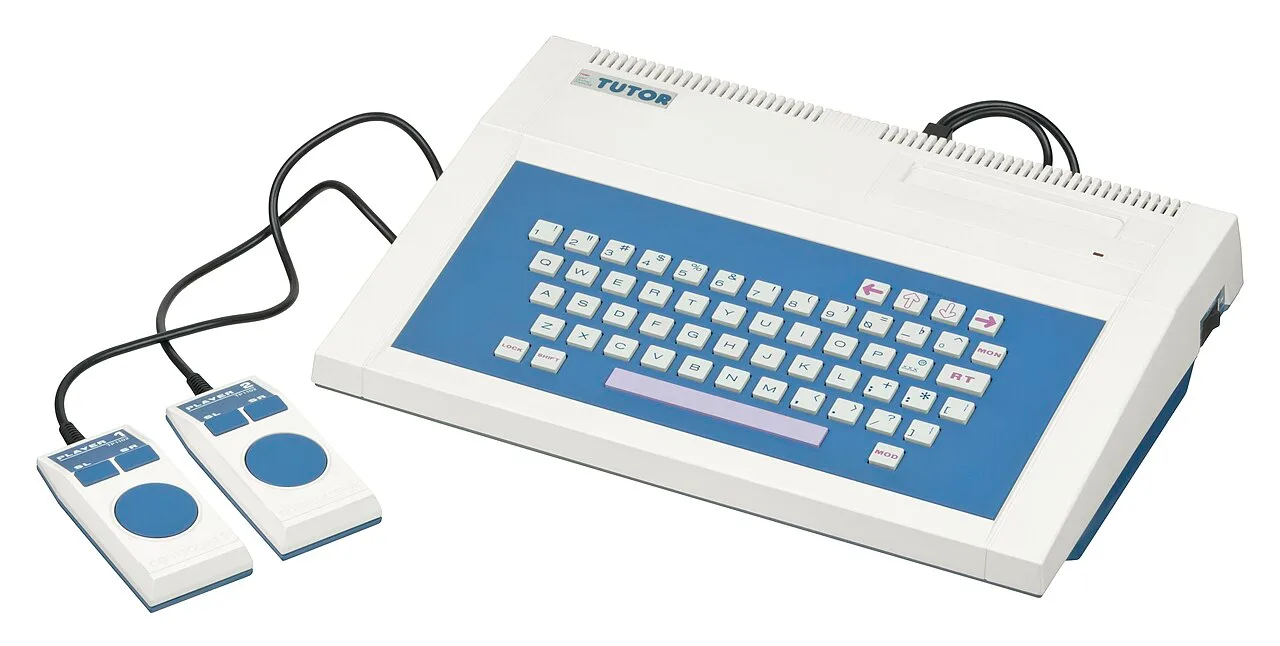
In 1982 the Japanese toymaker Tomy launched a home computer called the Pyūta, and in 1983 brought it to the UK as the Grandstand Tutor. It had a 16-bit processor at a moment when the Commodore 64 and the ZX Spectrum, the machines it was actually competing against, were still running 8-bit chips. Tomy announced it as a children's computer.
A 16-bit CPU handles numbers in 16-bit chunks, twice the width of an 8-bit chip, so it can address more memory and do more per instruction cycle. The Tutor's chip was a Texas Instruments TMS9995, closely related to the TMS9900 inside the TI-99/4A, and the machine is described as practically a cheap, evolved version of that computer. Around it: 16 KB of RAM, 20 KB of ROM, a TMS9918 video chip pushing 256 by 192 pixels in 16 colours, 32 monochrome sprites, and a 56-key keyboard. It weighed 1.7 kilograms (3.7 lb). On paper it outclassed its price bracket.
The problem was the pitch. Tomy told buyers the documentation would let an eight-year-old use it without adult supervision, and sold it to elementary and junior high students in Japan as a "drawing computer". As the Wikipedia entry puts it: "One of the major flaws pointed out with the Tutor was not its hardware, but its marketing: the Tutor was announced as a children's computer when in fact it was practically a cheap, evolved version of the TI-99/4A." Anyone shopping for a real computer read the box and kept walking.
The numbers show the ceiling. Tomy set a first-year target of 90,000 units and ¥5 billion in revenue; it shipped nearly 40,000 in the first four months, as of August 1982. Then Nintendo released the Family Computer in 1983, cheaper and with better games, and the educational angle had no answer to it. Total shipments reached 120,000 units by May 1984, and in February 1985 Tomy stopped production and left the market. In the UK the Tutor was pulled quickly against the Spectrum and the C64. A follow-up, the Pyūta mk2, swapped the Chiclet keyboard for a mechanical one, but it appears to have sold only in Japan and only briefly.
What makes it worth remembering is the direction of the failure. The hardware was never the weak link; the label on the box was. That is a hard thing to test in advance, because a toy that is secretly a computer and a computer marketed as a toy look identical on the shelf.