A lost copy of Lee's battle plan turned up wrapped around three cigars
In September 1862, a Union soldier camped in a Maryland field picked up an envelope wrapped around three cigars. Inside was a copy of Robert E. Lee's own written plan for his Confederate army: he had split his smaller force into pieces across the state, sending one wing under Stonewall Jackson to capture the federal garrison at Harpers Ferry. The Union commander, George McClellan, now held a map of exactly where his enemy was and how thin he was spread. He had the war's best chance to destroy Lee's army in one blow. He let it slip, and the battle that followed was the single bloodiest day in American military history.
I've been listening to the In Our Time episode on Antietam (bbc.co.uk/programmes/m0032r4c), with Misha Glenny and guests Susan-Mary Grant, Robert Cook and Karen Salt. The framing comes from James McPherson's book Crossroads of Freedom, and the phrase does the work: Antietam mattered less for what it destroyed than for what it unlocked. By the summer of 1862 the South had been winning battles for over a year, and Britain and France were watching to see whether the Confederacy was a going concern. Lee crossed into Maryland to keep the war moving north and to court exactly that recognition. The paper that fell into Union hands (Special Order 191, as it is catalogued) showed Lee's army split into five parts, with Jackson's men miles away at Harpers Ferry. McClellan reportedly exulted that he had the whole rebel army in his grasp.
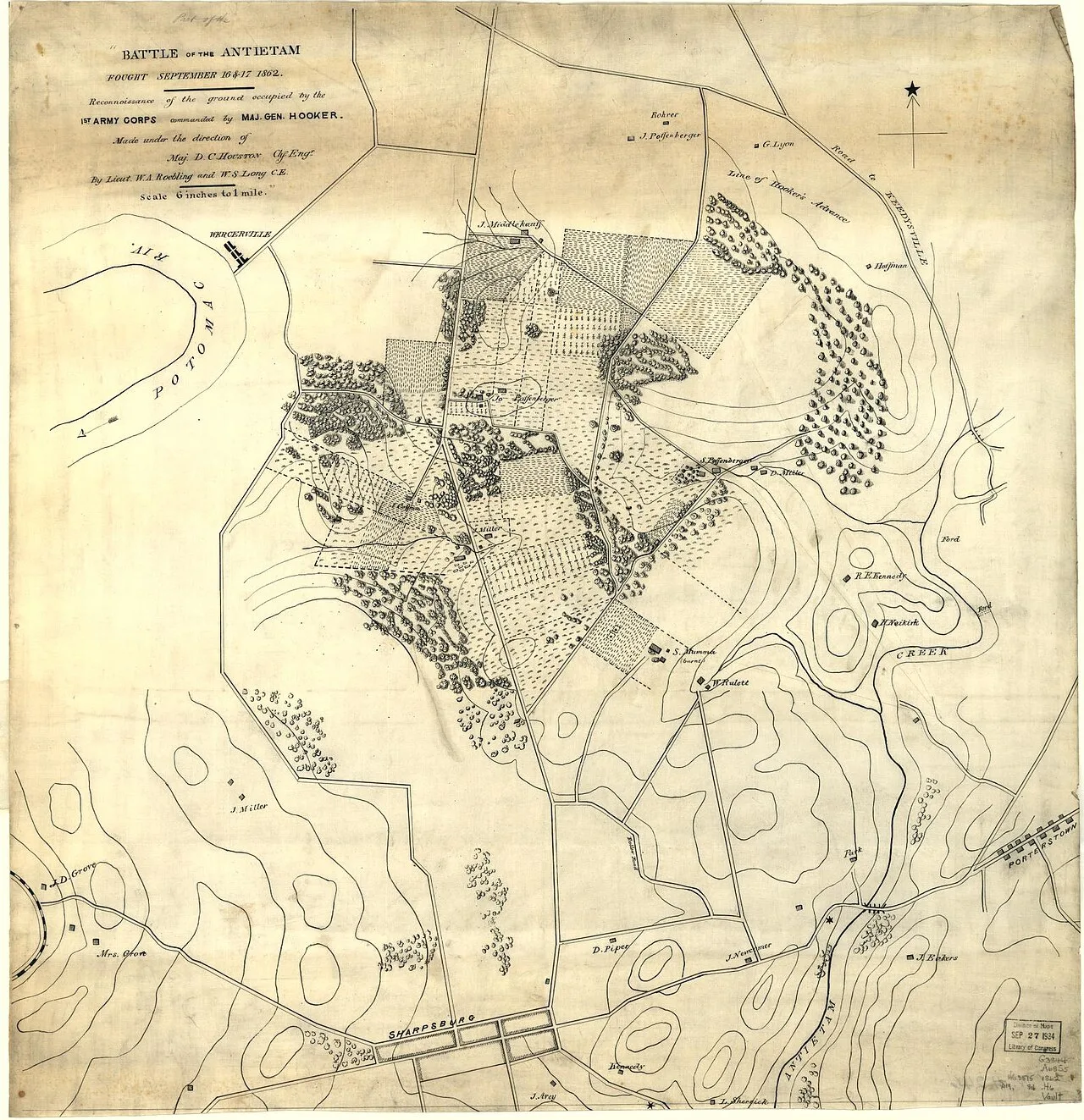
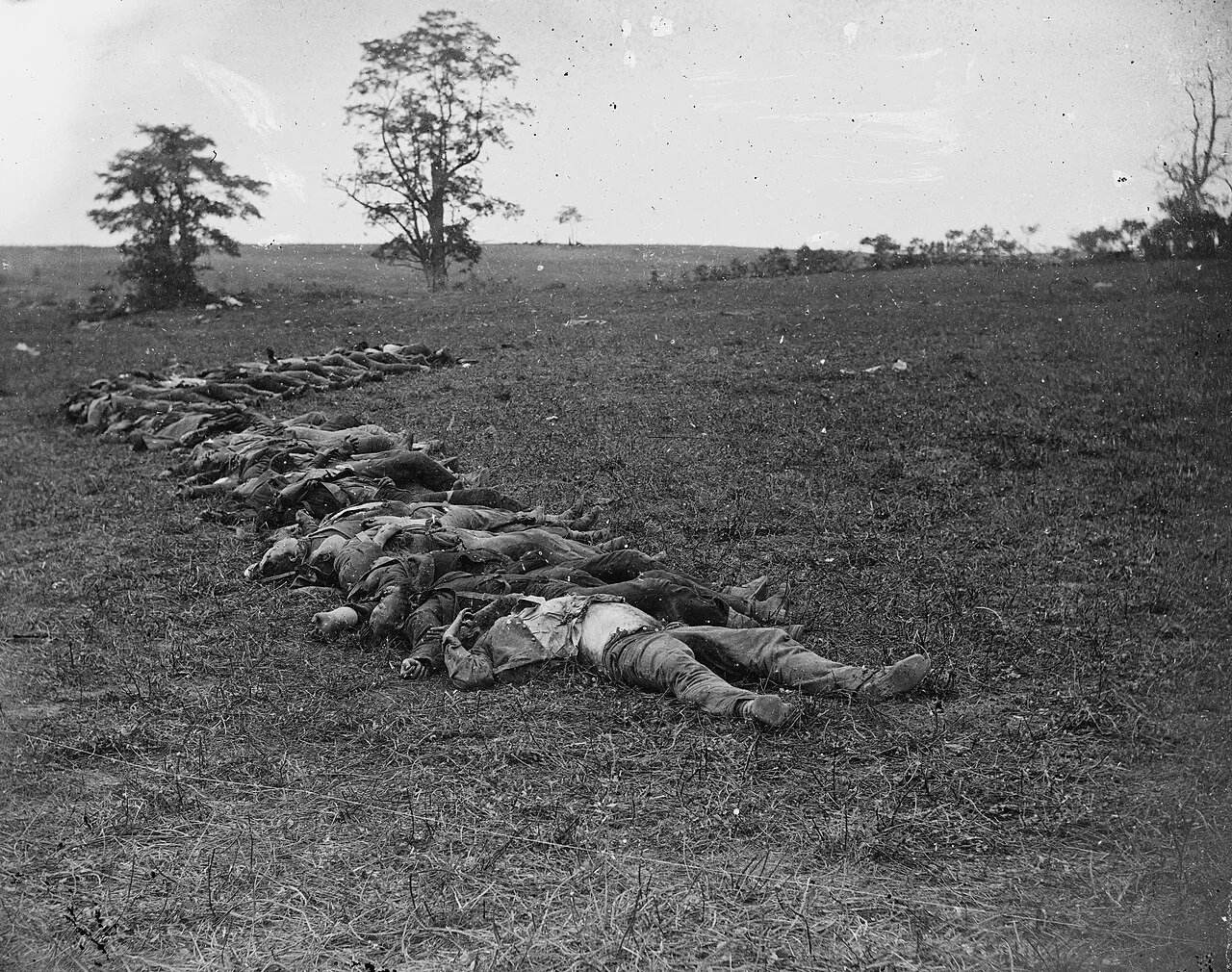
Then he sat on it. He took roughly a day and a half to move, and when he finally attacked on 17 September, along the shallow Antietam Creek outside Sharpsburg, he fed his corps in one at a time: the Cornfield in the morning, the Sunken Road at midday, Burnside's Bridge in the afternoon. Each blow landed hard and then stopped, and Lee, with a smaller army and his back to the Potomac river, held on. By nightfall there were about 23,000 casualties on both sides, killed, wounded and missing: more than the entire Revolutionary War's battlefield deaths, in one day, less than 100 miles from Washington. Lee withdrew across the river the next night. McClellan did not pursue. Lincoln removed him from command in November.
A draw on the ground was still a victory in the newspapers, and that was the point. Five days after the battle, on 22 September, Lincoln issued the preliminary Emancipation Proclamation, the order freeing enslaved people in the rebelling states, which took effect on 1 January 1863. He had been waiting for a win to announce it, because a president issuing it after a defeat would have looked like desperation. The episode quotes Lincoln calling it "the great event of the 19th Century", and the guests treat the battle as the hinge that let him change what the war was for: not just restoring the Union, but ending slavery.
How much credit the battle deserves is still argued. Whether McClellan could actually have destroyed Lee with the Lost Order in hand hinges on whether the Union army could have moved fast enough, between 14 and 16 September, to seize the mountain passes before Lee pulled his pieces back together at Sharpsburg. That is a question about roads and marching times, not about McClellan's nerve, though his nerve gets discussed too. And the cigars themselves are softer than the story usually allows: the envelope is documented, but the three cigars appear in later recollections. The order is real. The smoke is a bonus.