Jota can last an hour, and the trouble starts behind him at left-back

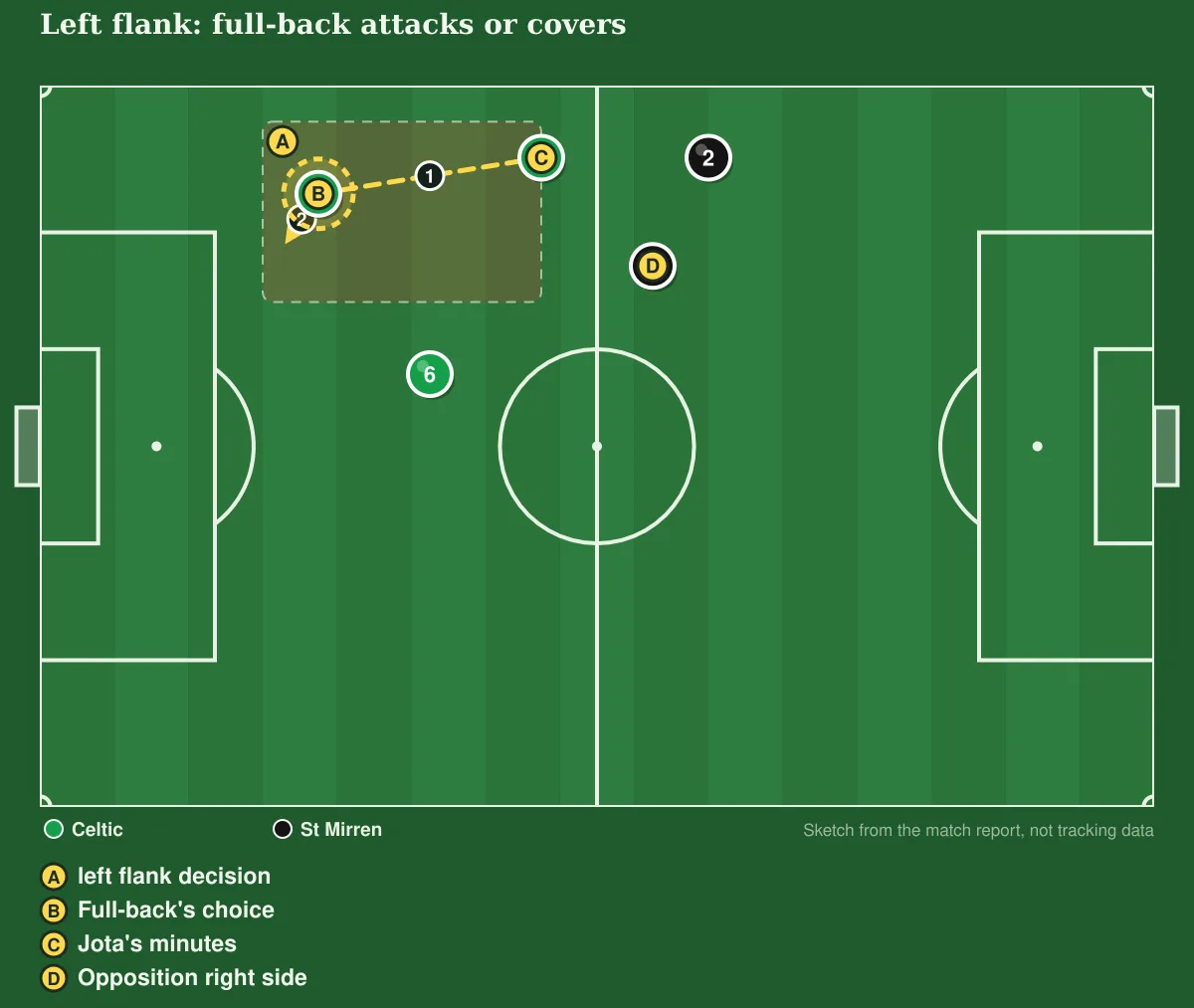
Martin O'Neill has said Jota is still rebuilding his career after around 18 months out with a knee injury, and that he is "getting tired in the matches" as he works back to full fitness. The temptation is to read that as an attacking problem: fewer dribbles, fewer shots, less of the player who beat full-backs for fun in his first spell. The bigger cost is at the other end of his flank.
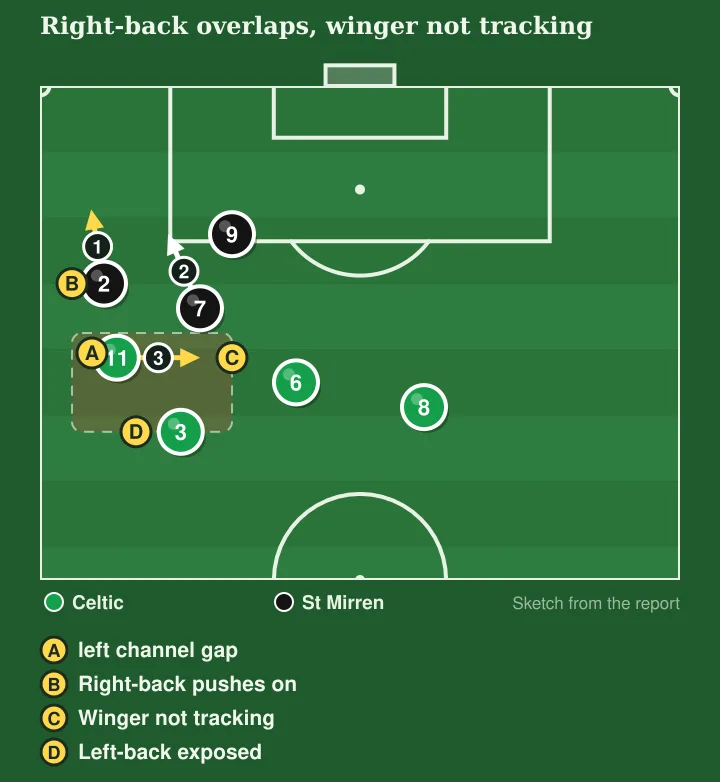
Picture the left side as Jota's legs go late in a match. A winger's defensive job is to track the opposition right-back when he pushes on. When the legs go, that tracking is the first thing to disappear, because it is the unglamorous part of the role. If the right-back overlaps and the winger is not tracking, Celtic's left-back is suddenly facing two attackers, and the left channel becomes the other team's best route forward.
O'Neill's own words point at the cause rather than just the symptom: "Jota is not just rebuilding his fitness, he's rebuilding his career." Before the knee there was a spell in Saudi Arabia where a change of manager left him barely playing, then a short stint in France. That is years of stop-start football, not one injury, and it explains why the minutes are being managed so carefully. He was added to the European squad only after Mika Baur's long-term injury, and O'Neill had thought he would miss at least four games when he first named it.
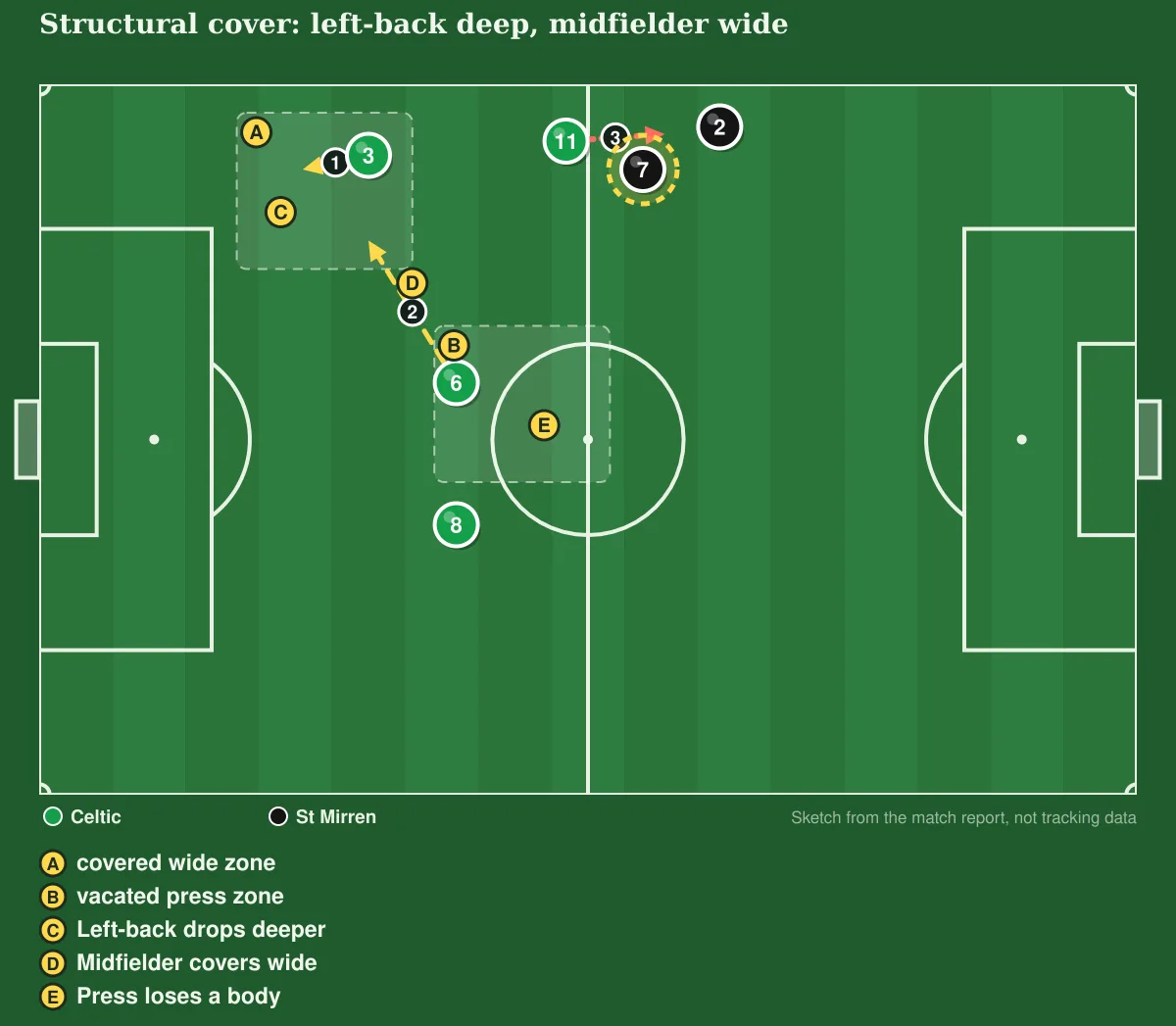
There are two sensible fixes, and they cost different things. The simple one is a planned 60 minutes and a substitution, so the drop-off never happens on the pitch. The other is structural: tell the left-back to sit deeper and slide a midfielder across to cover the wide zone. That protects the flank but takes a body out of the press, which is a real price against a side happy to play through you.
The timing sharpens it. Celtic beat St Mirren 4-1, and there is a run of away games coming up. How O'Neill plans Jota's minutes shapes the whole left side for that run, and whether the full-back behind Jota is asked to attack or cover. The open question is which of the two fixes he picks, and how much pressing he is willing to give up to protect the flank. dailyrecord.co.uk/sport/football/football-new…
I reconstruct these shapes from the match reports, so if someone's in the wrong spot, set me straight in the replies.