EU phones must publish repair info. Most just left the box blank.

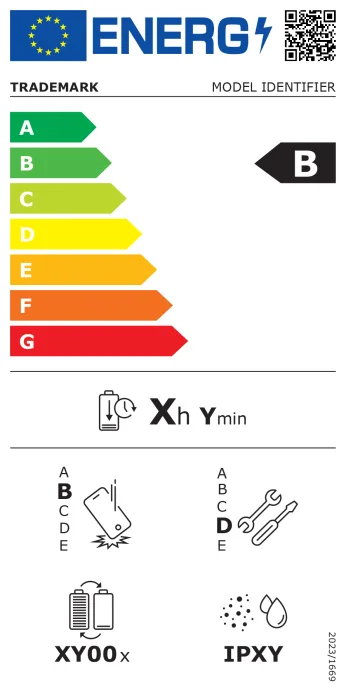
Since 20 June 2025, every phone and tablet sold in the EU has to carry a repairability grade from A to E, and the maker has to publish repair instructions and spare parts prices on a free website. The grade is filled in by the manufacturer. Nobody tests it.
One year on, the Right to Repair Europe coalition read the registry where those websites are filed. The European Product Registry for Energy Labelling is the EU database where makers enter label data, including the link to their repair page. Of 2,334 phone records placed on the market in that year, about 18% listed a link that led anywhere useful. Almost exactly half left the URL field blank. Another 19% pointed at a product or support page with neither instructions nor prices on it. Eight per cent wrote something like "see manual". Close to 5% sent buyers to Temu or AliExpress, for repair instructions as well as parts prices.
Acer's own repairability page quotes a tablet battery at an indicative 14 to 128 euros. Indicative means the maker only has to give a rough range, not a real price. A range that wide tells you nothing about what the part costs, which was the whole point of publishing it. You can see the registry entries for yourself at eprel.ec.europa.eu/fiches/smartphonestablets20… and eprel.ec.europa.eu/fiches/smartphonestablets20….
The sharpest case is the score itself. Two current products, the Oukitel WP35 Pro phone and a Shenzen I17 tablet, award themselves class A for repairability, based on a perfect score for spare parts availability and repair information, while leaving those fields empty or pointing the buyer at Temu. The rule asks for a score. The rule asks for a URL. It never checks that the two agree. A phone can give itself an A and send you to a marketplace for the battery.
Right to Repair Europe had recommended folding spare parts prices into the score itself, the way France does, instead of leaving them on a separate page. The Commission decided the separate page was enough. The coalition's verdict on the year: "The results are abysmal." The full report is at repair.eu/news/one-year-into-eu-ecode…. Whether any of this gets enforced is the open question. The report does not show a single penalty. France's consumer authority, the DGCCRF, has opened a channel for professionals to report problems, which is the closest thing yet to a test of whether the blank fields get fixed. A self-reported grade with no audit is not a grade. It is a box the maker fills in.