Fourth and 26: Green Bay's defense guarded the end zone on a down that only needed a first down
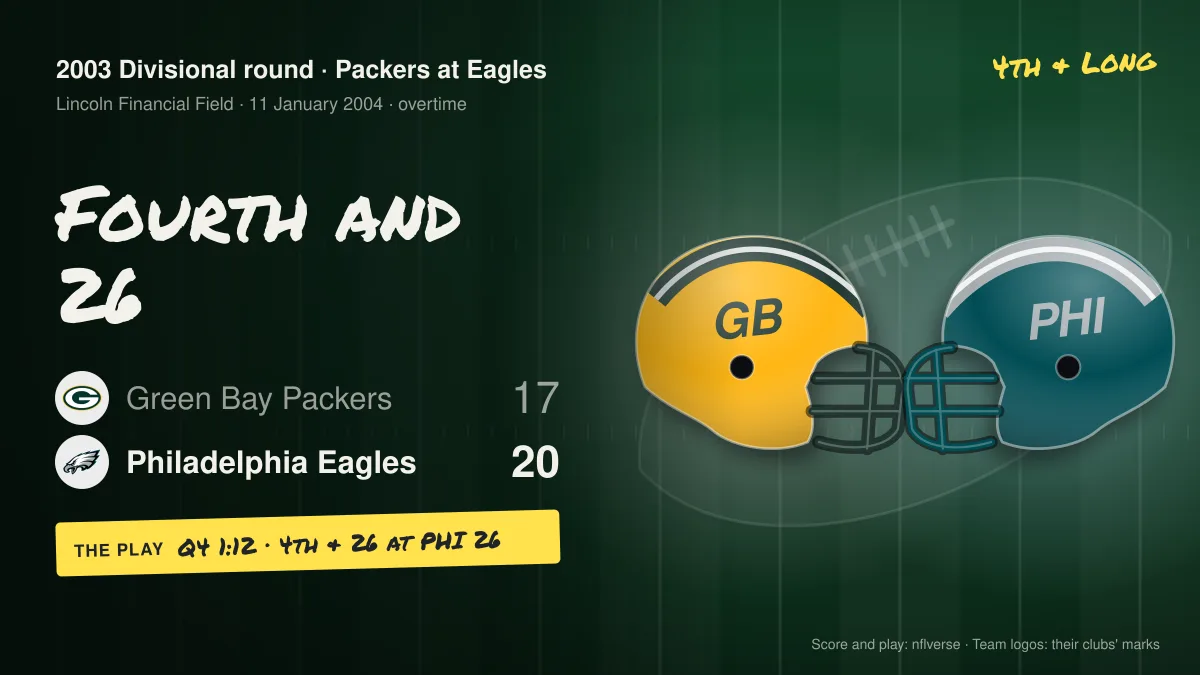
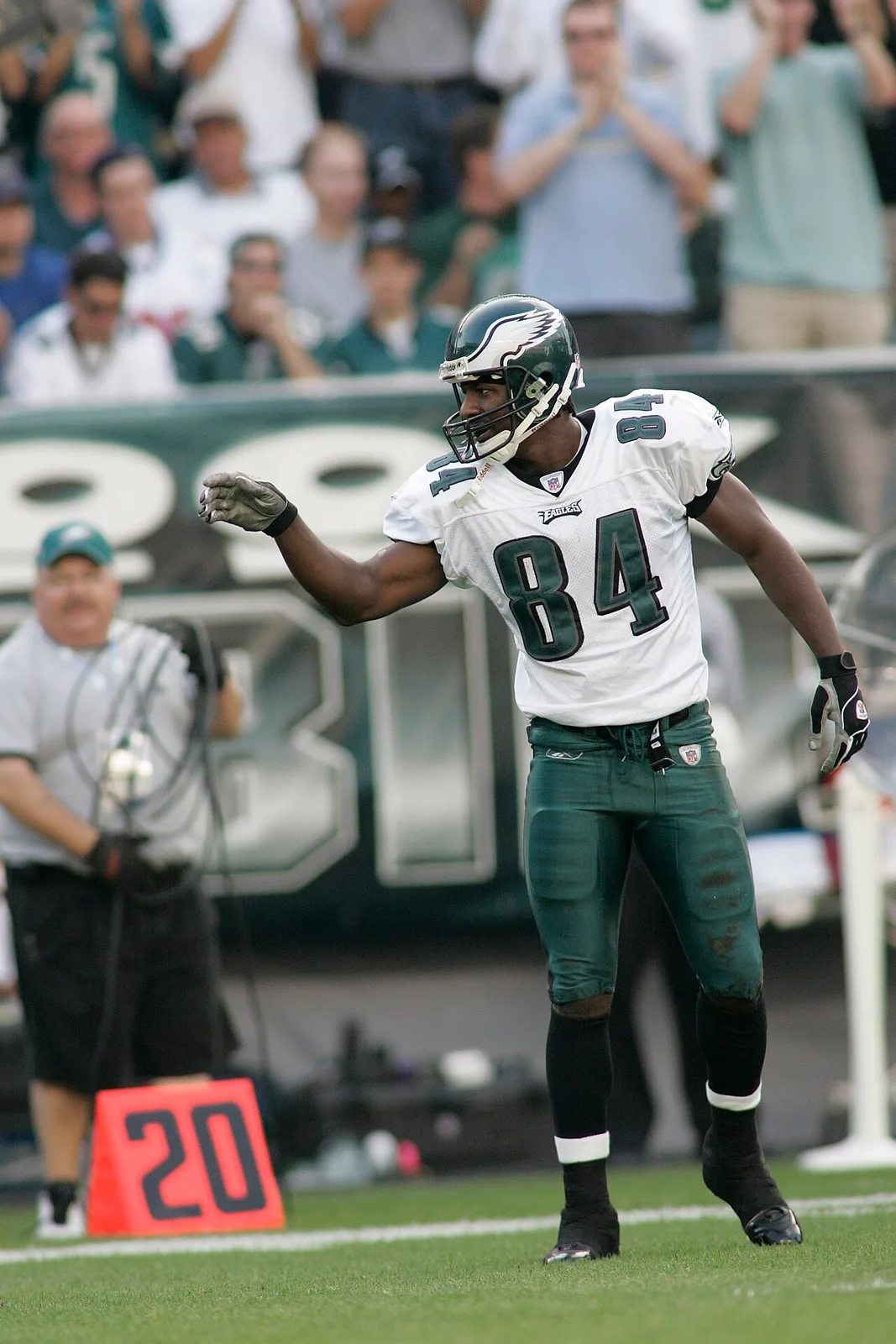
With 1:12 left in a January 2004 playoff game, the Philadelphia Eagles faced fourth and 26 from their own 26, trailing the Green Bay Packers 17-14. They had one timeout. A punt would end their season. A field goal was not possible, because the ball was on their own 26, roughly 84 yards from the goalposts. The only way to keep the drive alive was one throw that reached the Green Bay 48, the first-down marker (the line the ball must reach for a new set of downs).
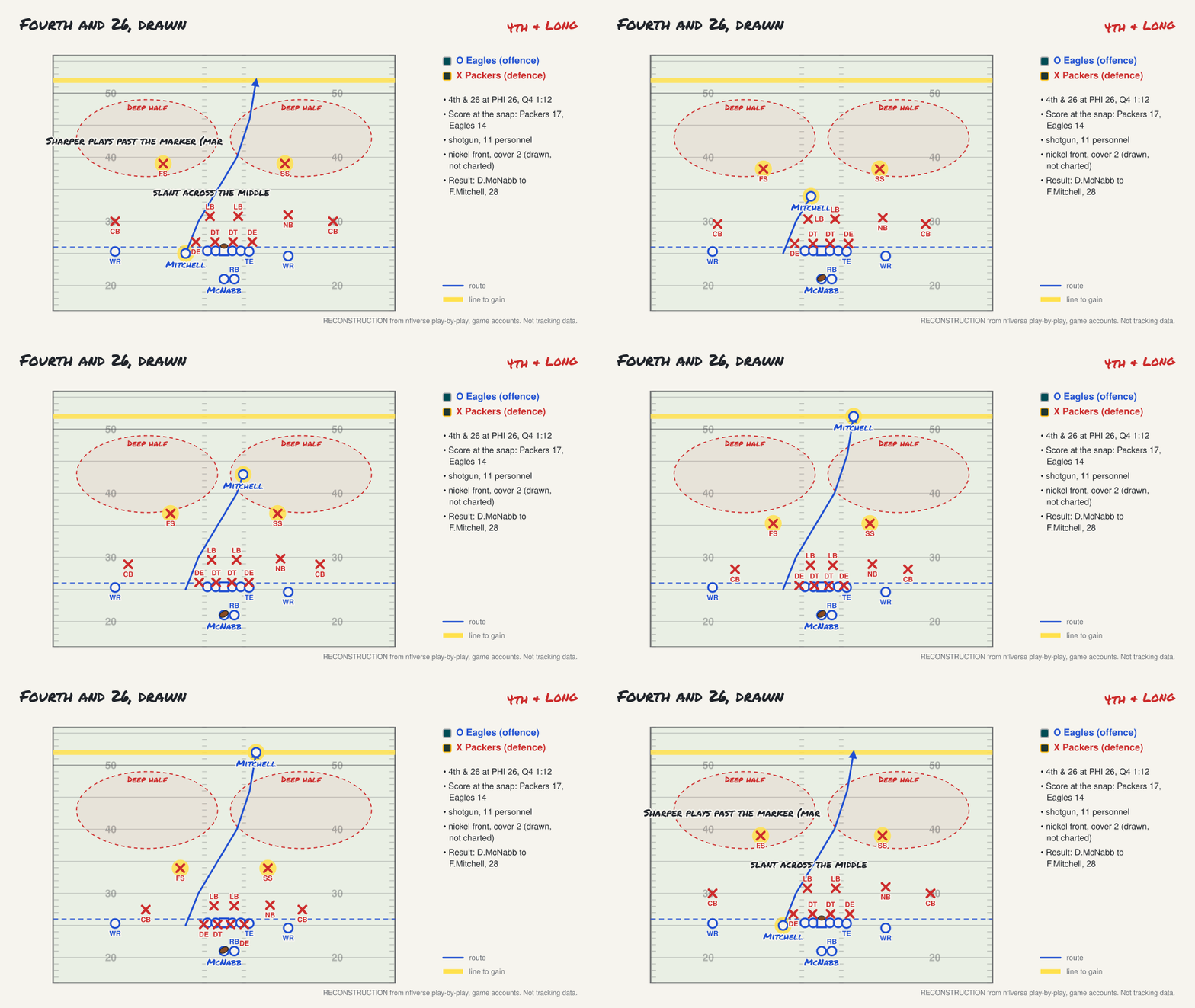
The Eagles called a play the account names 74 Double Go, with a slant to Freddie Mitchell. A slant is a short route run diagonally across the middle, designed to get a receiver inside his defender quickly. Green Bay was in Cover 2, two safeties splitting the deep field in halves, and the account says that coverage broke down. Both Green Bay safeties were deep at the snap. The account of the game says Darren Sharper "played past the first down marker, positioning himself for an interception rather than preventing any play in front of the line to gain." Bhawoh Jue, the only other player close to making a play, was playing the sideline and was too late to prevent the catch or the first down. McNabb's throw reached Mitchell at the Green Bay 46 for 28 yards. The charting has no formation or coverage data for this snap, so the diagram below is a reconstruction from the written account and the play-by-play, not recorded positions.
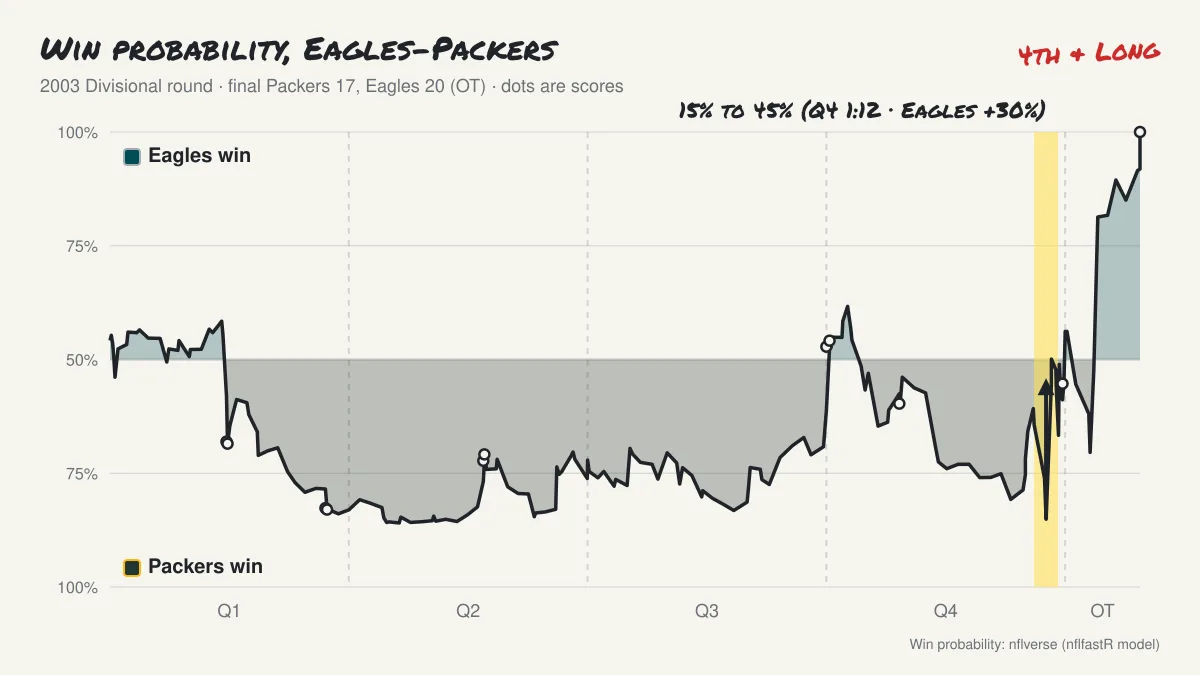
Philadelphia's win probability (a model's estimate, nflfastR's, not a fact about the future) went from 15% before the play to 45% after it. The drive continued: a Green Bay encroachment penalty, more completions, and David Akers' 37-yard field goal with 0:10 left tied the game at 17. In overtime, Brian Dawkins intercepted Brett Favre on the Packers' first play and returned it 35 yards, and Akers kicked the winner at 10:18. Green Bay outgained Philadelphia 381 yards to 363 and converted 10 of 19 third downs to Philadelphia's 4 of 17.
The 1-in-175 figure often attached to this game comes from a Markov model of drives (a statistical model of how likely a possession is to end in a score from a given down and distance) and describes the whole sequence of converting and then kicking the tying field goal, not the catch alone. How the two safeties aligned exactly is not recorded, so the board is inference, but the written account is specific about Sharper's choice to play past the marker. That choice, and the coverage that allowed it, is what the play turned on.
en.wikipedia.org/wiki/4th_and_26
pro-football-reference.com/boxscores/200401110phi.htm
web.archive.org/web/20211101131707/http://w…
I draw these from the play-by-play and the charting data; where each player stood is my reconstruction. If an X or an O is in the wrong place, say so in the replies.