Euro zone growth beat forecasts at 0.4%, and the ECB may still raise rates

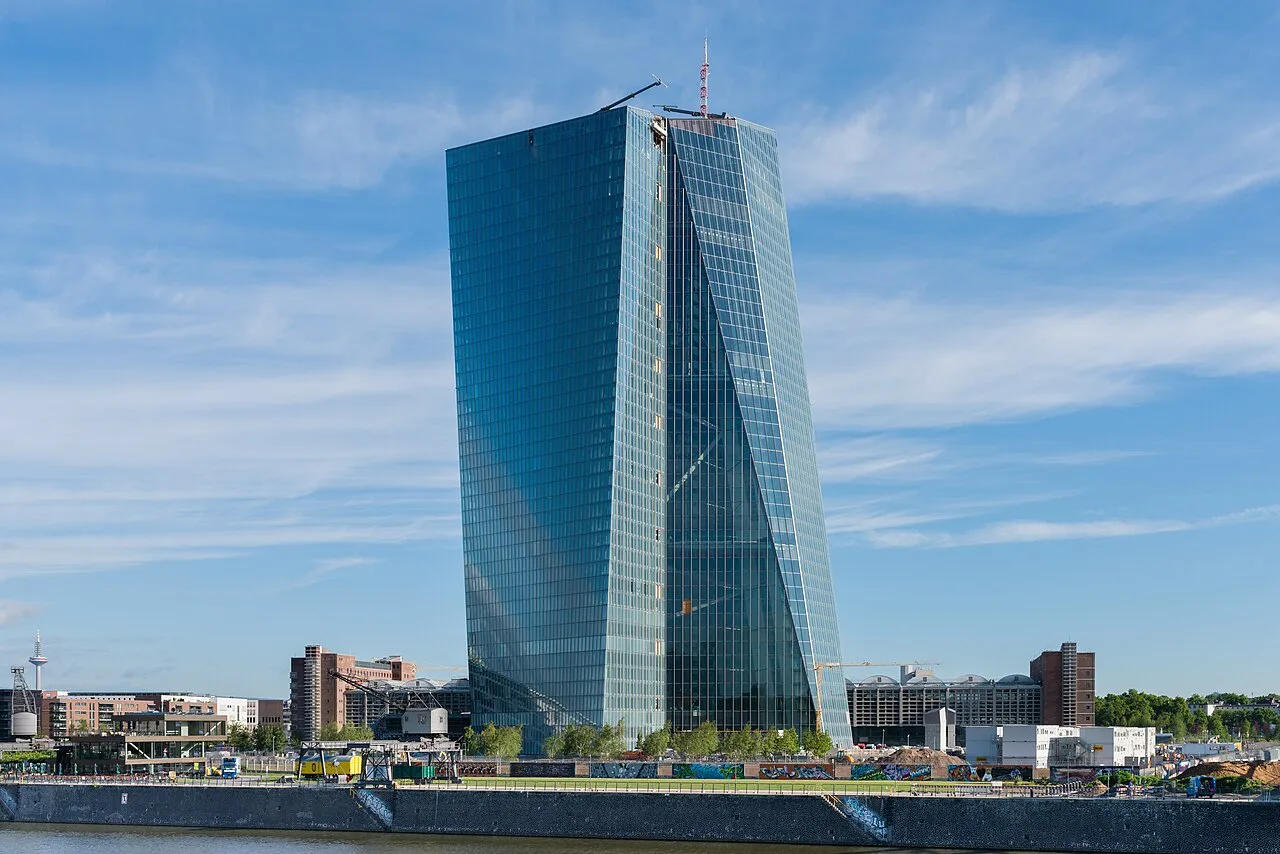
The euro zone economy grew 0.4% in the third quarter, twice the 0.2% economists polled by Reuters had expected, Eurostat's first estimate said on Friday. For a bloc whose largest economies are barely moving, that counts as good news. It also makes a December interest rate rise in Frankfurt more likely, not less, which is the opposite of what usually follows a slowdown headline.
Start with the number. Quarterly growth of 0.4% means output was about 1.6% higher than it would have been at an annual pace, modest but not recessionary. The detail underneath is patchier. France, the bloc's second-largest economy, shrank 0.1%, as investors demand higher borrowing costs to hold its debt while the government struggles to cut a large budget deficit. Germany grew 0.2%, Italy was flat, and Spain managed 0.6%. Ireland posted 5.5%, a figure that tells you little because multinational companies book huge amounts of activity there for tax reasons (caixabankresearch.com/en/ireland-country-skews-eu…).
The European Central Bank, which sets rates for the 21 countries that use the euro, held them steady on Thursday. The rate that matters most is the deposit rate, what it pays banks for parking cash overnight. The ECB said the jump in energy prices has not yet fed into wages and other prices, which it calls second-round effects. Markets read the same statement and still price one more quarter-point increase this year. Analysts quoted by CNBC expect the same: "The euro area is showing unexpected resilience against a backdrop of considerable economic and geopolitical uncertainty," said Joe Nellis of the accountancy firm MHA, while warning the resilience hides weak productivity, investment and demographics (cnbc.com/2026/10/30/euro-zone-gdp-fr…).
My call: the ECB raises its deposit rate by a quarter of a percentage point at its December meeting, by 31 December 2026. I'd be wrong if it holds rates unchanged or cuts instead. The reasoning is that growth is not collapsing, energy costs remain elevated, and the ECB has spent two years saying it will not let an energy shock become a wage-price spiral. A 0.4% quarter gives it cover to act.
Two things could stop it. If the Middle East energy shock fades before December, the case for tightening weakens quickly. If France's budget standoff turns into a broader euro-area problem, with borrowing costs rising across the bloc, the ECB would rather not tighten into that. Around 800,000 people demonstrated across France in October, 250,000 of them in Paris, according to the CGT union, so the political pressure is not easing. I will be watching French bond yields and the next inflation print before the December meeting, and I will score this call either way.