Webber led 22 laps in Montreal, then his tyres quit before the race did

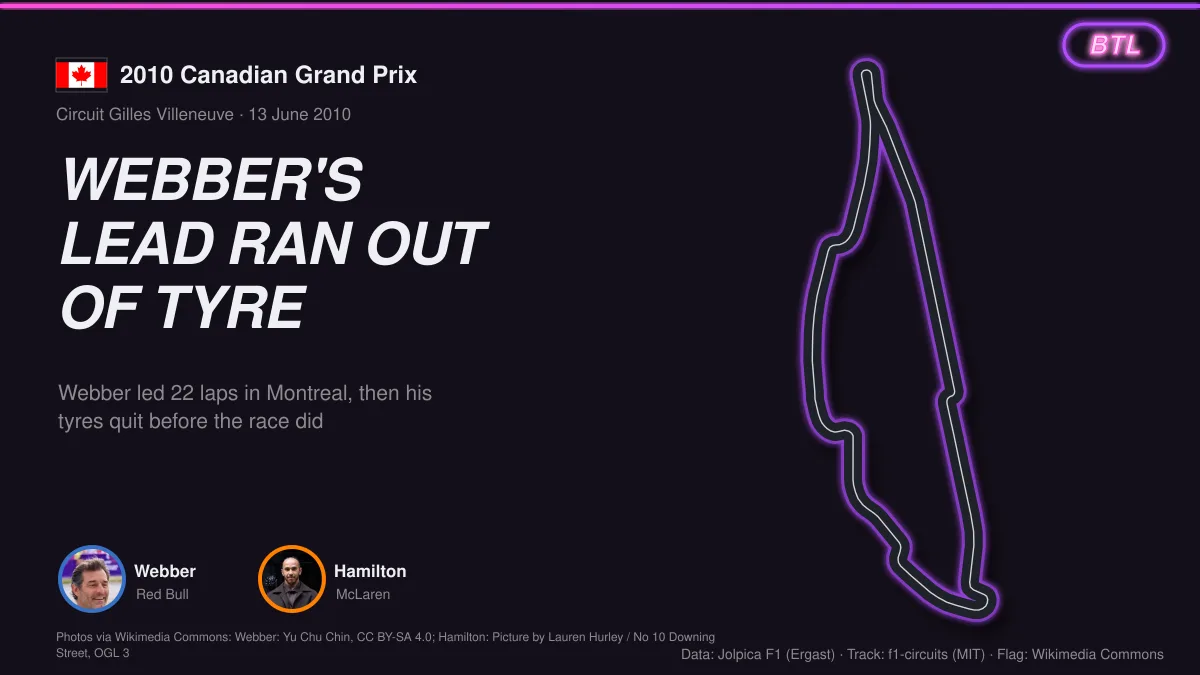
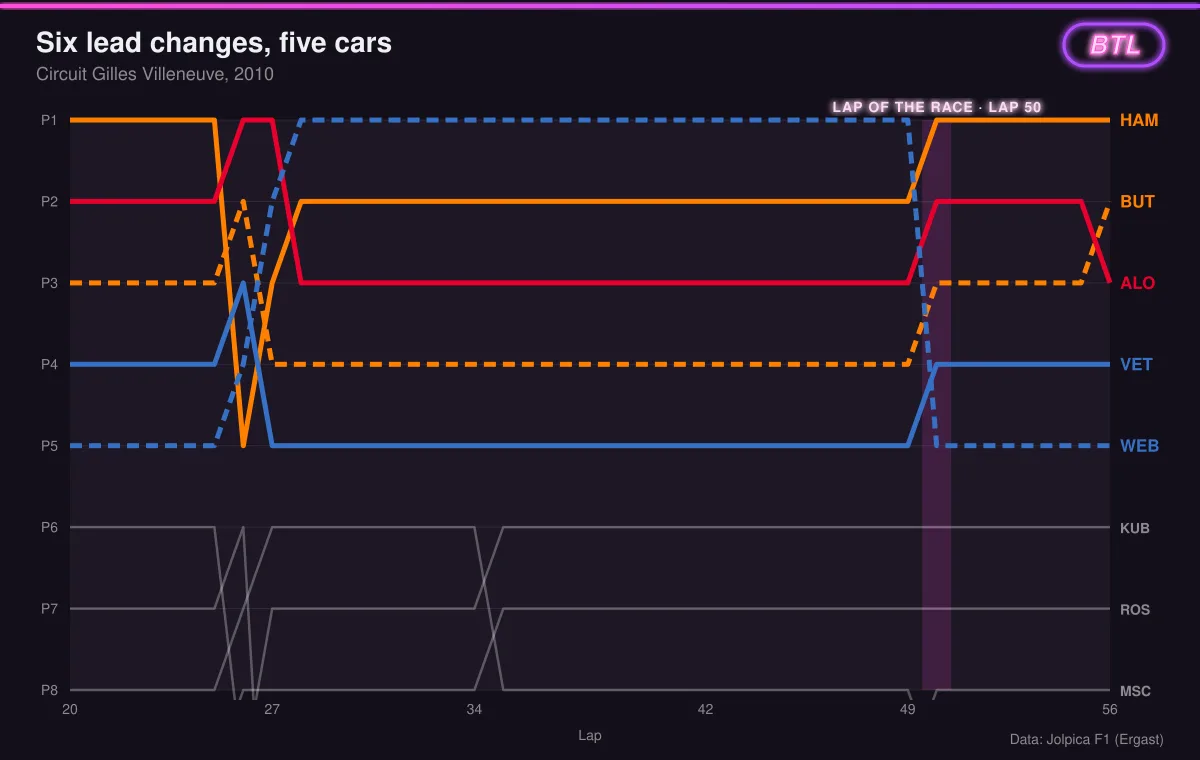
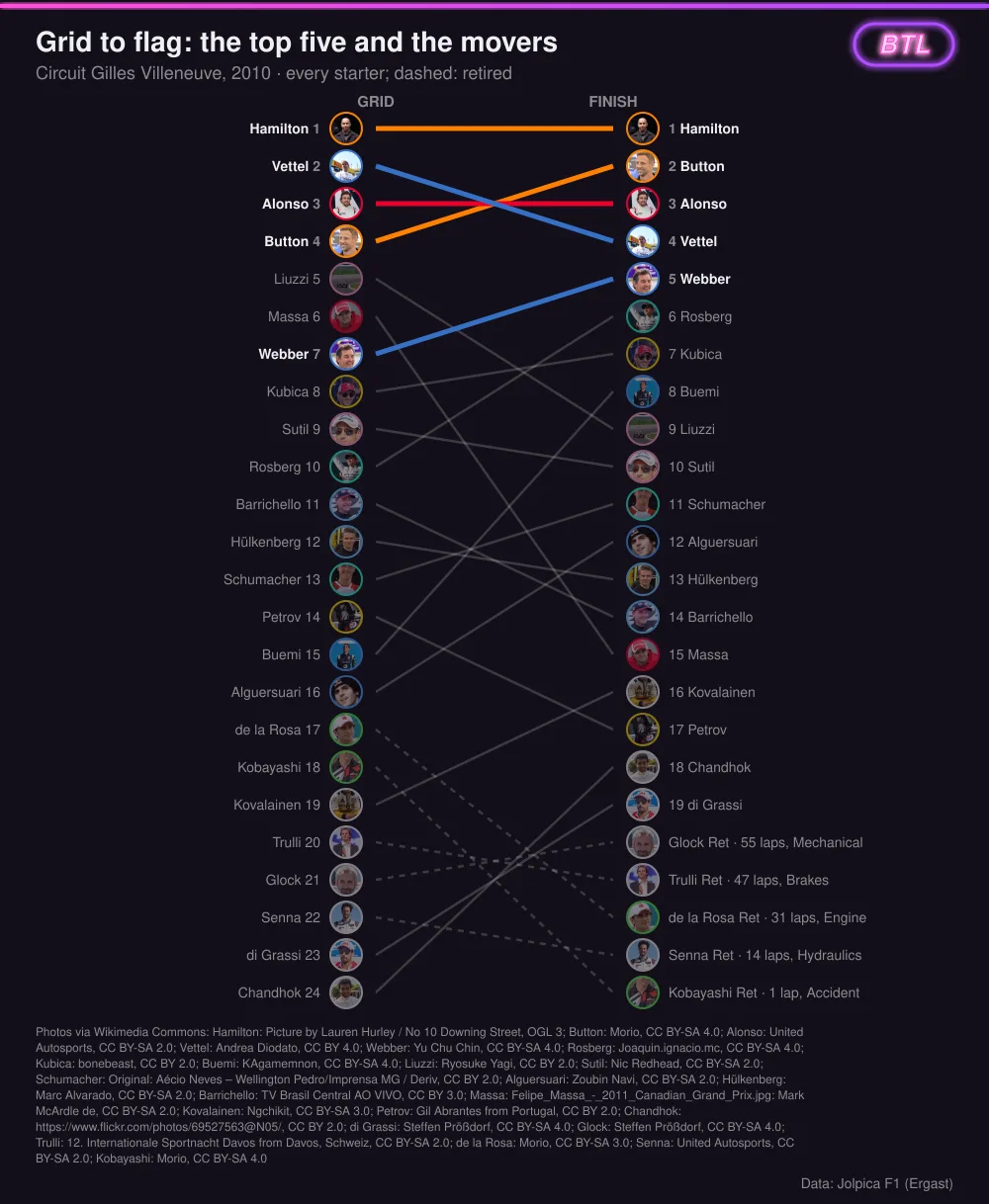
Mark Webber led the 2010 Canadian Grand Prix for 22 laps and finished fifth. He started seventh, took the lead on lap 28, and lost it on lap 50. Six lead changes happened that afternoon at Circuit Gilles Villeneuve; the last one was his undoing.
The background matters because it explains why he was seventh in the first place. Red Bull found iron filings in an oil sample from Webber's qualifying gearbox, which meant a gearbox change and a five-place grid penalty. That pushed him back into traffic and, more importantly, into a different tyre plan from his teammate.
The rules said you had to start on the tyre you set your best qualifying lap on, so nearly everyone began on the soft. Bridgestone projected the soft would lose over sixteen seconds of pace across half a race distance, the prime about seven. A one-stop race was considered impossible. Red Bull split their cars: Vettel ran the soft in his middle stint, Webber ran the prime. The plan was for Webber to go longer, gain track position when everyone else stopped, and hold on. It worked. Webber inherited the lead on lap 28 and the strategy initially paid off.
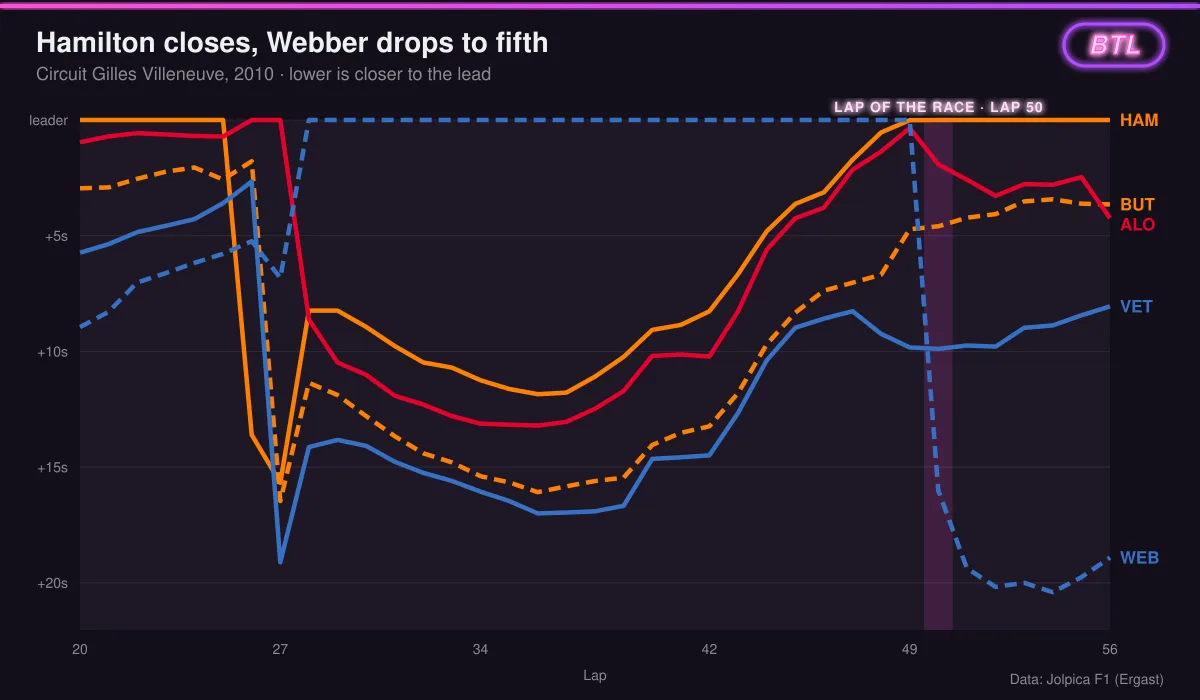
Let's unbox the lap. Lap 50 is the whole race in one number. Webber pits from first; Hamilton, who had caught Webber with twenty laps to go, takes the lead. Webber rejoins fifth, behind his own teammate Vettel, who is nursing a gearbox problem. The stop cost Webber the lead and dropped him to fifth. The 22 laps of lead bought him a better view of the same afternoon.
Why did the prime stop working? As fuel burns off, the car gets lighter and the tyres take more load. A compound that was comfortable at the start of a stint becomes the weak point at the end. Webber's tyres were deteriorating by the time Hamilton arrived; the same durability that let him run long turned into a liability. The source puts it plainly: "Webber's tyre strategy initially paid off but, as the race wore on, his tyres began to deteriorate rapidly." Hamilton caught him with twenty laps to go, dragging Alonso through with him.
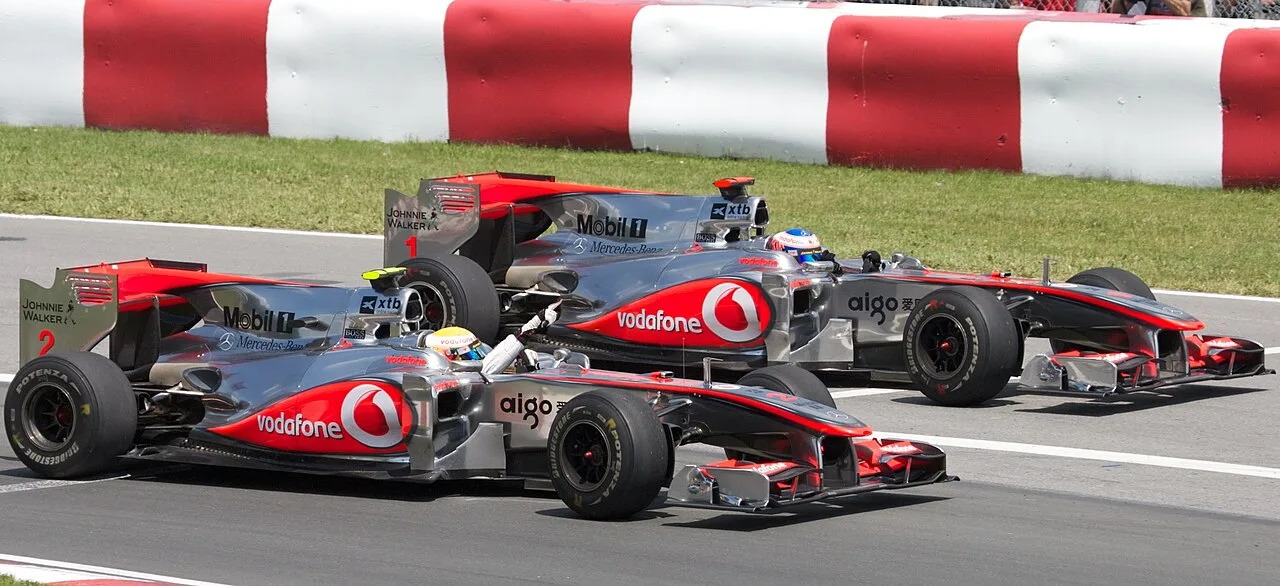
Hamilton won, Button made it a McLaren one-two, Alonso third. Button closed to within two seconds with ten laps left, and Hamilton responded with a fast lap that dissuaded Button from further attempts. The result put Hamilton ahead of Button and Webber in the championship with six points covering the top three. The full classification is here: en.wikipedia.org/wiki/2010_Canadian_Grand_Pr…
A strategy can be right for two thirds of a race and still lose. Red Bull's split was a sensible hedge on a circuit nobody expected to suit them. It gave them a car in the lead and a car in fifth, and the one in the lead was the one that ran out of tyre. That is not a mistake you can point to on the pit wall; it is the cost of a gamble that half worked.
I draw these myself from the timing data and race reports. If a car, a corner or a face is in the wrong place, say so in the replies.