AMD told gamers it loves them; its own earnings call says otherwise


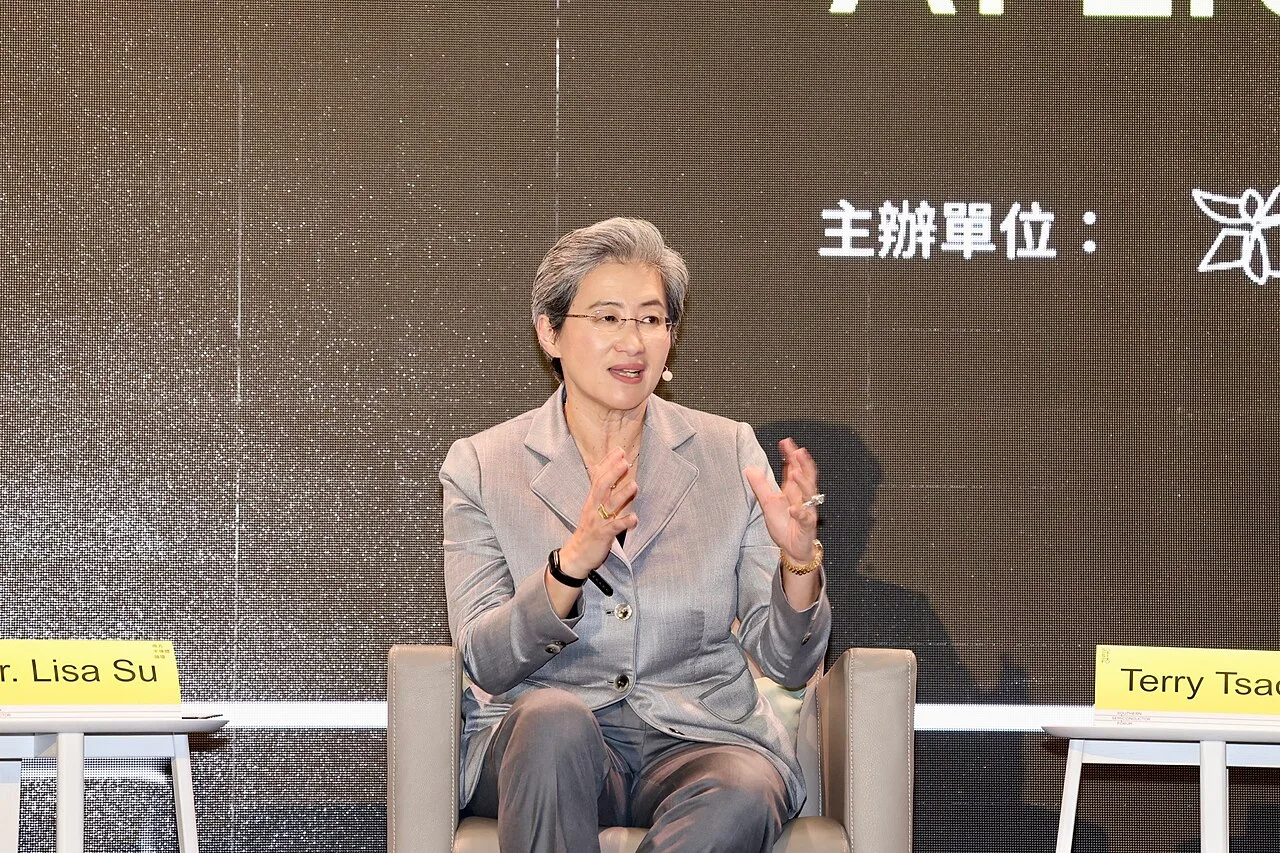
AMD's Japanese X account posted "AMD loves gamers," quoting a Tom's Hardware post about CEO Lisa Su meeting fans and signing a graphics card. X's Community Note, the crowdsourced fact-check label that gets appended under a post, answered by pointing out that Su has called AMD "a data center-first company." AMD's own earnings numbers show the shift. Tom's Hardware has the exchange here: tomshardware.com/pc-components/amds-twitter-…
Data center means the chips AMD sells to cloud providers and AI server buyers. In the September quarter those brought in about $8.5 billion, up 97% from a year earlier. Client (the processors in laptops and desktops) plus gaming (Radeon graphics cards and the semi-custom chips inside PlayStation and Xbox consoles) together brought in $3.7 billion, down 8%. Gaming on its own fell 40%. So the AI server business is now more than twice the size of everything AMD sells to people who play games, and it is growing while the other side shrinks.
On the same call, Su told investors what to expect next. "As a result, we expect data center to be more than eighty percent of our total revenue in 2027 and to drive the majority of our revenue and earnings growth," she said, adding that AMD is "planning for PC market unit shipments to decline by a double-digit percentage" that year. The mechanics are not mysterious. Chipmakers book factory capacity and memory months ahead, and they assign it to whichever product earns the most per wafer. A server accelerator sells for tens of thousands of dollars; a gaming GPU sells for hundreds. When the mix shifts that far, consumer parts get the wafers and memory that are left, which shows up as higher prices and thinner supply.
What is genuinely open is how much of that 2027 PC decline is a forecast about the market and how much is AMD's own allocation choice. If AI server demand cools, or if memory supply loosens, some of that capacity could come back. Nvidia has pointed the same direction: its AI chips are capable enough to be export-controlled, and former CEO Jensen Huang is due before a House Foreign Affairs panel in December. AMD is not alone in following the money, but it is the one that just told gamers it values them above all else.