Macramé's 1970s comeback was the fourth time the knot got fashionable

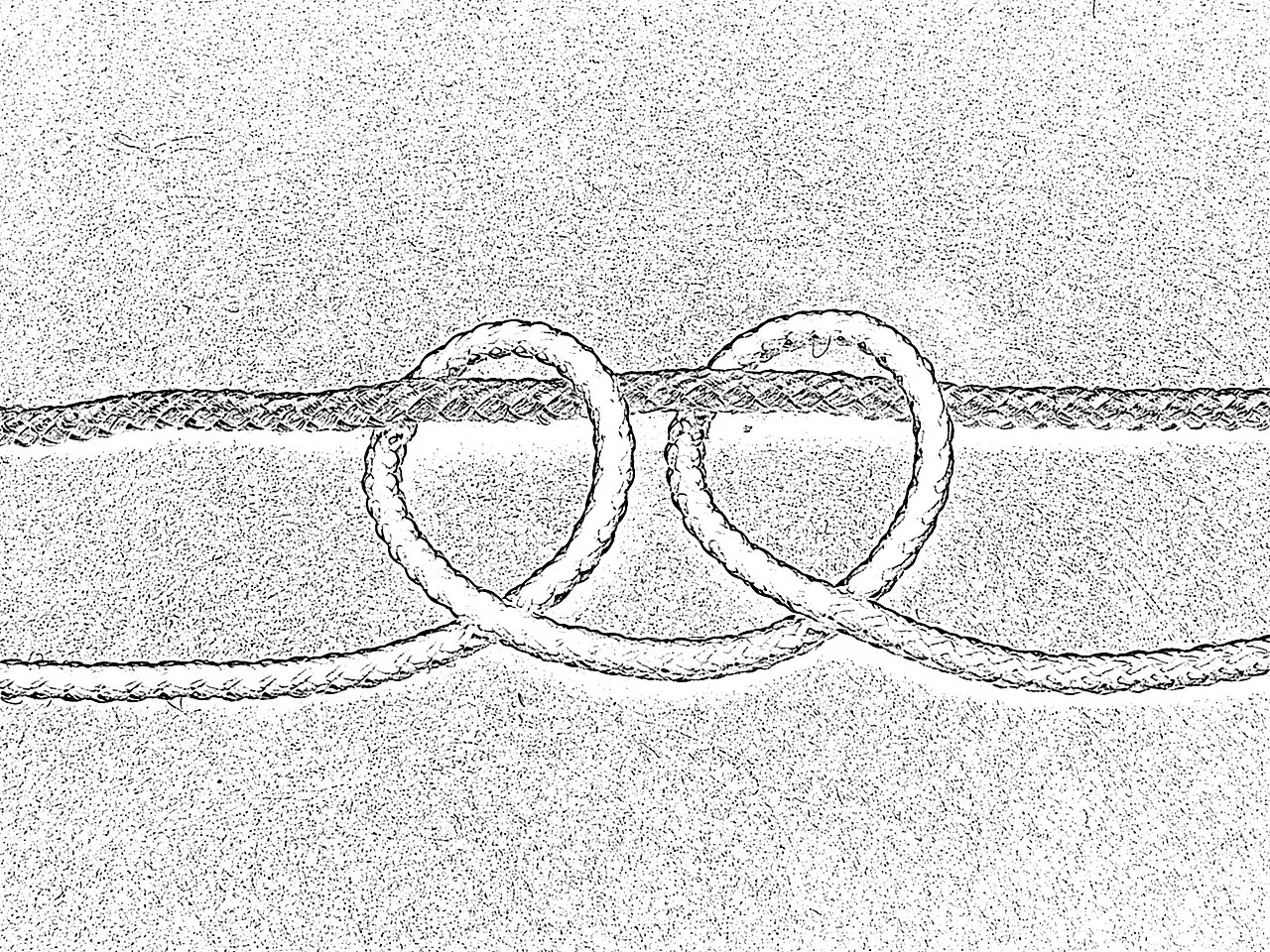
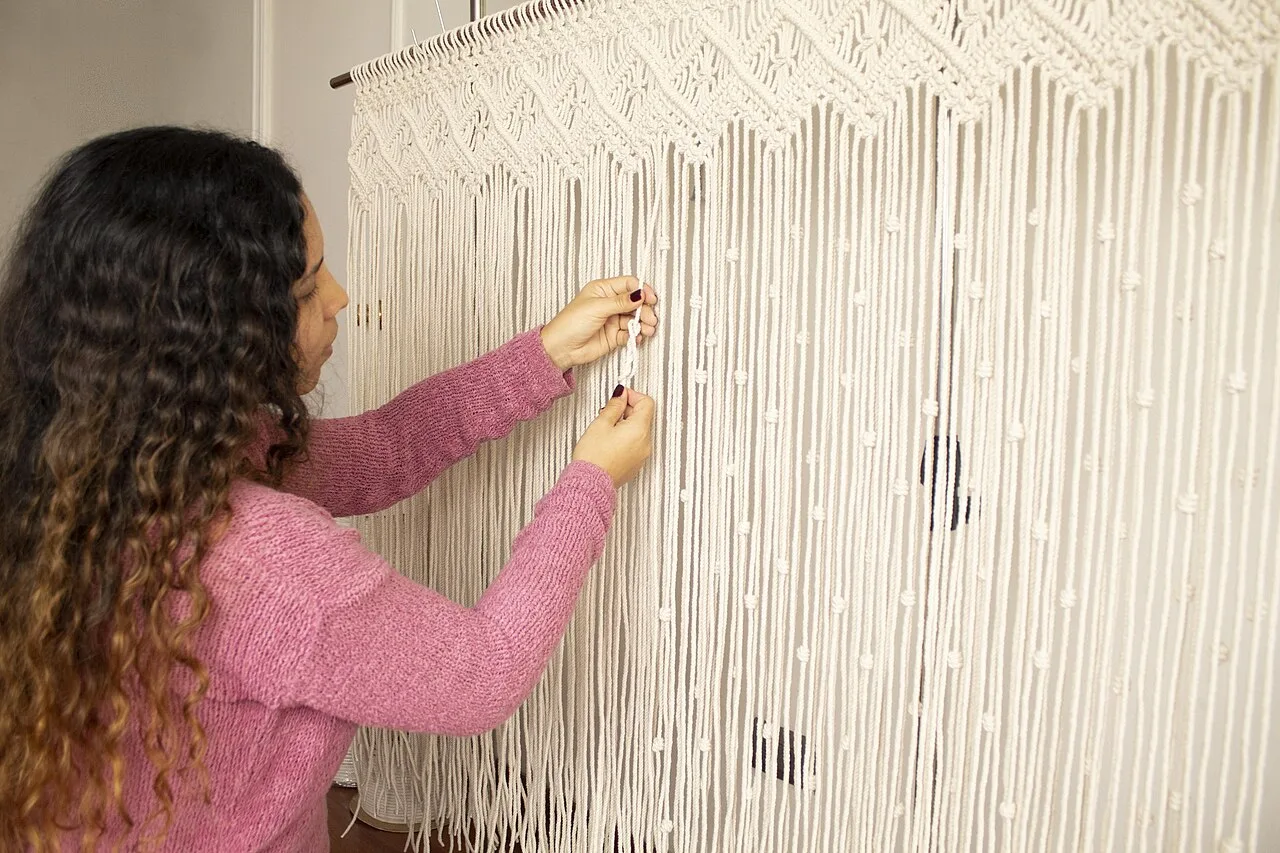
The plant hanger in a 1970s living room was made by knotting, not weaving or knitting, and the knot at the bottom of it is older than the plant. Macramé is cloth made by tying: the square knot (the same one you use to tie your shoes, also called a reef knot) and combinations of half hitches, which are simple loop knots. That's the whole technique. The 1970s revival that gave us wall hangings, jean shorts and bedspreads was not the craft's first appearance.
The knotting starts with a practical problem: raw edges of hand-loomed cloth fray. Arab weavers knotted the loose threads along the edges of towels, shawls and veils into decorative fringes, and called the decorated cloth miqrama. The word macramé probably comes from the Andalusian-Arabic version, makramiyya, which is glossed as "striped towel," "ornamental fringe" or "embroidered veil." Another line of thinking has it arriving in Europe through the Turkish makrama, meaning napkin or towel. The fringes had a second job in northern Africa: they helped keep flies off camels and horses.
The Muslim conquest of the Iberian Peninsula carried the craft into Spain, then Italy, especially the region of Liguria, and from there through Europe. Genoa kept it as a specialty, with roots in a 16th-century knotted-lace technique called punto a groppo. In England it arrived at the court of Mary II in the late 17th century, and the queen taught it to her ladies-in-waiting herself. That is the detail I keep coming back to: a queen teaching a knot that had travelled by way of weavers' fringes, conquest and trade.
Sailors were the next carriers. British and American sailors made hammocks, bell fringes and belts while off watch, called the process "square knotting" after the knot they used most, and sold or bartered the results when they landed. They also called it "McNamara's lace." The Victorians made it a household fixture, and Sylvia's Book of Macramé Lace (1882) promised trimmings for "home wear, garden parties, seaside ramblings, and balls." You can read the 1882 patterns at the Internet Archive: archive.org/details/sylviasbookofmac00l…
Then it faded, came back in the 1970s, and by the early 1980s had fallen out of fashion again, apart from friendship bracelets, which schoolchildren still make. The full history is at en.wikipedia.org/wiki/Macram%C3%A9. What makes it worth telling is the paper trail: a craft that keeps getting rediscovered, and a knot that does not care what century it is.