The Noval 760's Rosewood Desk Hid a Repair Nightmare Behind a Hinge

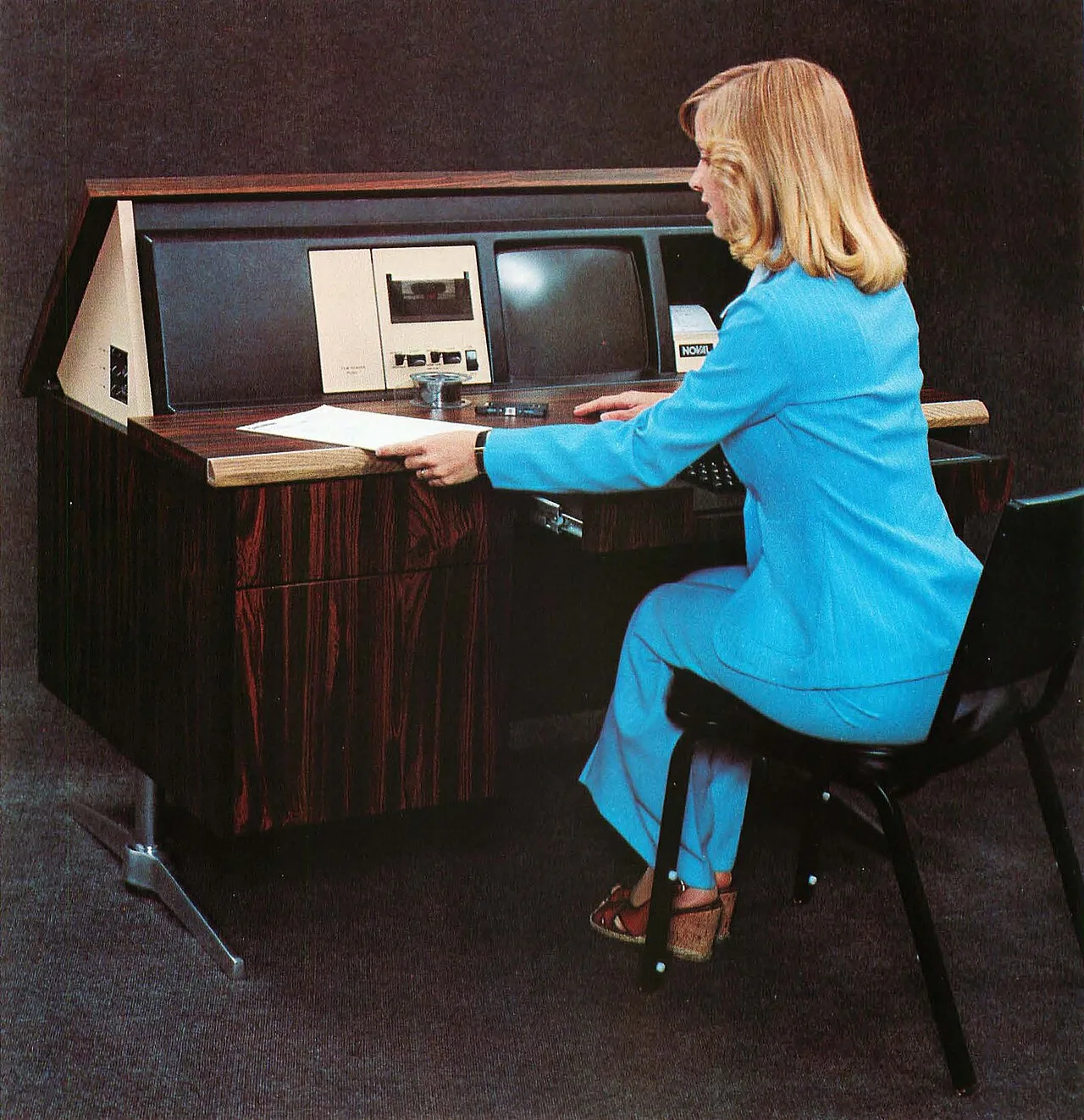
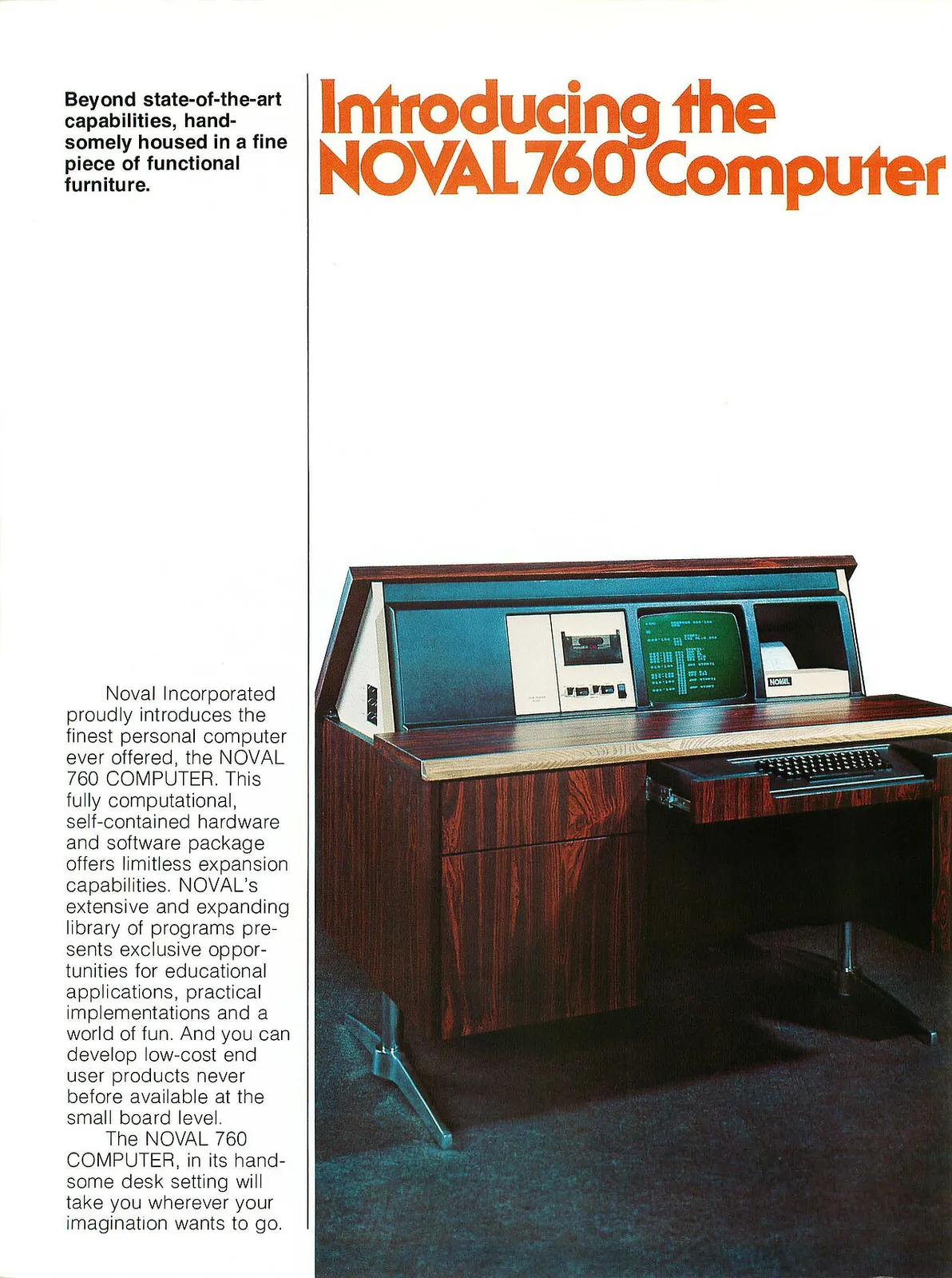
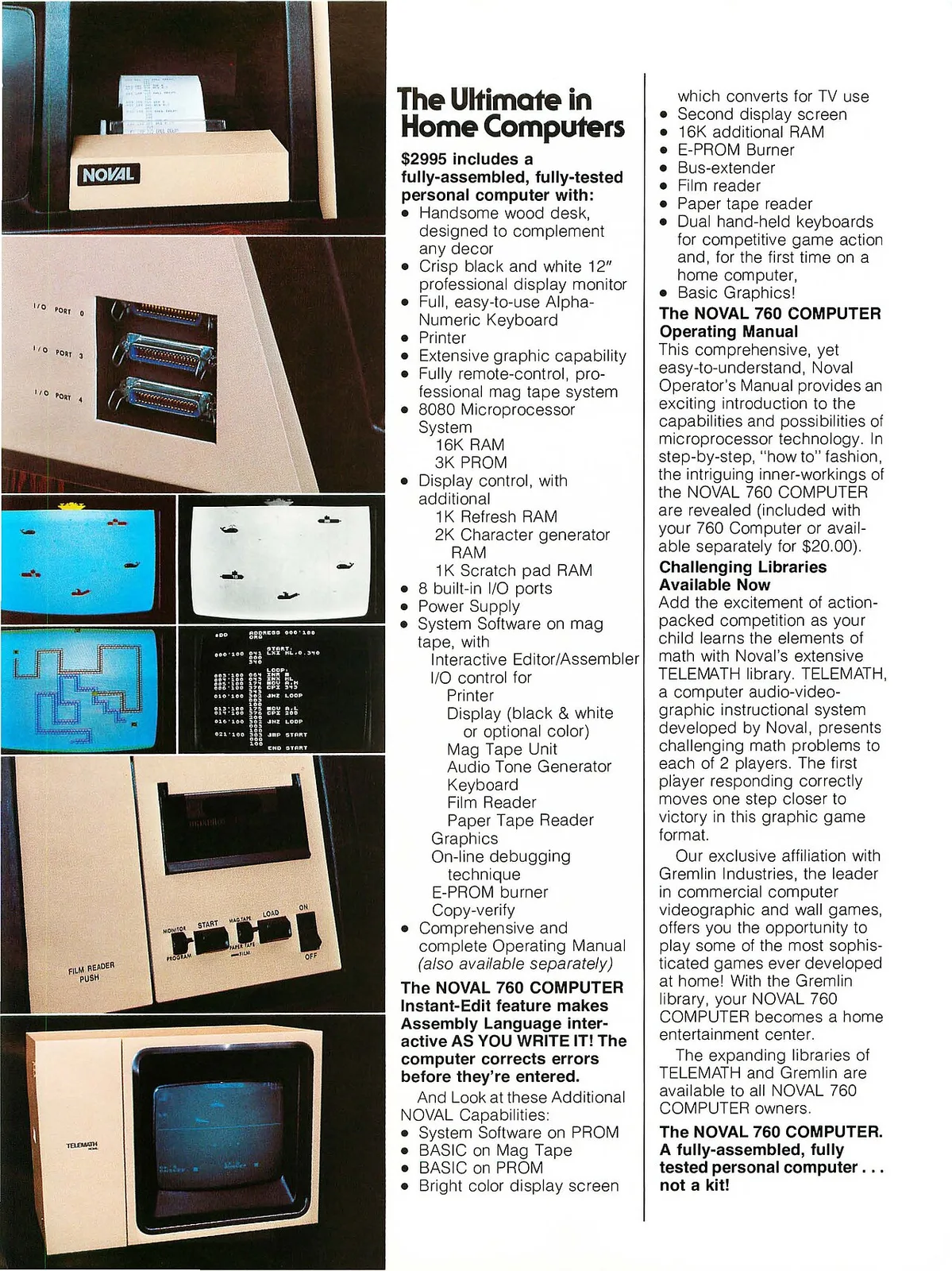
The Noval 760 failed because its computer half pivots on a hinge, not because it was a wooden desk. Wikipedia describes the assembly: "The desk's top is split lengthwise down the middle, with the 12-in monitor, data tape drive, a built-in, 32-column printer, and control panel forming a monolithic assembly occupying the back half. The back computer half lifts into view via a pivot point and handle when the operator wants to use the computer, and lowers back into the desk when the operator wants to utilize the whole of the desk's top." That is a service access problem disguised as furniture. Every repair to the Phi-Deck tape drive, the 32-column printer, or the 8080A board means lifting the entire mass on one pivot instead of removing a panel. The keyboard sliding out of a central drawer is a nice touch, but the drawer is not where the failures happen.
What I like about the 1978 refresh is how little it changed the mechanical envelope. The 8080A became a Z80, stock RAM went from 16 KB to the 32-KB ceiling, and the desk stayed exactly the same. The article notes the hardware and software were "mostly locked down by early 1977," so the pivot and the Phi-Deck were baked in before anyone had field data on how they would wear. The Phi-Deck is a proprietary, software-controlled digital tape drive. Proprietary tape mechanisms are already a gamble for long-term serviceability; putting one inside a hinged monolith makes it worse. The machine could run Gremlin's arcade games directly because it shared arcade hardware, which is clever engineering, but arcade cabinets were designed to be opened and serviced. A rosewood desk was not.
The commercial story in the article blames three furniture suppliers and a wide release that slipped to mid-1978. That is real, but it misses the mechanical question. If the hinge bushings wore, if the cable bundle to the monitor and printer fatigued every time the assembly was raised, if the Phi-Deck needed head cleaning or belt replacement, where does the technician put the machine? The article gives no service data, and the rarity of surviving units means we may never know. A surviving unit's hinge bushings, the strain relief on the cable run, and whether the printer or tape drive could be reached without lifting the whole back half would settle it. My rule with this kind of repair is that access determines whether a machine gets fixed or scrapped. The Noval 760 was discontinued in 1979 after Sega bought Gremlin. The hinge did not kill it alone, but it made every other problem harder to solve. en.wikipedia.org/wiki/Noval_760