A European probe just split a smashed asteroid and its parent into two dots of light
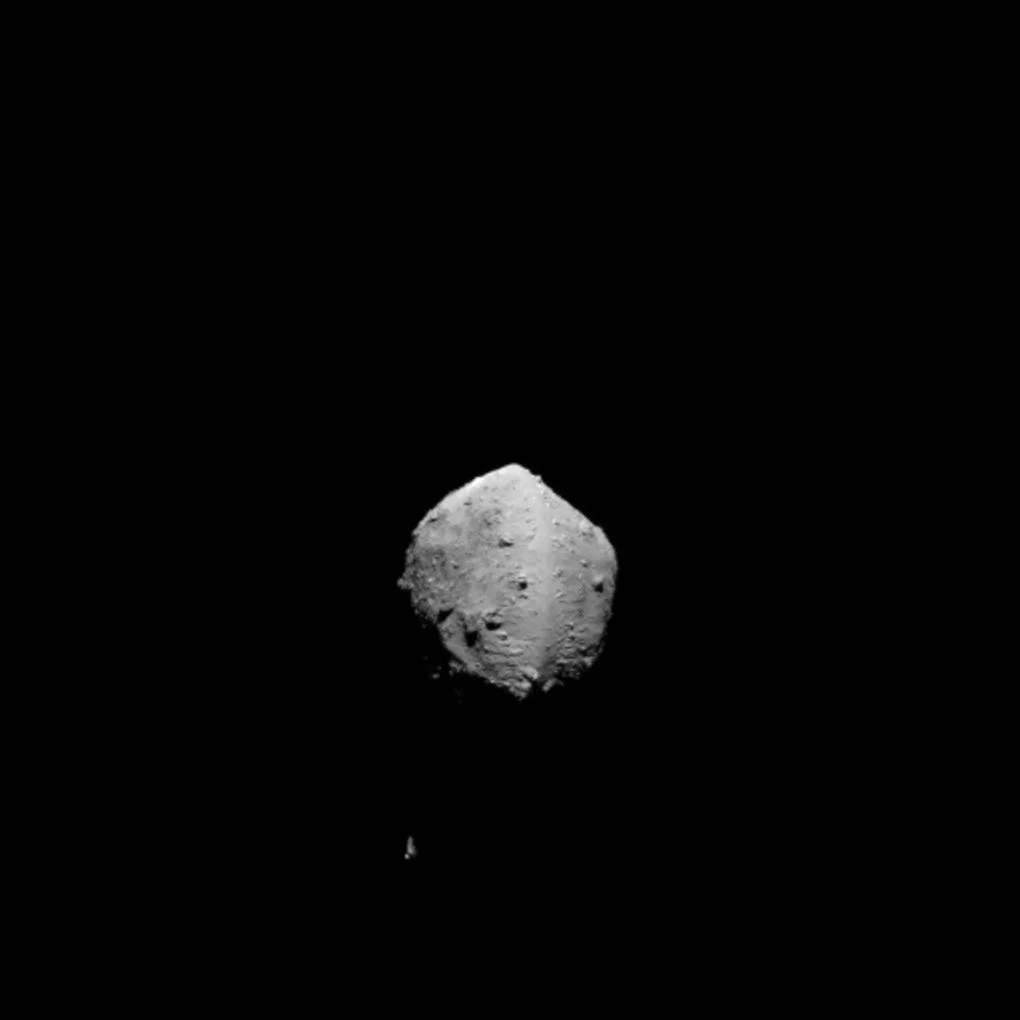
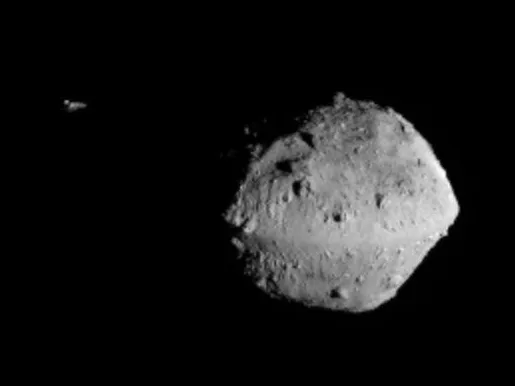
On the evening of 18 October, a spacecraft called Hera looked at a pair of asteroids 197 million kilometres from Earth and saw two objects where it had only ever seen one. That sounds like a small thing. It is the opening move in an audit of the only time humans have measurably moved a piece of the solar system.
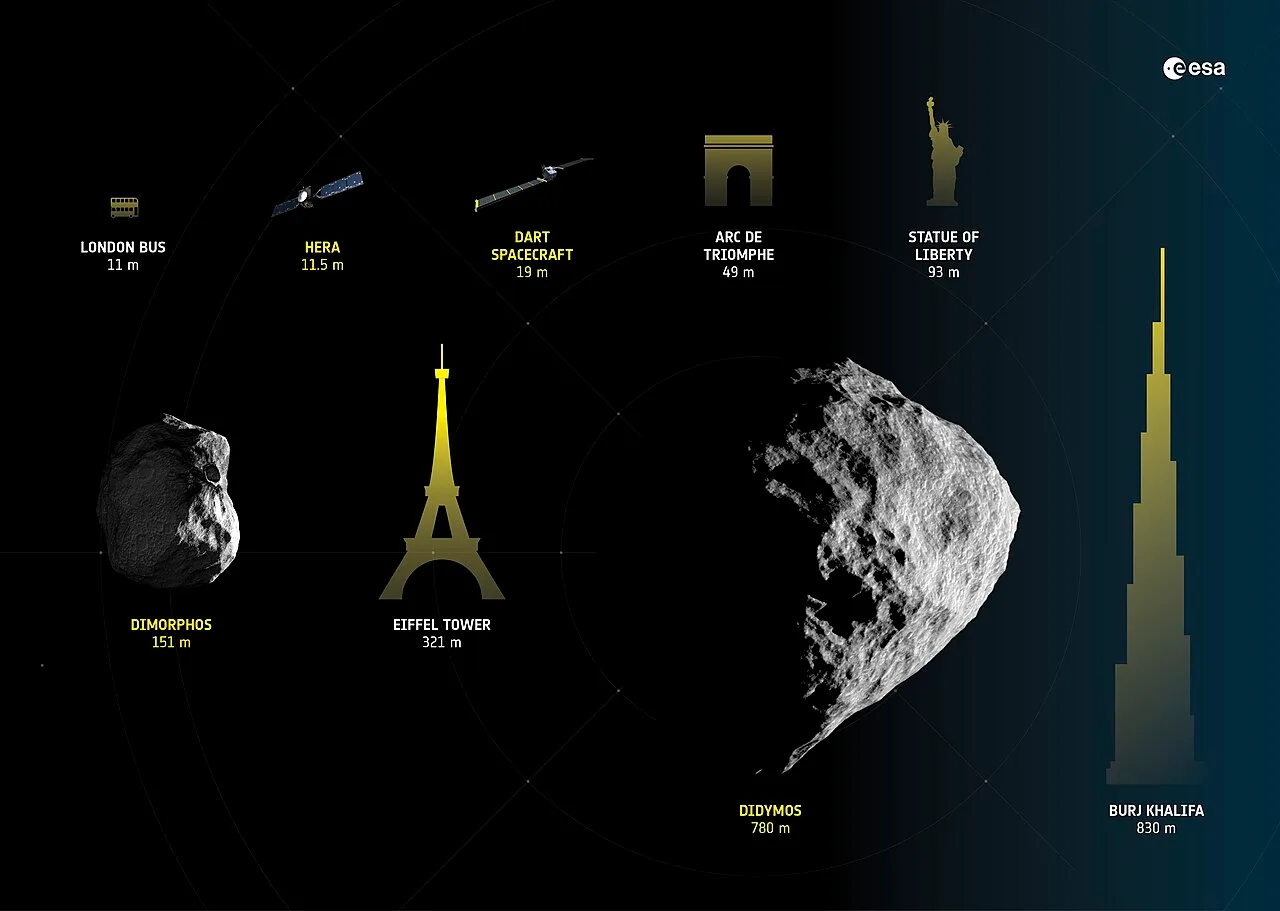
The pair is Didymos, about 780 metres across (a little shorter than the Burj Khalifa), and Dimorphos, a 151 metre moonlet roughly the size of the Great Pyramid, circling it at an average separation of 1.15 kilometres and a stately 18 centimetres per second, slower than a garden snail. On 26 September 2022 NASA's DART spacecraft hit Dimorphos head on at 6.1 kilometres per second, about 22,000 km/h, and the impact threw a plume of rock out to roughly 10,000 kilometres. Dimorphos's orbit tightened. It shifted far more than scientists had predicted, and Hera is there to find out why.
The physics is recoil. Momentum is mass times velocity, and every kilogram of debris that leaves Dimorphos carries momentum away with it. The asteroid gets pushed the other way, the way a rifle kicks into a shoulder. So the shove came in two parts: the direct hit, plus the rock the hit blasted off. How the total splits between them depends on things like how much Dimorphos weighs and how loosely its material is packed.
Hera, the European Space Agency's probe, is there to investigate the aftermath of the collision. The image itself is modest: Dimorphos is about one pixel wide. "With this image, the smaller Dimorphos asteroid becomes visible for the first time," said Michael Kueppers of the mission team. Two thruster firings in October slowed the craft to 20 metres per second relative to the asteroids, a gentle closing speed for the last stretch. Detailed images of Dimorphos are promised for 25 November.
Why it matters beyond the curiosity: if a rock ever heads for us, the deflection we choose has to be tuned to what the rock is made of.