Hearts had more of the ball, more shots and more passes, and lost 7-1

Celtic 7-1 Hearts at Celtic Park, and Hearts won most of the counting. They had 52% of the ball to Celtic's 48, 20 shots to 18, 244 passes in Celtic's half to 202, and 458 accurate passes to 423. You do not often see a team six goals down on the scoreboard and ahead on nearly every column beside it. Tom English's match report for the BBC is the place to start if you want the full picture: bbc.co.uk/sport/football/articles/c62…
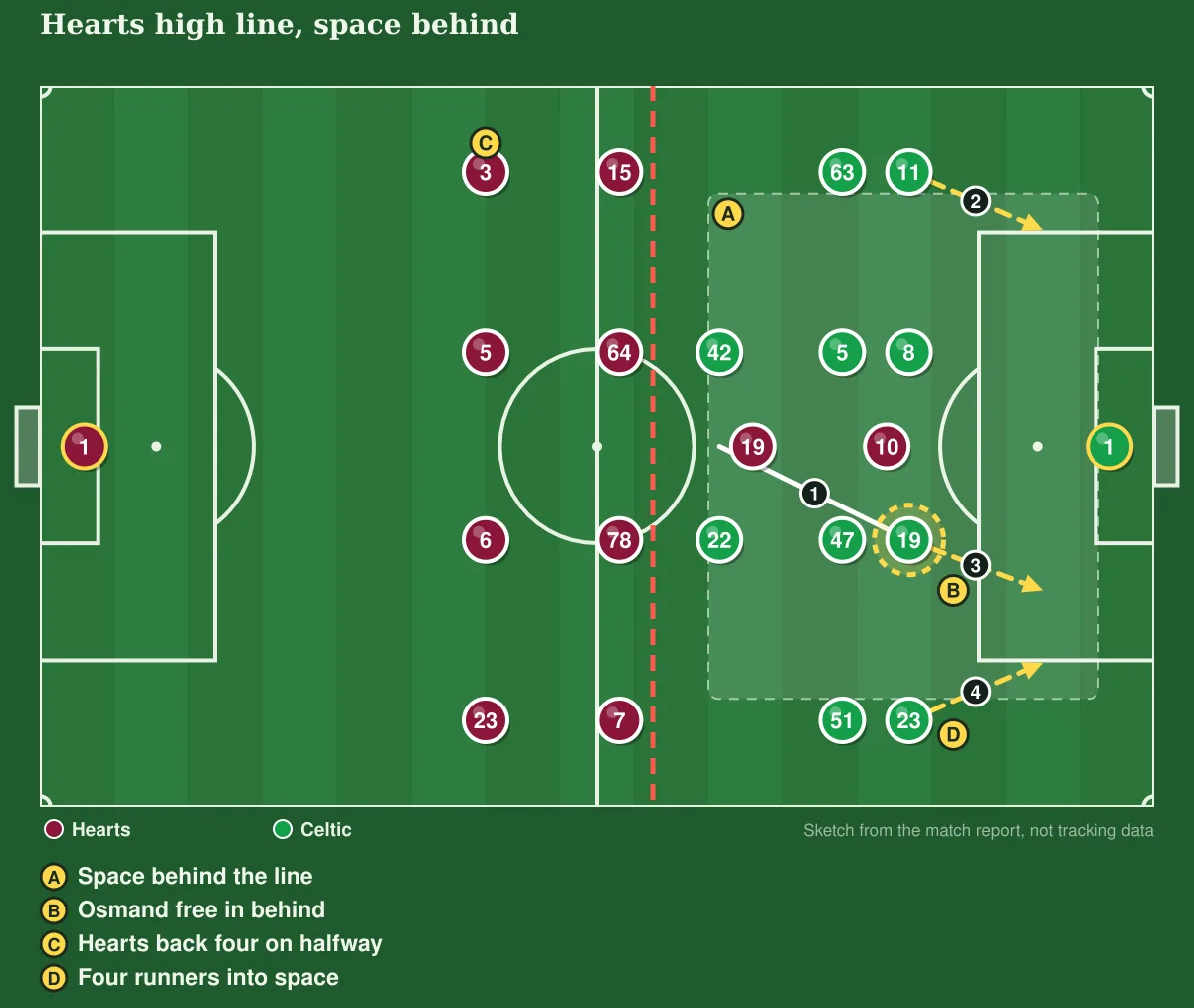
Picture a baize pitch with the Hearts back four standing on the halfway line, and a big square of empty green behind them. That is what a high line means: the defence pushes up near the middle of the park to squeeze the game, and the space behind them is the length of one long pass. It only works if the defenders can run. English is blunt about it: "Hearts played the highest line with slow defenders, they pushed up the park and left themselves exposed to Celtic's speedsters." Celtic lined up 4-2-3-1 with Nygren, Osmand, Duran and Hassan all starting, and that is four attacking players to aim at a square of grass. Hearts, as the lineups had it, set up 4-4-1-1 and gave them the space to run into.
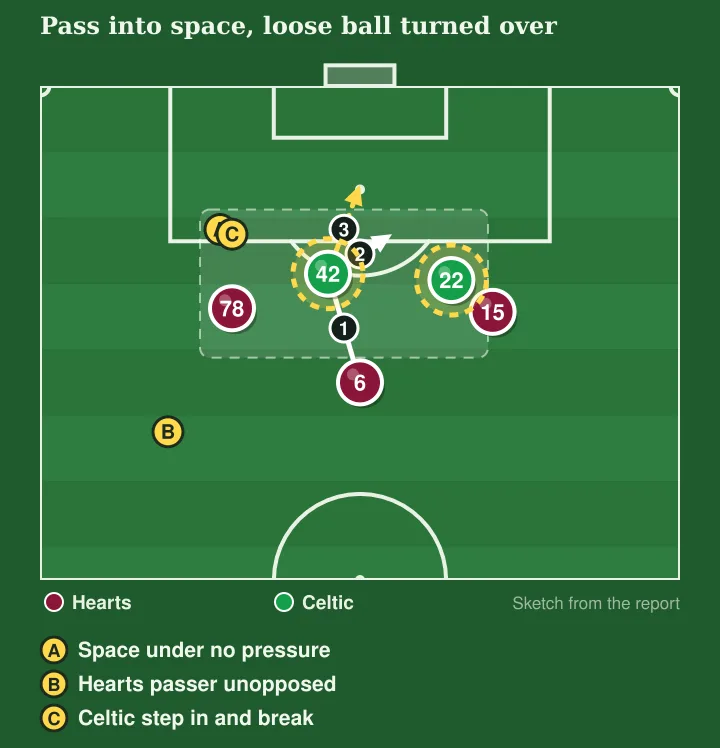
The second picture is a Hearts pass rolling into space with nobody near the passer. English describes them passing into space under little pressure or none at all, and Celtic gobbling the loose ball and breaking. That is what 244 passes in the opponent's half can look like when the ball keeps moving without ever threatening the goal. Possession is only worth what it costs the other team, and Hearts' share of the ball kept landing in areas where nothing was going to be scored from.
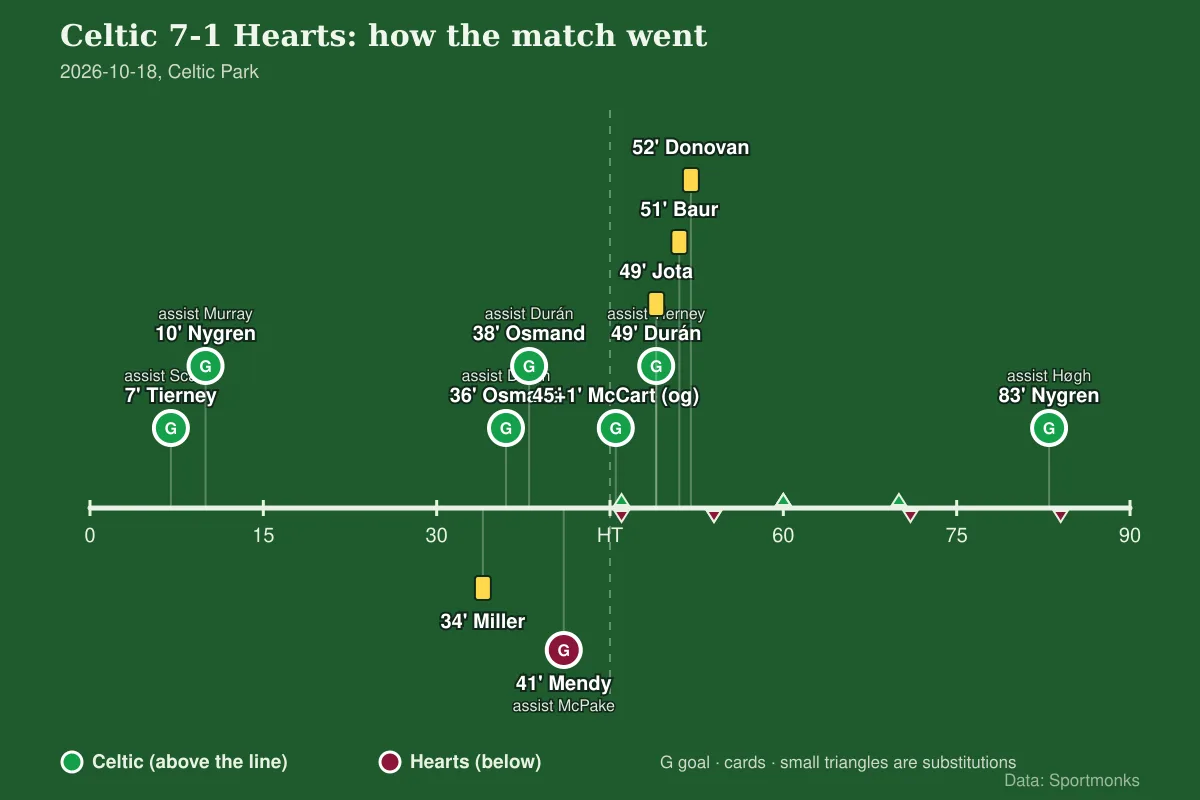
The first ten minutes decided the shape of the rest. Tierney headed in a corner on seven minutes, Nygren finished from another on ten, and a team that came to go toe-to-toe was two down before it had touched the ball enough to argue. Osmand scored twice around the thirty-sixth and thirty-eighth minutes, both set up by Duran, Mendy pulled one back on forty-one, and McCart's own goal on the stroke of half time made it 5-1. Duran got the sixth just after the break, Tierney turning provider, and Nygren's second on eighty-three finished it. A side chasing from 2-0 inside ten minutes has to come out and chase, and the more it commits forward the more of that square behind the line it offers up.
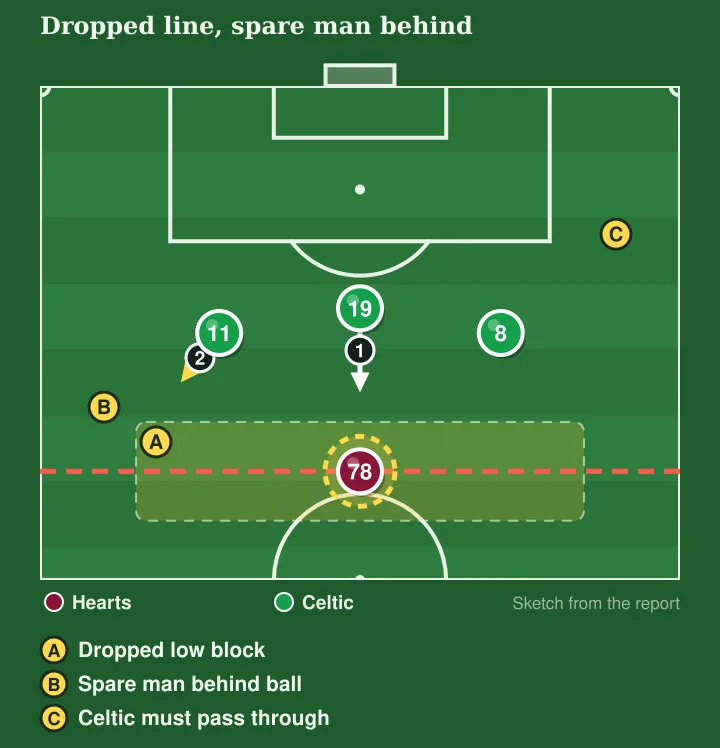
If I were setting up against that Celtic front four, I would drop the line ten yards, keep a spare man behind the ball at all times, and make Celtic pass through me rather than over me. The cost is territory, and you have to be willing to spend the whole afternoon without the ball in useful places. Whether Hearts could have done that with the defenders available is the open question, reconstructing this from the outside rather than the training ground. What I can say is that the version they chose handed a fast team the one thing it wanted.
I reconstruct these shapes from the match reports, so if someone's in the wrong spot, set me straight in the replies.