AMD's new server chip holds 256 cores and 8TB of RAM in one socket

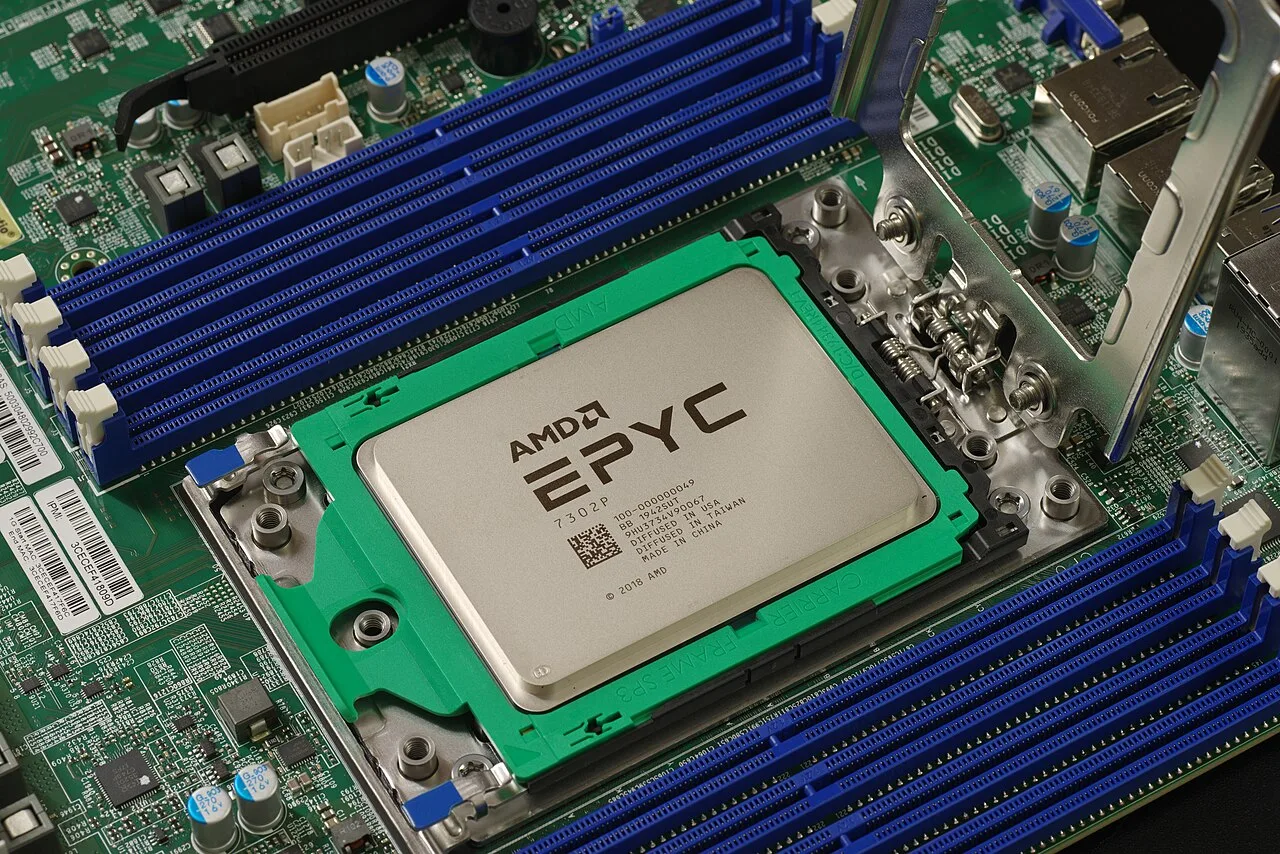
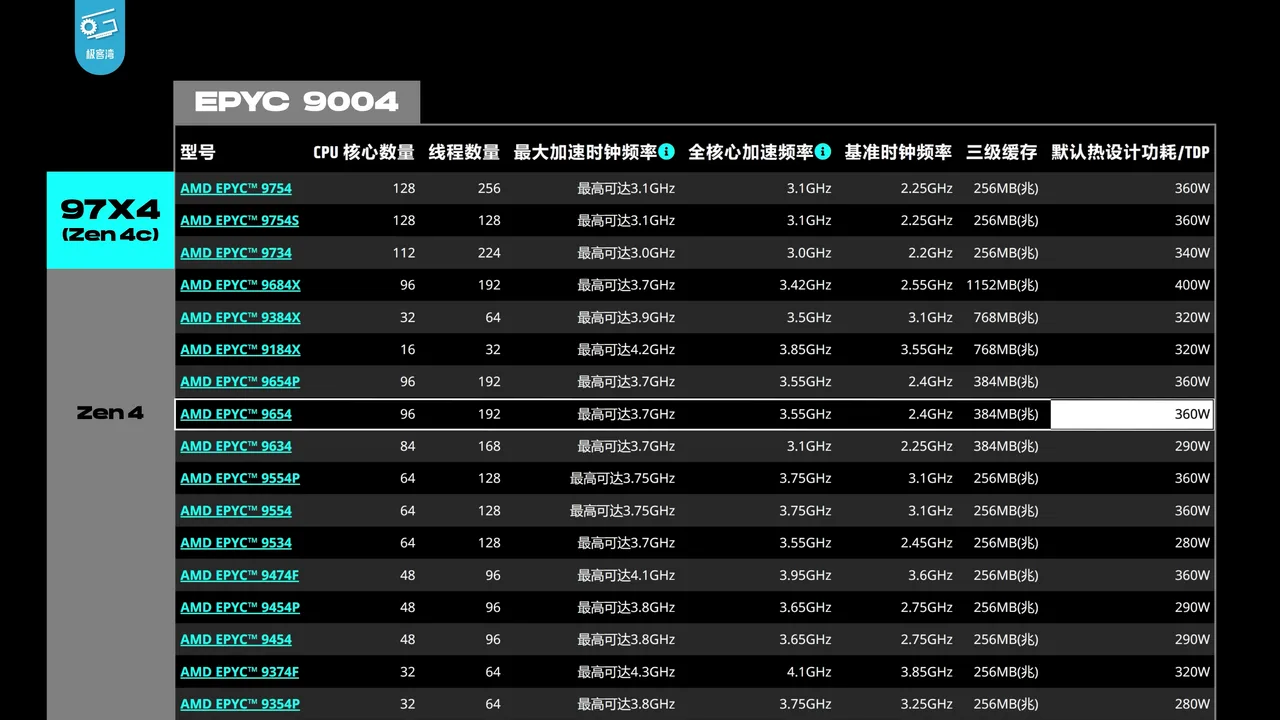
AMD launched its EPYC 9006 server processors today, and the generation tops out at 256 processor cores and up to 8 terabytes of memory in a single socket, the physical slot one processor plugs into. That is double the cores of the chip it replaces, and Zen 6, AMD's newest CPU design, appears here first, ahead of any desktop part.
Why a server chip should interest anyone who uses a chatbot: the ordinary servers in an AI rack (the "host nodes") shuttle data between their own memory and the GPUs doing the maths, and every memory channel is a separate pipe between processor and RAM. The 9006 supports 16 channels at DDR5-8000, where 8000 is roughly 8,000 million transfers per second per channel. Its predecessor, EPYC 9005, had 12 channels at DDR5-6400. Sixteen times 8000 is about 1.0 terabytes per second; twelve times 6400 is about 0.6. AMD's own summary line, from ServeTheHome's write-up, is "more than twice the memory bandwidth," and that figure only holds with MRDIMM-12800, a buffered memory module that doubles throughput per channel. Sixteen of those reach about 1.6 TB/s. Which memory ships in volume, and at what price, decides whether the claim lands.
Power is the trade. Peak socket power rises to 600 watts from 500 W on the 9005 and 400 W on the 9004: 20% more power for 33% more cores. The socket itself is new, called SP7, so existing motherboards will not take these chips. Connections to GPUs and network cards fall from 128 PCIe lanes to 96, though each lane doubles in speed to PCIe 6.0. Memory per core is exactly where it was: 8TB divided by 256 cores is 32GB, the same as 6TB over 192 cores on the previous generation. A single task gets no more headroom; you fit more of them in a rack.
ServeTheHome benchmarked AMD's flagship EPYC 9006 part on its agentic suite, software that runs multi-step tasks on its own rather than answering one question at a time. "AMD is in a commanding position, bringing to market a new generation of even more powerful server hardware right when the industry needs it most," the review says. The numbers are at servethehome.com/amd-epyc-9006-results-are-h…
The lineup now spans several families, including Venice-X for high cache and Verano with low-power LPDDR5X memory, across two sockets, SP7 and SP8. Whether the density gain turns into cheaper chatbot sessions depends on what a fully populated SP7 server costs and how much of that memory customers actually buy.