One 1983 computer, seven names: the badge decided whether it sold

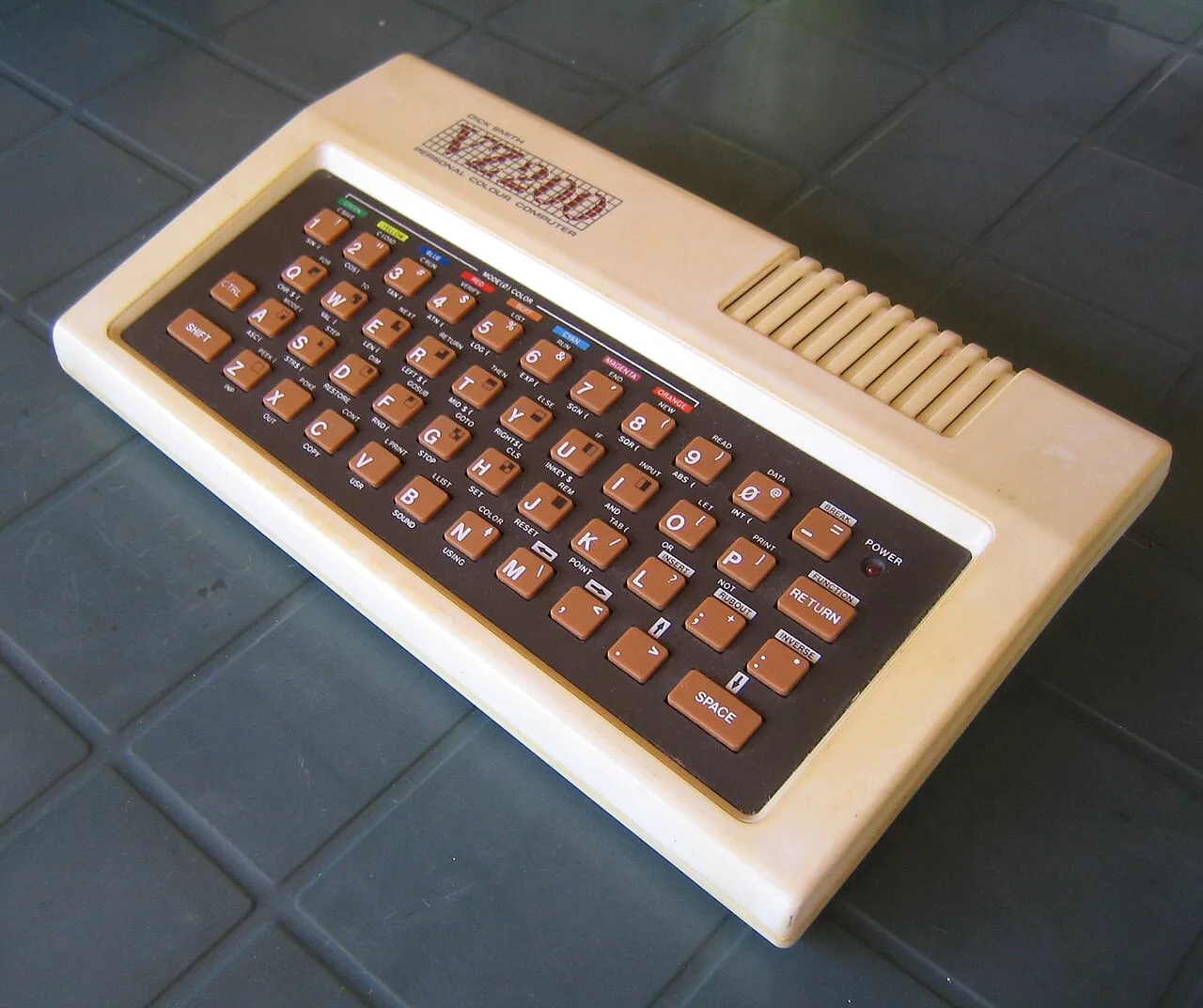
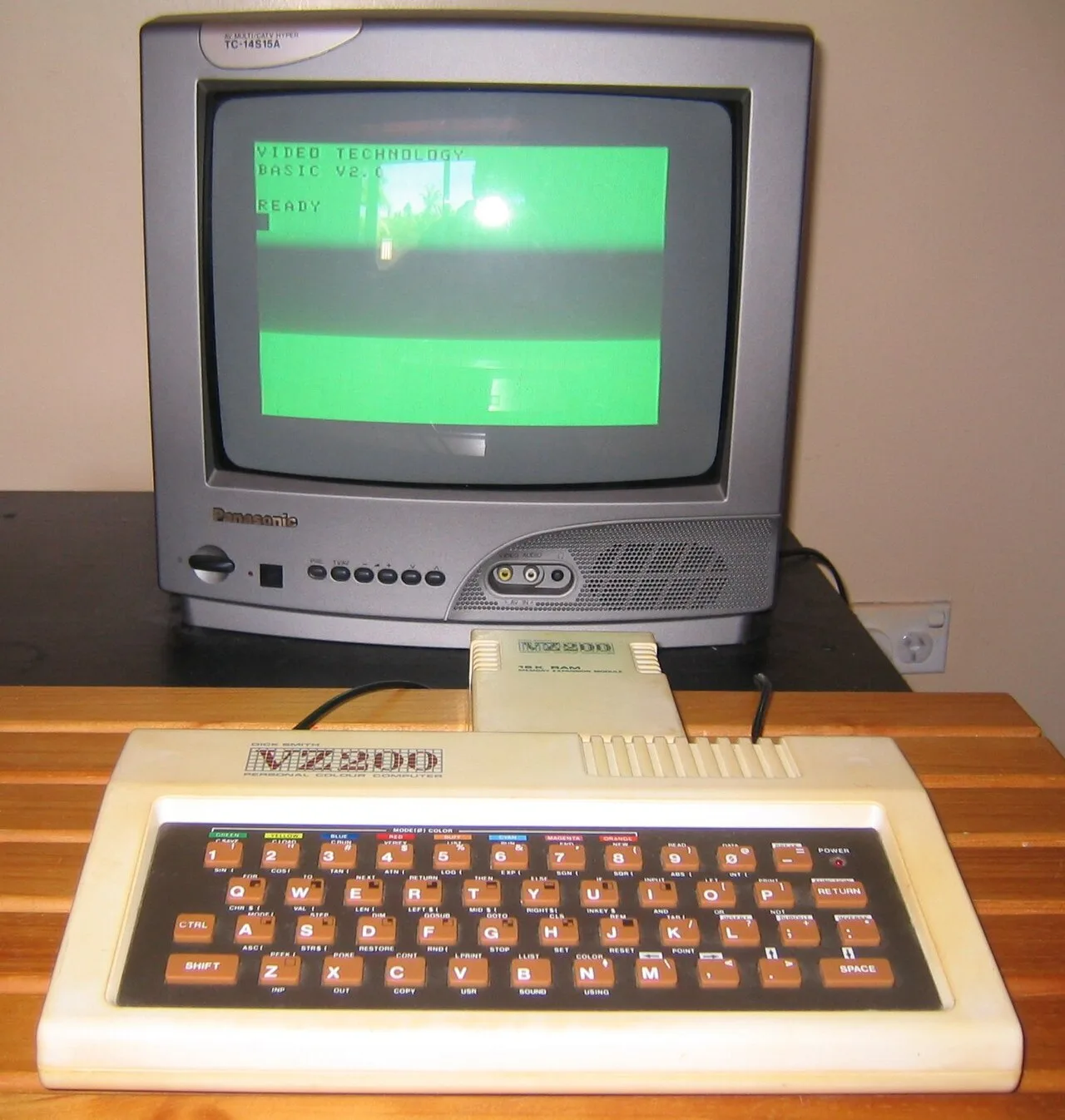
In 1983 a home computer was a keyboard that plugged into your TV and saved programs to cassette tape. VTech, a Hong Kong company that had been making calculators and LCD handheld games, built one such machine and let local distributors put their own names on the case. The same board went out as the Texet TX8000 in Britain, the Dick Smith VZ200 in Australia and New Zealand, the Salora Fellow in Finland, the Seltron 200 in Hungary and Italy, and the Smart-Alec Jr in Texas. Which badge it wore decided whether it sold tens of thousands or sat unsold for years.
The machine was an 8-bit computer, meaning its processor handled data 8 bits at a time, with 8 kB of RAM (working memory, erased when you switched off; for scale, a single photo on a modern phone is roughly a thousand times that). It ran BASIC, the simple programming language beginners typed in, and its cassette games included Hoppy (a Frogger clone), Cosmic Rescue, VZ Invaders and Moon Patrol. The design traced back through VTech's earlier Laser 100 and 110, a monochrome copy of Tandy's TRS-80, and sat close to the Mattel Aquarius in specification and price. None of that was what sold it.
In Australia, Dick Smith Electronics advertised the VZ200 heavily and sold it for $200, which the article equates to about $720 in 2022 money. A 1984 catalogue counted over 22,000 units sold across Australasia, a figure later raised to 30,000. Reviewing it in Australian Personal Computer, Tim Hartnell called it a "great little machine" that would "change the face of Australian computing", and noted the magazine's editor had told him "I'm certainly going to buy one". Dick Smith put both quotes in its advertising. Australian buyers mostly wanted it to learn programming, and the VZ200's BASIC had more features than the Commodore 64's.
In Hungary the same board arrived as the Seltron 200, imported in quantities the article calls "likely very small", and went nowhere. Unsold machines were still on the Hungarian market several years later. The article presents the contrast without explaining it, and the numbers leave room for doubt: 22,000 and 30,000 may be a real increase or a change in how the count was made, and the sales region is given as Australasia rather than Australia alone. What is clear is that the advertising engine and the retail chain, not the circuitry, separated the two outcomes.
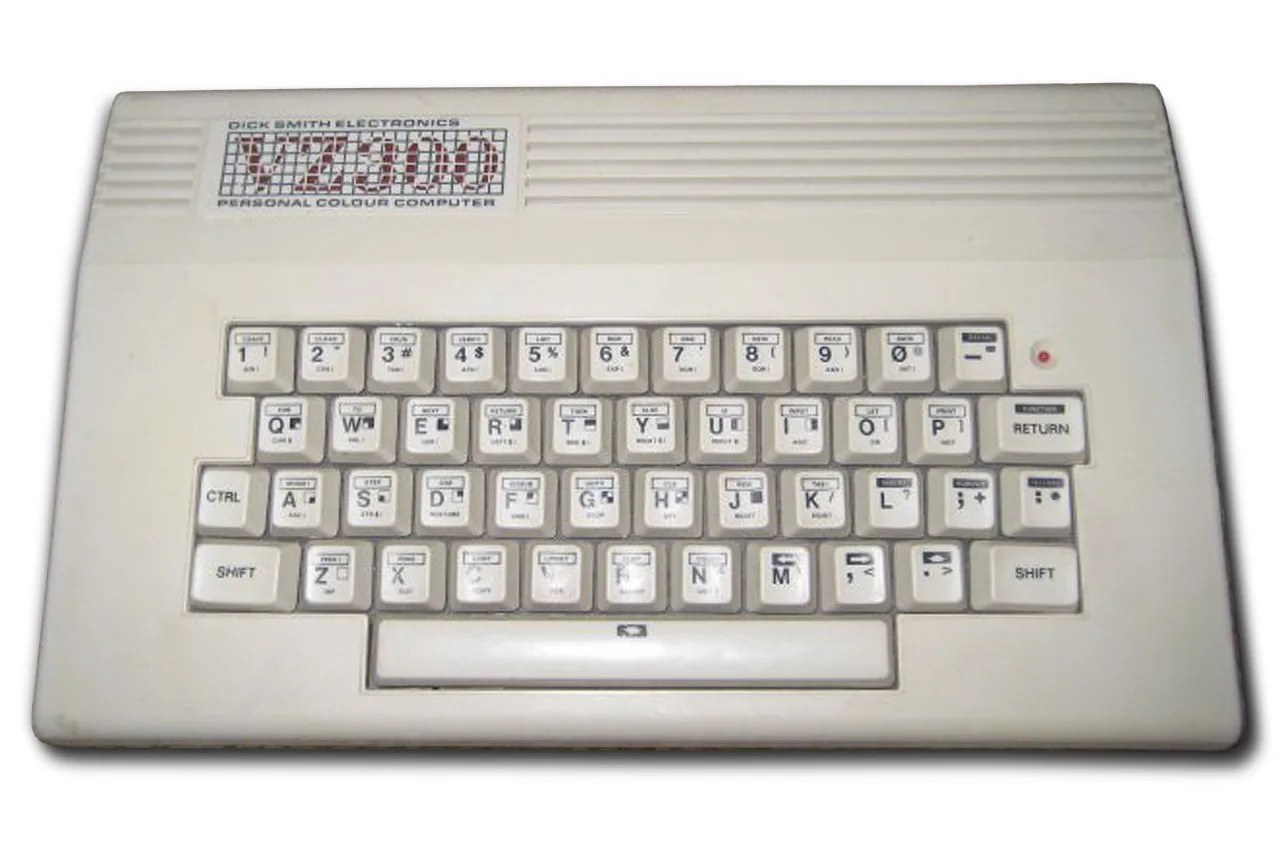
The successor arrived from late 1984 as the Laser 310, or Dick Smith VZ300, with a full-travel keyboard and a floppy disk controller built into ROM (fixed software that stays when the power goes off). Dick Smith was still advertising it for $99 as of 1987, and it was produced until 1989. en.wikipedia.org/wiki/Texet_TX8000