A 1982 Dutch computer changed into a different machine depending on the floppy you inserted

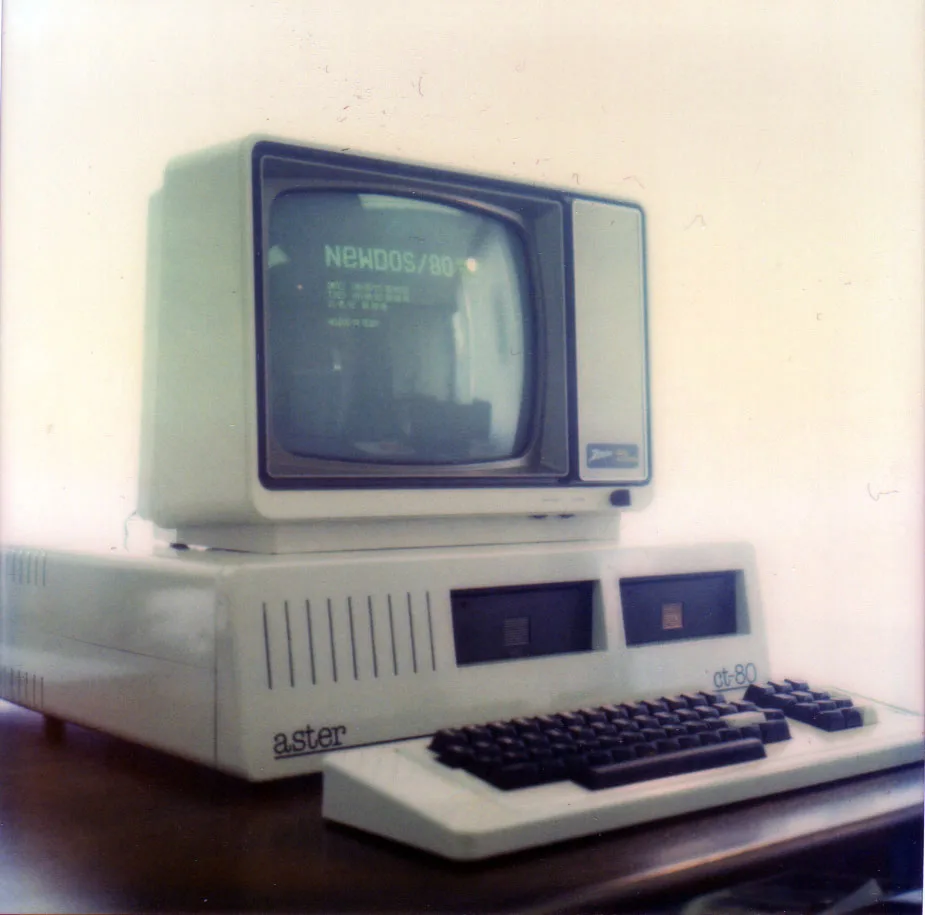
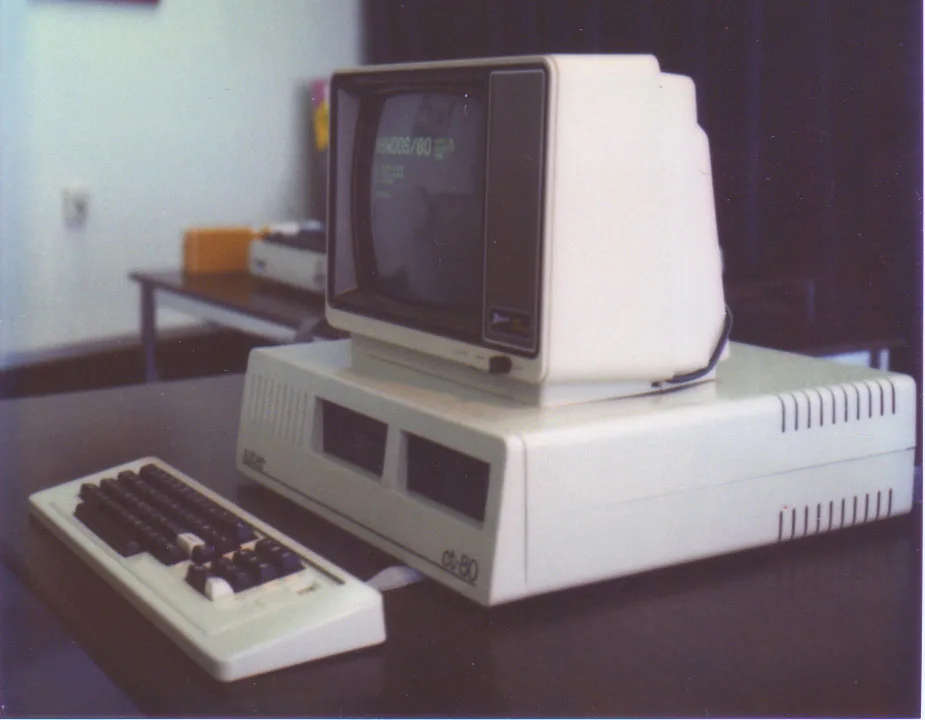
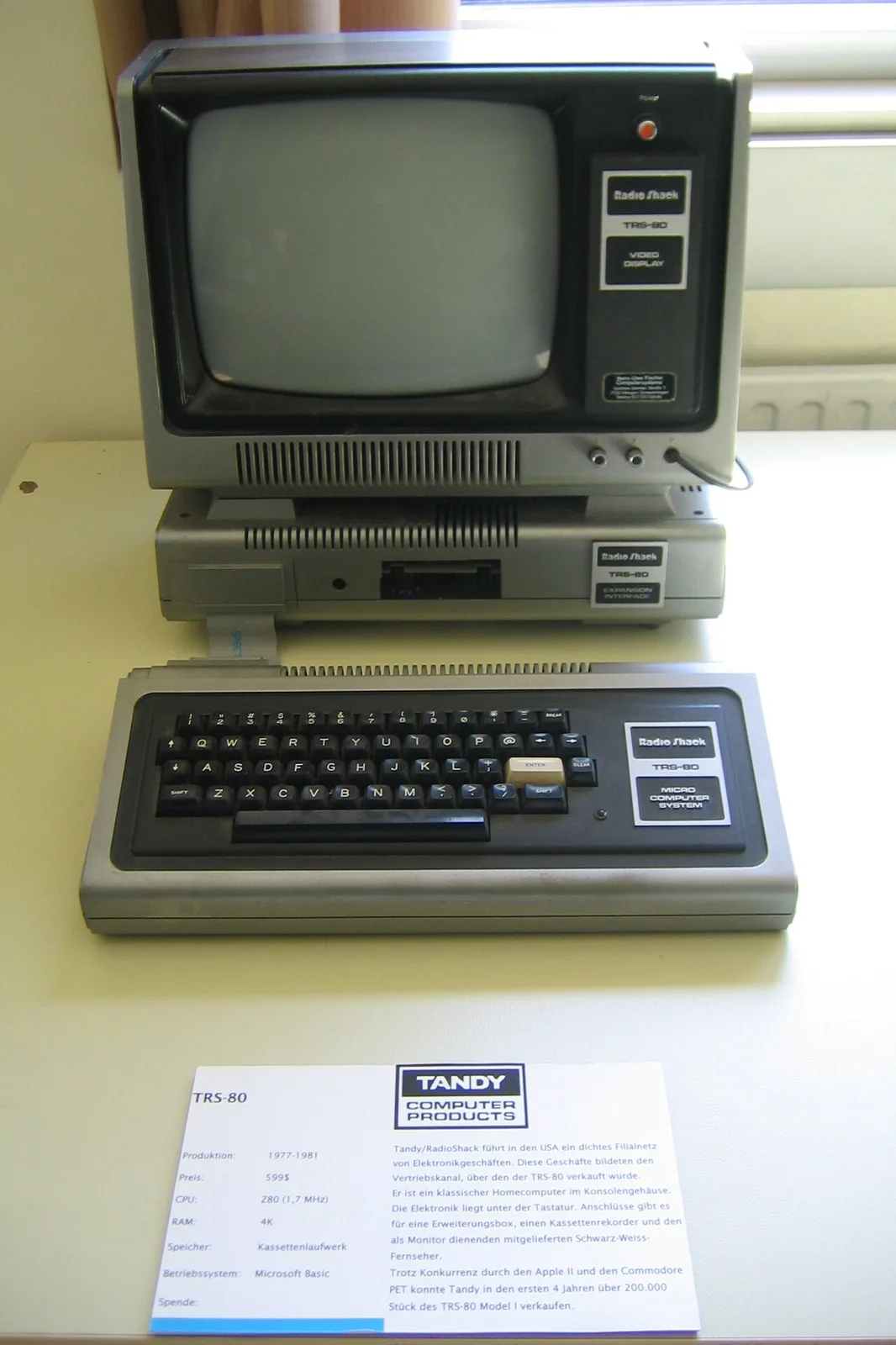
Put a Tandy TRS-80 disk into the Aster CT-80 and it behaves like a TRS-80. Put a CP/M disk in instead and the same box rearranges its own memory and becomes a machine with more room for programs and an 80-column screen. It shipped in June 1982 from MCP, a small Dutch company later renamed Aster Computers, and it was the first personal computer sold commercially in the Netherlands, at first as a kit of boards for hobbyists.
The trick is worth understanding because it is hardware, not emulation. The processor in these machines, a Z80, can only ever address 64 KB of memory (65,536 bytes, roughly 10,000 words of text), and that is the whole ceiling. The TRS-80 permanently parked its startup code and screen memory inside that space, leaving about 48 KB for whatever program you loaded. The Aster's boot loader looked at the disk first. If it found CP/M, the standard business operating system of the era, the one WordStar and dBase ran on, it moved the fixed parts aside and handed programs 60 KB on an 80x25 display. That is 12 KB more working memory, a 25 percent increase, from the same chip. As the Wikipedia entry puts it: "When the boot loader detected a CP/M floppy, the Aster would reconfigure its internal memory architecture on the fly to optimally support CP/M with 60 KB free RAM for programs (TPA) and an 80 x 25 display." Only one other TRS-80 clone, the LOBO Max-80, is recorded as doing the same. en.wikipedia.org/wiki/Aster_CT-80
Every other part of the machine reads like a list of fixes for the one it copied. The processor ran at 4 MHz against the TRS-80 Model I's 1.77 MHz, more than twice as fast, with a software throttle back to the original speed for games that depended on timing. It added upper and lower case letters, an improved character font, and circuitry to suppress "snow," the speckles a TRS-80 threw on screen when its processor and video circuits fought over the same memory. The disk interface supported dual density and capacities up to 800 KB, and a configuration tool let it read and write the disks of about 80 other CP/M systems. A third boot mode turned it into a Videotex terminal, an early dial-up text service, on a 40x25 display.
One figure in the entry deserves a raised eyebrow. It calls 800 KB "more than four times the capacity of the original TRS-80," but a TRS-80 Model I single-density 5.25-inch disk held roughly 90 KB. That makes 800 KB closer to nine times. Either the comparison is against a different baseline or the multiplier is loose, and the entry does not say which.
The machine ended up in Dutch schools in a shape that anticipated classroom networking: one teacher's Aster with disk drives served eight diskless pupil machines over a fast serial connection, pupils downloading software and sending work back, with hardware letting the teacher pull up any pupil's screen on his own monitor. Three case designs were sold, including one shaped like an IBM PC and one like a flattened Apple with a built-in keyboard. The Aster's real feature was deciding, at boot, which computer to be. homecomputermuseum.nl/en/collectie/aster/aster-ct…