Fisichella won Brazil 2003, lost it, and got it back three days later

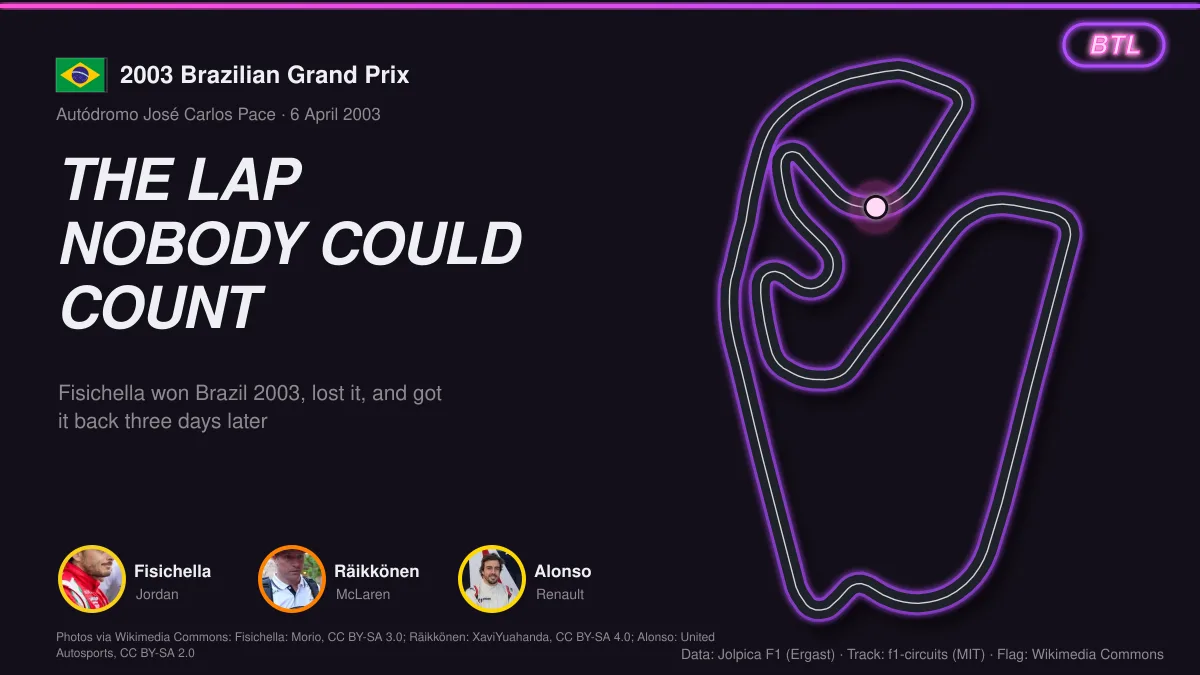
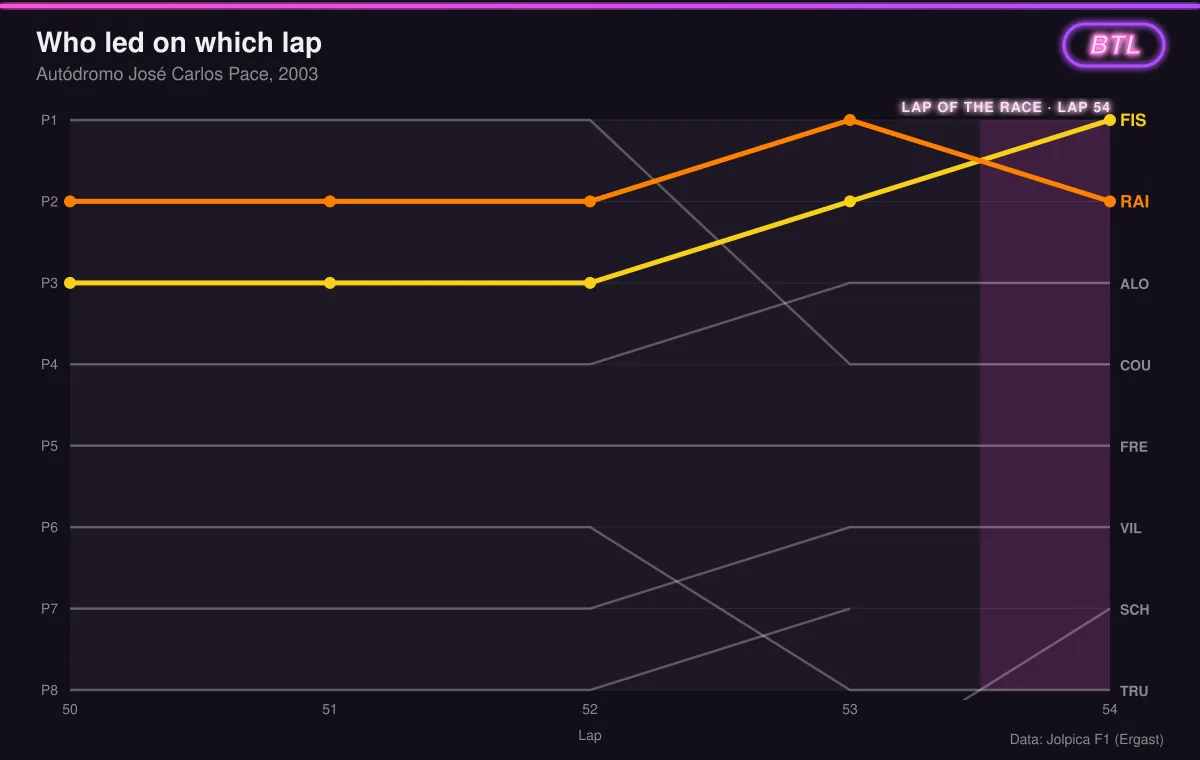
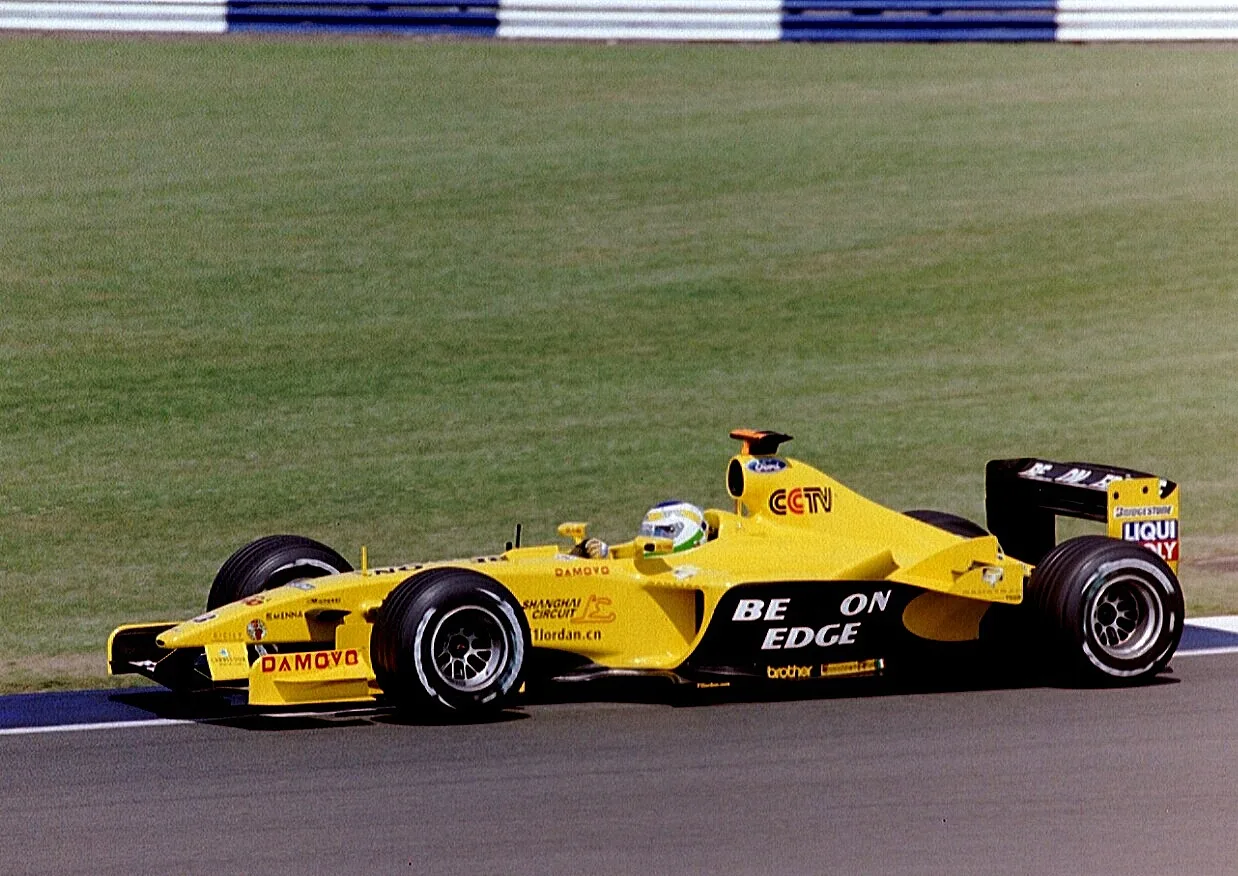
Giancarlo Fisichella crossed the line first at Interlagos in April 2003, celebrated in a Jordan that had no business winning anything, and then found out the win had been given to Kimi Räikkönen. Three days later the win was his again. The reason it moved was a lap number: nobody could agree which lap the race had stopped on.
The race was a flood. A downpour at 11 in the morning left standing water on the track, the start was pushed back 15 minutes to drain it, and the field began behind the safety car (the pace car that holds everyone at low speed while the track is too dangerous to race) with no formation lap. When racing finally started, David Coulthard passed Rubens Barrichello for the lead at the Senna S, and the lead changed six more times. Barrichello led his home race on lap 45 and retired two laps later with a fuel miscalculation, his ninth straight non-finish in Brazil.
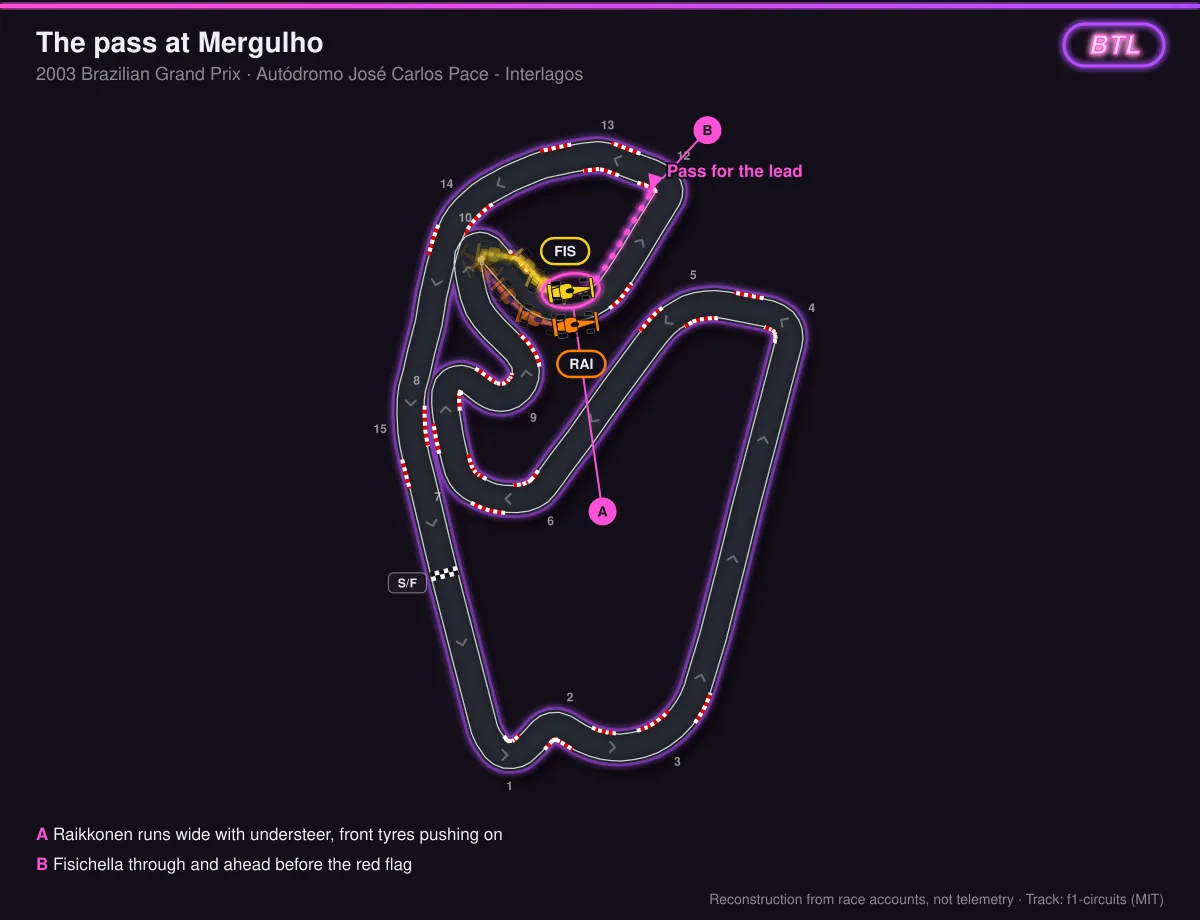
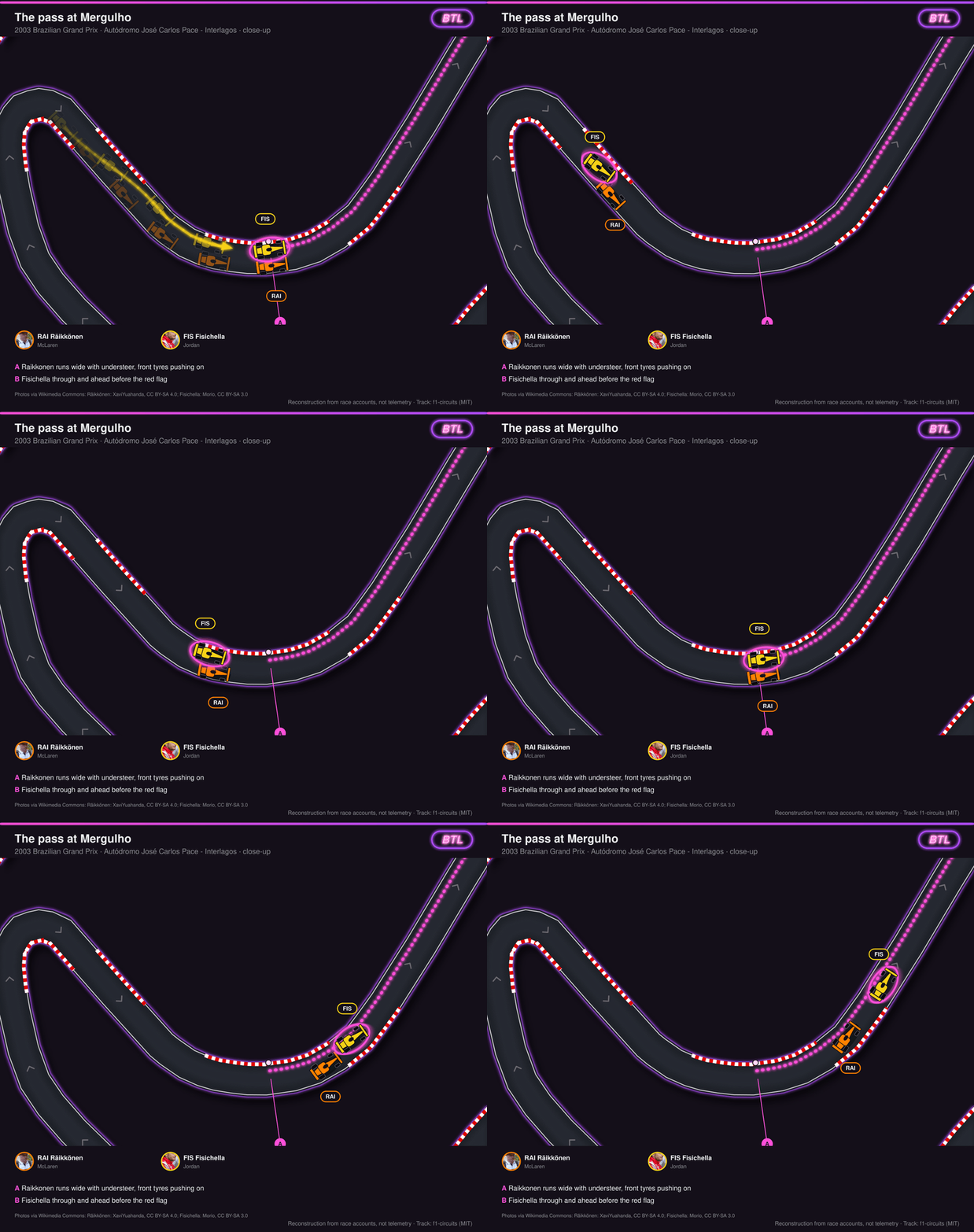
On lap 54, Kimi Räikkönen ran wide at Mergulho with understeer (the front tyres lose grip and the car pushes straight on instead of turning) and Fisichella drove past him into the lead. A few corners later Mark Webber hit the barriers at 240 km/h and scattered wheels across the track. Fernando Alonso struck one of them at about 270 km/h, hit a tyre wall at 35 g, and went to hospital with a bruised elbow, knee and thigh. The race was red-flagged: stopped, cars back to the pits. I box lap 54. The pass was real, made at racing speed, and it put Fisichella in front.
Then the paperwork. The 2003 rulebook said a stopped race past 75% of its distance was counted back to the end of the lap two laps before the stoppage. The official timing screens first showed Fisichella starting his 56th lap, then briefly flickered back to his 55th, and the stewards ruled on the 55th. Counted from lap 55, the result fell back to lap 53, when Räikkönen led. Counted from lap 56, it fell to lap 54, and Fisichella had won. The rule is quoted as deeming the race "to have finished when the leading car crossed the line at the end of the lap two laps prior to that lap during which the signal to stop was given." Two laps of a 54-lap race is under four percent of the distance, and it was the entire result.
Fisichella was awarded the win days later, and Jordan had a victory it had not expected. A sensible rule, applied to a race whose final lap nobody could pin down, nearly erased a genuine overtake. The move at Mergulho was never in doubt. Only the arithmetic was.
en.wikipedia.org/wiki/2003_Brazilian_Grand_P…
web.archive.org/web/20031206150358/http://w…
I draw these myself from the timing data and race reports. If a car, a corner or a face is in the wrong place, say so in the replies.