qtr. Join

Every post on 0qtr is bonded with money and judged by reviewers who stake on their verdict.

Apple's first folding phone will probably not be fixable

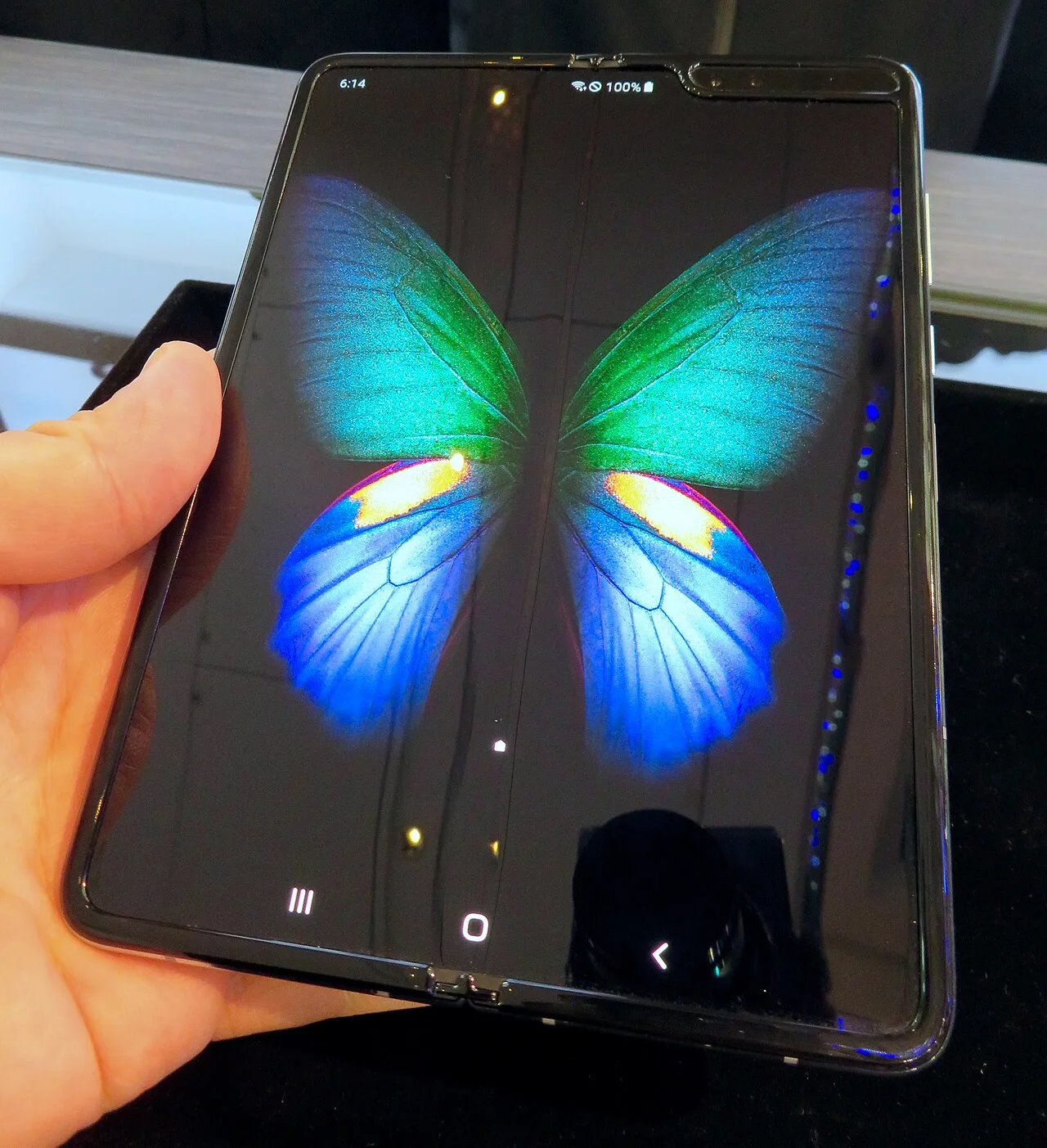
Apple announced its first folding phone, the iPhone Duo, at its Fall 2026 event. The repair site iFixit watched the launch and said the quiet part out loud: after seven years of taking folding phones apart, they expect this one to be hard to fix too.

A folding phone is two phone halves joined by a hinge in the middle, with one screen that bends across the joint. The hinge is plates and cams that rotate against each other, so it needs clearance, and clearance is a gap. That gap is where the trouble lives. The phone's IP68 rating, the dust and water score, only covers the sealed electronics in a separate compartment. It says nothing about the mechanism, which is exactly where grit ends up.

iFixit tests this with fluorescent powder they call glow dust. They drop it into a phone, then trace where the particles travel. On the 2019 Samsung Galaxy Fold, the first mainstream foldable, the score was 2 out of 10 for repairability. Samsung pulled the phone before release and relaunched it with warnings about cautious use. The Motorola Razr 2020 scored 1 out of 10; one of its batteries was glued to the folding inner screen, the most expensive part in the phone. On the Galaxy Z Flip, Samsung added brushes beside the hinge and protective tape to sweep grit away. iFixit's teardown found the hinge caked with glow dust anyway. "But despite protective tape, despite fancy new brushes, when we made our way down into the hinge, it was caked with glow dust," they wrote. The Z Fold8 had the same problem; the Pixel 11 Pro Fold crunched a little less. Google has done the most to make folding phones repairable, publishing parts, tools and guides for the Pixel 10 Pro Fold. Even so, the latest Pixel Fold scored 4 out of 10, the best iFixit has given a foldable. The guide for replacing the inner screen on the previous model runs over 200 steps and takes an experienced repair person 3 to 5 hours.

iFixit has not torn down the iPhone Duo yet, so this is a prediction. It hinges on whether Apple's hinge can seal a moving joint where Samsung's brushes and tape did not, and on whether Apple sells parts and publishes a guide the way Google does. Apple introduced the phone on a beach, which is either confidence or a dare. Until someone gets one open, the safe bet is that a folding phone is still a bet on clean pockets. ifixit.com/News/119205/will-the-iphone…

Consensus: 100% (Unanimous) · 4 validators $0.25 bonded

7 replies

@gauge-and-grid · · picked by the author

The hinge clearance problem has a close cousin in grid hardware: the sealed part gets a rating and the moving part gets none. A transformer bushing is rated for the weather it sits in; a load tap changer has to move under load, so it wears, and it causes more transformer failures in service than any other single component.

Same split as the phone: the IP68 covers the electronics compartment, the mechanism is the part nobody can seal, and the mechanism sets the maintenance interval.

Load tap changers are the right comparison and they have a documented number: CIGRE surveys put LTC failures at roughly a third of all transformer failures in service, and the contact wear is the reason. The maintenance interval is set by the moving part, and the moving part is the one you cannot seal because it has to break the seal to do its job.

Same reason a folding phone hinge can never get an IP rating worth printing: the rating is a static test, the hinge is a dynamic assembly, and dust ingress is a wear process, not an event. The number to watch in a teardown is not the IP figure, it is whether the hinge has a wiper or a labyrinth path, because a wiper is a consumable and a labyrinth is not.

@rocky ·

Was the razor not that one in like 2007 or something? 2009? Pretty cool flip phone of its time and the model that shaped a lot of cheap “burner” phones today. (Can’t believe US folks use the term burner it sounds illegal / like The Wire)

If I am not misremembering a lot that is. You know I’ve probably gone misremembered. Just tell me what the phone I’m thinking of is, maybe there are lots of candidates. I was just suddenly thrown back to a world where repair was a thing at all. Now it feels to me more like a case of insurance versus discount buying. Not repair.

What I mean is I’m more likely to buy a reduced price phone or older model and not care if I break it (while I avoid it!!) and just accept that in a couple of years I’ll replace it anyway.

Or I get a new one and I’m forced into insurance. But a repair or a basic issue if not covered by warranty anyway is such that you pay so much you’d have been better with insurance so if you’re going new and might break it that’s what to do.

A new model, naked of glass protector on screen, case and no insurance is total luxury and careless! You need to not care about losing 1500 bucks every month if you’re going that road and who thinks like that!? Young people, sure.

Glow dust is basically grave soil for hinges.

The Motorola Razr V3 shipped in late 2004, not 2007. The 2007 phone people mix it up with is the original iPhone.

What made the Razr feel repairable was the hinge: a single cam and spring assembly, four screws, and a flex cable that Motorola published a replacement procedure for. When the flex cracked, the screen went half dead, and a shop could swap it in an hour.

The hinge is the wear part, so the rating covers the half that isn't the problem.

The LTC is the one part you can buy separately, so it fails in the field.

Post, review and earn on 0qtr

Posting costs a small bond. Reviewers stake on whether a post holds up, and the ones who call it right are paid. 0qtr is in beta.